

The hardest part of the MYP Personal Project usually isn’t the “big idea.” It’s the quiet moment when you realize your idea has to survive a calendar, other subjects, and your future self on a tired Thursday night.
That’s why support matters. Not the kind that takes over your project (and steals your voice), but the kind that gives you a structure strong enough to hold your independence. In the MYP, the Personal Project is where you practise being the driver of your learning: choosing a direction, documenting your thinking, and proving growth through evidence.
If you’re also an IB student preparing for exams, here’s the good news: the MYP Personal Project can be a training ground for exam success. Planning, research discipline, reflection, and feedback loops are the same skills that make revision efficient. You’re not “doing extra.” You’re building a system.
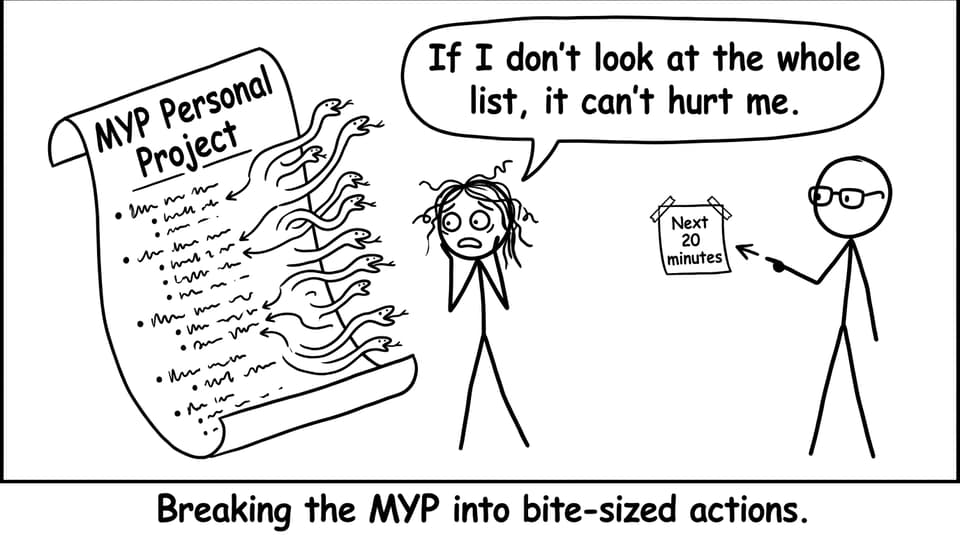
Quick checklist: a calmer MYP Personal Project process
Use this checklist to keep the MYP project moving without letting it take over your week:
-
Choose a goal you can actually finish (and measure)
-
Pick one Global Context and keep returning to it
-
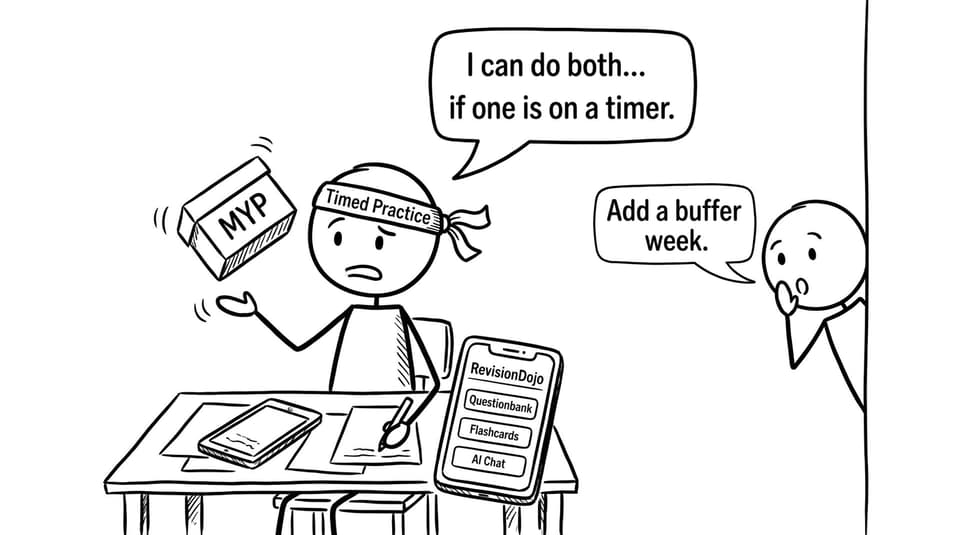
Set weekly milestones and one “buffer week” for real life
-
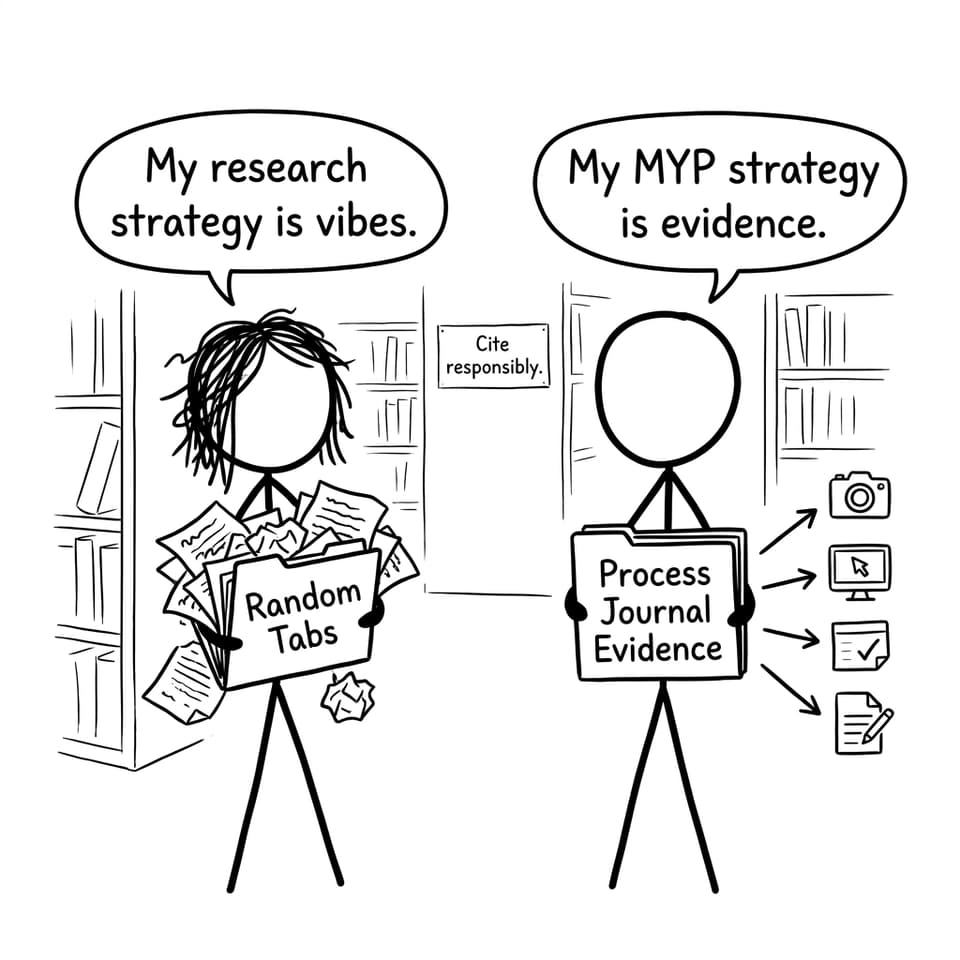
Capture evidence every week (drafts, photos, feedback, decisions)
-
Treat reflection as a habit, not a final paragraph
-
Align early to Criteria A--D so your report writes itself later
If you want a rubric lens from day one, start with the MYP Personal Project Grader. It turns vague stress into specific next steps.
What the MYP Personal Project is really testing
On paper, the MYP Personal Project asks for a product/outcome and a report. In reality, it’s assessing whether you can run a complete learning cycle: investigate, plan, take action, and reflect.
That matters because the “product” is rarely the thing that earns strong achievement levels. The marks live in your reasoning and evidence: why you chose the goal, how research shaped decisions, how you adapted, and what you learned.
If you need concrete models of what “good” looks like, browse the IB Personal Project (MYP) Examples. Seeing annotated exemplars helps you internalize the level of specificity the MYP expects.
Support without takeover: what effective supervision feels like
Great support in the MYP is mostly questions, not answers. The best supervisors don’t push your project in their direction; they keep you honest about clarity, feasibility, and evidence.
Try using supervisor meetings like short strategy sessions:
-
Clarify the goal: “What would success look like in a way you can prove?”
-
Pressure-test the plan: “What will you do when week 6 collapses?”
-
Strengthen the context: “How does this Global Context show up in your decisions?”
-
Protect integrity: “Where are your sources and what did you actually change because of them?”
If you want extra structure beyond meetings, use a platform that makes your workflow visible. RevisionDojo does this naturally because it connects planning and feedback habits to tools you already use for exams: Questionbank, Study Notes, Flashcards, AI Chat, and Grading tools.
For a deeper student-friendly walkthrough, keep the MYP Personal Project: The Ultimate Student Guide open as a reference.
The MYP project stages (and what support looks like in each)
Planning: make the goal measurable and kind to your time
Most MYP projects fail quietly at the goal stage. Not because the student isn’t smart, but because the goal is either too vague (“raise awareness”) or too massive (“build an app with features I’ve never coded”).
Support strategy: shrink the goal until it becomes testable.
-
Define the product/outcome in one sentence.
-
Add 2--4 success criteria you can measure (feedback forms, before/after data, usability tests, performance metrics).
-
Choose one Global Context and write a short “why it matters” paragraph.
If you’re stuck choosing, scan idea patterns in Real Examples of IB MYP Personal Projects for Inspiration and then add constraints (time, tools, audience) to keep your MYP scope realistic.
Taking action: build a weekly evidence routine
The easiest way to support yourself through the MYP action phase is to stop treating documentation as “extra.” Documentation is the project.
A simple weekly routine:
-
1 photo/screenshot of progress
-
1 decision note (what you changed and why)
-
1 feedback artifact (peer, supervisor, user)
-
1 improvement made because of feedback
This turns your process journal into proof, not a diary.
Want a fast way to avoid common traps? Read Common MYP Personal Project Mistakes (and Fixes). It’s basically a shortcut list of what assessors notice.
Reflecting and reporting: write like a scientist, not a storyteller
Reflection in the MYP isn’t “I enjoyed it” or “it was challenging.” Strong reflection is a chain:
Evidence --> judgment --> learning --> next step
Try this repeatable reflection block:
-
What did I try this week?
-
What evidence shows the result?
-
What did that evidence tell me (good or bad)?
-
Which ATL skill did I improve, and how exactly?
-
What will I change next?
If your reflection feels fuzzy, RevisionDojo’s AI Chat can help you sharpen it into criteria language, while the Grading tools help you check alignment before you submit.
ATL skills: the hidden engine of MYP (and your exams)
In the MYP, Approaches to Learning (ATL) skills are the “how” behind performance. They’re also the same skills you lean on when revision gets serious.
Support your ATL development by choosing only two ATL skills per week and making them visible:
-
Self-management: one timed work block, one milestone, one buffer
-
Research: source credibility checks and consistent citation
-
Communication: clearer visuals, tighter explanations, better audience fit
-
Thinking: improved iterations based on test results
-
Social: structured feedback, not random opinions
If you want to connect ATL directly to performance, read Linking ATL Skills to Conceptual Understanding in the MYP. For an even broader routine, Embedding ATL Skills Seamlessly in Daily Lessons helps you keep it practical.
When exams collide with the MYP project: how to do both
Exam season makes the MYP Personal Project feel heavier, even if the workload didn’t change. The fix is not motivation. It’s scheduling.
Two patterns that work:
-
Daily 20 minutes: update evidence + write one reflection line
-
Weekly 60--90 minutes: one milestone + one paragraph draft
Then keep exam prep moving in small, repeatable loops. RevisionDojo is built for this kind of parallel progress: use the Questionbank to practise weaknesses, Study Notes to rebuild clarity, and Flashcards to protect recall.
If you’re in full eAssessment mode, the MYP eAssessments: 30-Day Study Plan That Works shows how to keep MYP revision structured.
Conclusion: make the MYP Personal Project a skill, not a stress
The MYP Personal Project is a rare assignment that rewards you for thinking like a real learner: choosing a meaningful challenge, building a plan that survives reality, collecting evidence, and reflecting with honesty.
If you support the process with small checkpoints and consistent documentation, the final report becomes a summary of what you already proved, not a last-minute invention. And if you want one place to keep your project and exam prep steady, RevisionDojo is built for it: Questionbank for practice, Study Notes for clarity, Flashcards for recall, AI Chat for quick unblocking, Grading tools for rubric alignment, Predicted Papers and Mock Exams for realistic rehearsal, plus a Coursework Library and Tutors when you need examples or human feedback.
Treat your MYP Personal Project like training for independence. Your future exam-self will thank you.