
Common MYP Personal Project Mistakes (and Fixes)
You don’t notice it at first.
You’re working. You’re trying. You’re even staying up later than you should. But then you open the rubric and feel that specific kind of panic: the kind where your project looks busy, yet somehow invisible.
That feeling is exactly why Common MYP Personal Project Mistakes (and Fixes) matters. The MYP Personal Project doesn’t reward effort the way school usually does. It rewards traceable thinking: decisions, evidence, changes, evaluation. And if you’re an IB student preparing for exams, that’s not a side quest. It’s practice for the same skills that separate a good answer from a top one: clarity, structure, proof, reflection.
This guide breaks down Common MYP Personal Project Mistakes (and Fixes) in a way that’s practical, rubric-first, and calm. No reinvention. Just clean fixes that raise marks.
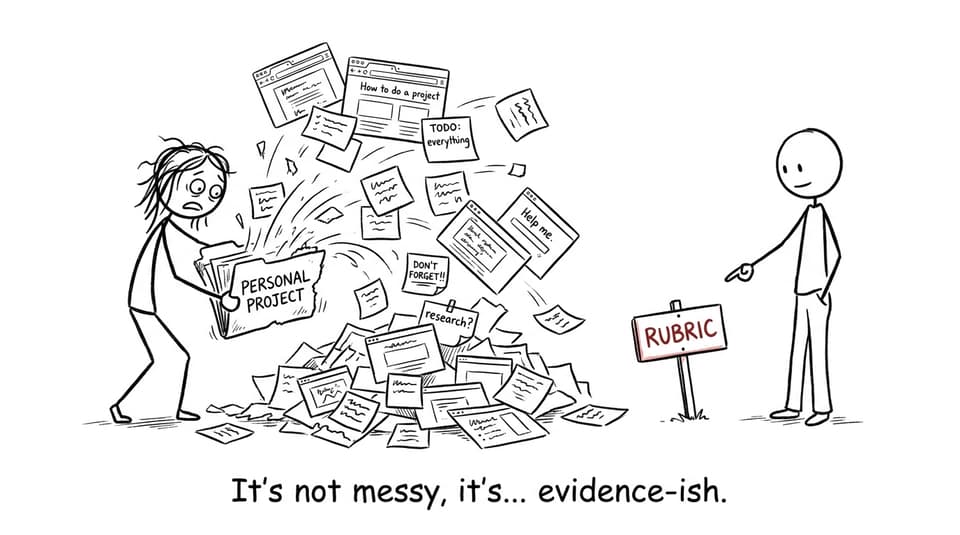
A quick checklist to catch the biggest mistakes early
If you only do one thing today, do this. This checklist is the fastest filter for Common MYP Personal Project Mistakes (and Fixes):
-
Your goal describes a measurable finish line (not just a theme).
-
You chose one Global Context and you return to it throughout the report.
-
Your process journal has dated proof: drafts, screenshots, notes, feedback, iterations.
-
Your report is organized by Criteria A-D (not by your personal timeline).
-
Your reflection evaluates success criteria with evidence and specific ATL growth.
Keep these RevisionDojo tabs open while you work:
Mistake: Your goal is inspiring, but not evaluable (Criteria A and D)
One of the most expensive patterns in Common MYP Personal Project Mistakes (and Fixes) is choosing a goal that feels meaningful but can’t be proved.
A goal like “learn guitar” or “raise awareness” sounds safe because it can’t be “wrong.” But it’s also hard to evaluate. And if you can’t evaluate, Criterion D becomes guesswork.
A marker can’t reward what they can’t verify.
Fix: Build a goal you can test like an experiment
A strong goal usually contains three things:
-
A clear product/outcome
-
A measurable completion condition
-
A defined audience or use-case
Here are upgrades that instantly make evaluation possible:
-
Instead of “learn guitar” -> “Create a 10-minute beginner guitar mini-course and test it with 3 peers using a feedback form.”
-
Instead of “improve fitness” -> “Design a 4-week fitness plan, track results twice per week using two metrics, and evaluate change against my success criteria.”
-
Instead of “raise awareness about recycling” -> “Create a recycling guide for my grade and measure impact through a before/after survey of 20 students.”
If you want project directions that naturally generate evidence (testing, iterations, feedback), use MYP Personal Project Ideas That Score High.
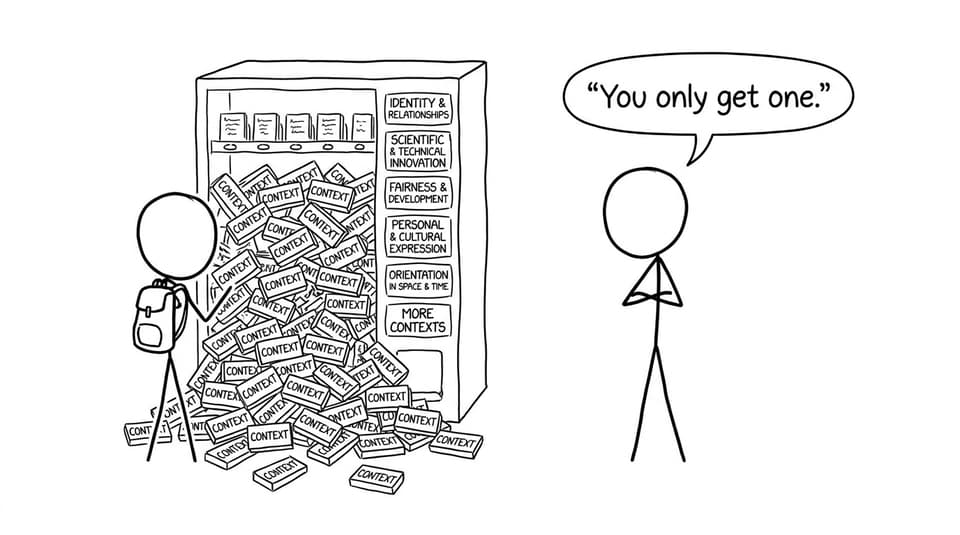
Mistake: The Global Context is treated like a label, not a lens
A classic entry in Common MYP Personal Project Mistakes (and Fixes) is writing one sentence like, “My Global Context is Globalization and Sustainability,” and then never returning to it.
In the MYP, the Global Context isn’t decoration. It’s the reason your project matters beyond “I like this.” If the context doesn’t shape your research, planning choices, action, and reflection, the project starts reading like a hobby report.
Fix: Make the context show up in every criterion
Pick one Global Context and thread it through your report:
-
Criterion A: Why does this context make your goal meaningful?
-
Criterion B: How did the context shape your planning choices, resources, risks, or audience?
-
Criterion C: What actions show real-world relevance to the context?
-
Criterion D: What did you learn about the context, not just about time management?
If you’re stuck between contexts (or you chose three), reset here: MYP Personal Project: How to Choose a Strong Topic.
Mistake: Reflection becomes a diary entry (Criterion D)
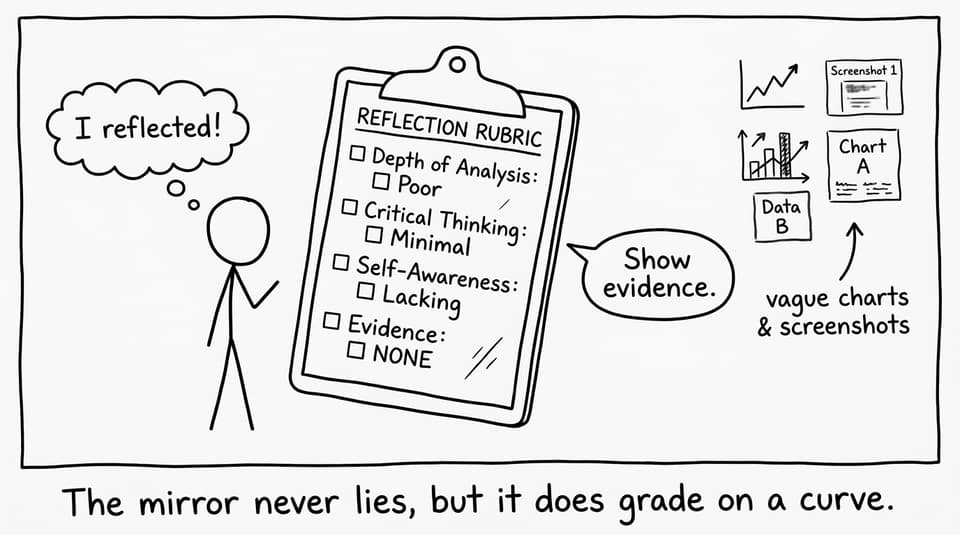
Reflection is where many students lose marks without noticing. In Common MYP Personal Project Mistakes (and Fixes), the core problem isn’t that students don’t reflect; it’s that they reflect in a way that can’t be assessed.
“I enjoyed this” and “It was challenging” can be true, but they don’t show evaluation. Strong reflection sounds more like an exam paragraph:
-
claim (what happened)
-
evidence (how you know)
-
reasoning (why it mattered)
-
improvement (what changed)
Fix: Use a reflection structure you can repeat
Try this template each time you reflect (and especially in your Criterion D section):
-
Goal check: Restate your goal and success criteria.
-
Evidence: Add proof (feedback results, photos, drafts, data, screenshots).
-
Judgment: Decide what worked and what didn’t, using the evidence.
-
ATL link: Name an ATL skill and explain exactly how it improved.
-
Next time: State one specific change you’d make.
To stop guessing whether your writing matches the strands, use the rubric-aligned tool: MYP Personal Project Grader.
Mistake: “My process journal is in my head” (Criteria B and C)
Another major item in Common MYP Personal Project Mistakes (and Fixes) is assuming the final product will speak for itself.
In MYP marking, the product is only part of the story. The journal and evidence show your decision-making: how you planned, adjusted, solved problems, and improved.
If you made something impressive but didn’t capture drafts, feedback, changes, and turning points, you’ve hidden the evidence Criteria B and C reward.
Fix: Create automatic weekly evidence
Each week, capture four things:
-
1 screenshot/photo of progress
-
1 decision note (what you chose and why)
-
1 feedback artifact (peer comment, supervisor note, survey result)
-
1 change made because of feedback
Think of it like a lab notebook. The “experiment log” matters almost as much as the result.
Mistake: Your plan looks perfect, so it collapses in real life (Criterion B)
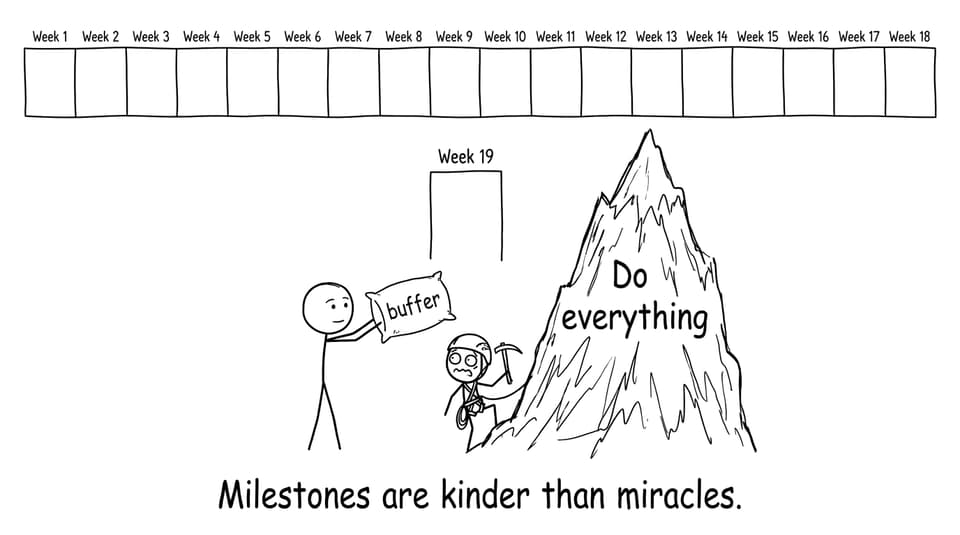
Perfect plans assume perfect weeks.
And school weeks are rarely perfect. Exams appear. Sports competitions happen. Illness hits. Motivation drops. In Common MYP Personal Project Mistakes (and Fixes), the problem isn’t that plans change; it’s that students treat changes as failure instead of evidence of self-management.
Fix: Plan for reality, then document adaptation
Build a plan with:
-
milestones (mini-deadlines)
-
buffers (extra time)
-
risks (“If X happens, I will do Y.”)
Then, when it changes, record:
-
what changed
-
why it changed
-
what you did next
That habit is often the difference between “I fell behind” and “I demonstrated self-management.”
Mistake: You write the report like a timeline, not a rubric response
Some students write beautifully and still lose marks. Why? Because the report is assessed by criteria strands, not by narrative flow.
This is one of the sneakiest Common MYP Personal Project Mistakes (and Fixes): your report can be coherent and still not answer what the assessor is scanning for.
Fix: Use Criteria A-D as your table of contents
Write with the rubric as your structure:
-
Criterion A: goal, motivation, Global Context, research questions, research influences
-
Criterion B: success criteria, timeline, resources, risks, changes to plan, ATL in planning
-
Criterion C: iterations, evidence of action, feedback, improvements
-
Criterion D: evaluation against success criteria, learning, ATL growth, next steps
If you need a clear, safe structure, follow: Writing an Outstanding MYP Personal Project Report.
For an additional blueprint, see: MYP Personal Project Report Structure Explained.
Mistake: ATL skills are used like buzzwords
ATL skills aren’t meant to be name-dropped. They’re meant to be demonstrated.
In Common MYP Personal Project Mistakes (and Fixes), weak ATL writing sounds like: “I used self-management skills.” Strong ATL writing sounds like: “I time-blocked two 45-minute sessions weekly, then revised my schedule after missing a milestone in Week 6.”
Fix: Attach every ATL skill to an observable action
For each ATL skill you mention, add:
-
the strategy you used
-
when you used it
-
what changed because of it
If you want a broader view of how MYP skills connect to assessment performance (and exams), read: MYP Revision Guide: Study Tips for Success.
Mistake: You forget the Personal Project is exam training
When you’re an IB student preparing for exams, the Personal Project can feel like “extra.” But it quietly trains the same mental moves you’ll need later:
-
interpreting criteria and command terms
-
writing with evidence
-
improving drafts through feedback
-
planning under time constraints
That’s why Common MYP Personal Project Mistakes (and Fixes) isn’t only about saving your project. It’s about building habits that transfer.
Fix: Run your project like an exam preparation system
This is where RevisionDojo fits naturally into your workflow:
-
Use the Questionbank to keep your exam practice active while the project runs in parallel.
-
Use Study Notes to keep research explanations tight and accurate (especially when your project has technical content).
-
Use Flashcards to lock in ATL language, command terms, and key definitions you need to write with precision.
-
Use AI Chat when your goal, success criteria, or reflection sounds vague and you need a calmer second brain.
-
Use Grading tools to check rubric alignment before you submit.
-
Use Predicted Papers and Mock Exams to maintain exam readiness when your schedule tightens.
-
Use the Coursework Library to calibrate what “good” actually looks like.
-
Use Tutors when you need targeted feedback without waiting for the next supervisor meeting.
For models you can learn structure from, explore: IB Personal Project (MYP) Exemplars.
A calm 7-day rescue plan (when everything feels behind)
If deadlines are close, the goal is not perfection. The goal is marks.
This rescue plan prioritizes the highest-leverage fixes from Common MYP Personal Project Mistakes (and Fixes).
Day 1: Tighten your goal and write success criteria
Rewrite your goal so it’s measurable. Then add 2-4 success criteria you can actually test with evidence.
Day 2: Commit to one Global Context and write the “why” paragraph
Use MYP Personal Project Global Contexts Explained to make the connection logical, not decorative.
Day 3: Evidence sweep
Collect drafts, screenshots, prototype photos, feedback forms, supervisor notes. Label everything by date.
Day 4: Patch the process journal honestly
Write short entries focused on decisions and changes. Use real artifacts (file history, messages, timestamps). No invented evidence.
Day 5: Outline the report by Criteria A-D
Use the rubric as your headings so the assessor never has to hunt.
Day 6: Write Criterion D using proof
Evaluate success criteria with evidence. Then link ATL growth to specific strategies you used.
Day 7: Get ruthless feedback
Run your draft through the MYP Personal Project Grader and compare your structure to the IB Personal Project (MYP) Exemplars.
Closing: clarity compounds
The Personal Project isn’t graded on how impressive your idea sounds. It’s graded on how clearly you can prove what you planned, what you did, what changed, and what you learned.
If you take one lesson from Common MYP Personal Project Mistakes (and Fixes), let it be this: make your goal measurable and make your thinking visible. Those two changes improve almost every criterion at once.
And if you want your project to feel less like chaos and more like a system, let RevisionDojo be the backbone: use the Questionbank to stay sharp for exams, Study Notes and Flashcards to stay precise, AI Chat for stuck moments, Grading tools for rubric alignment, Predicted Papers and Mock Exams for readiness, the Coursework Library for models, and Tutors for targeted support.
In MYP, calm isn’t a personality trait. It’s a structure you build.