Stress shows up in sport the way bad weather shows up on race day: it rarely announces itself, and it never arrives in just one form.
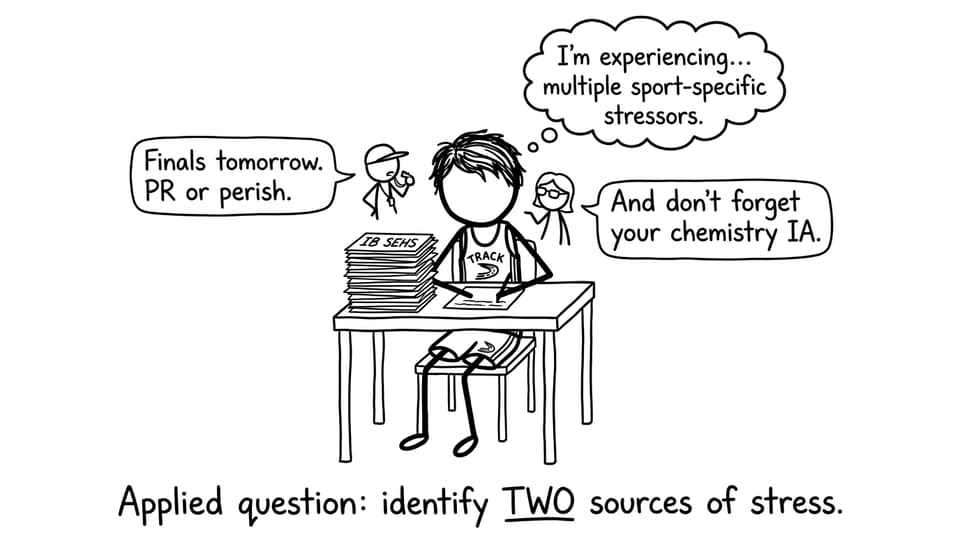
One minute you feel fine in warm-up. The next, your heart rate spikes because the crowd is loud, your coach looks tense, and you suddenly remember you have an essay due tomorrow. In IB SEHS, those moments matter because exam questions love them. They ask you to identify sources of stress in sport, and then apply them to performance, anxiety, and coping.
IB student athlete juggling stressors
IB SEHS quick checklist: what to name in an exam answer
When a scenario screams “pressure,” scan for these common IB SEHS stress categories:
Think finals, trials, or even a “must-win” group match. The stressor is not just the opponent, but the meaning attached to the outcome: fear of failure, fear of negative evaluation, or fear of letting others down. In an exam response, go one step further and connect this to likely performance effects (reduced decision-making quality, rushed execution, or distraction).
Performance expectations: pressure that lives in people
Expectation-based stress is sneaky because it often feels “normal.” But in IB SEHS, expectations are a key source of stress in sport because they can come from:
Injury-related stress: the body heals, the mind negotiates
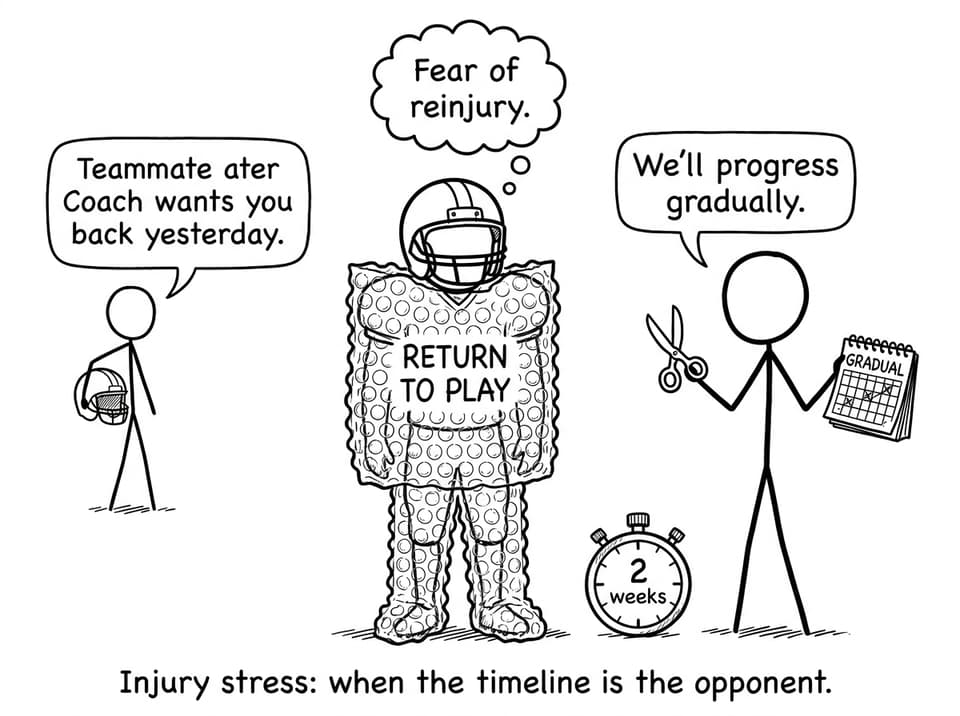
Injury is a major IB SEHS source of stress in sport because it threatens identity, routine, and confidence.
Common injury stressors include fear of reinjury, frustration during rehab, and pressure to return too soon. In exam terms, you can link this to anxiety symptoms and changes in focus or motivation. You can also mention how social pressure from teammates or coaches can turn a physical setback into a psychological spiral.
Organisational and environmental stressors: the system adds weight
Some stressors aren’t about performance at all. They’re about the structure around sport.
Travel fatigue, poor facilities, schedule clashes, unclear roles, and team conflict can build slowly into chronic stress. In IB SEHS, these are useful because they’re easy to apply to real scenarios: a tournament with early starts, long bus rides, and little recovery time.
Personal and lifestyle stressors: the athlete is also a student
A big IB SEHS insight is that sport stress doesn’t stay inside sport.
Academic deadlines, relationship issues, lack of sleep, and financial worries can raise baseline stress levels so that even small sporting problems feel huge. In exams, this is a strong “applied” angle: show how life stress can increase anxiety and reduce concentration during performance.
Individual differences: the same stressor, different meaning
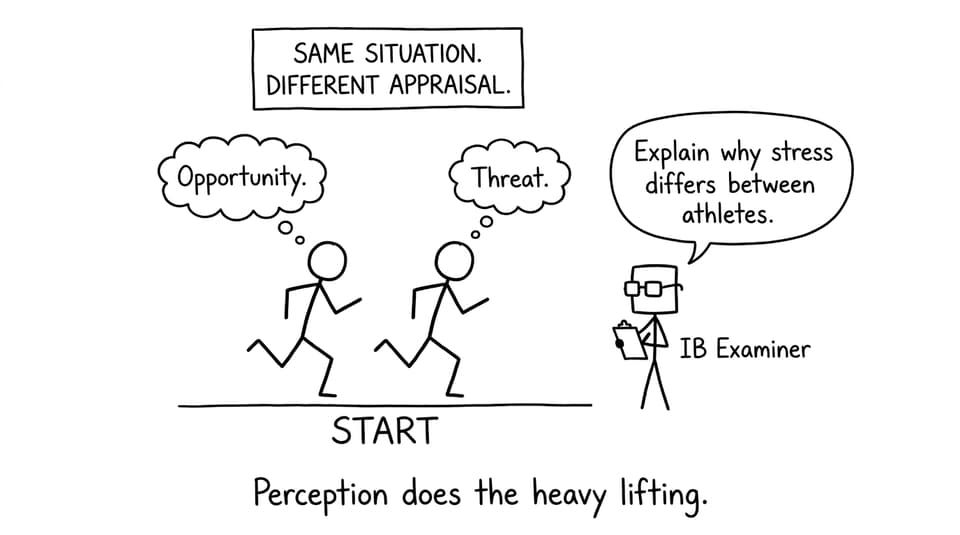
Two athletes can face the same event and react differently because stress depends on perception.
Confidence, experience, motivation, and support systems shape appraisal: one athlete reads pressure as a challenge, another reads it as a threat. That’s why IB SEHS answers often improve when you mention individual differences, not just the stressor list.
Different appraisal at the same starting line
How to write this in IB SEHS exam style
A simple structure that earns marks:
Identify at least two sources of stress in sport
Explain how each creates psychological/physiological demands
Apply to the scenario details (crowd, selection, injury, travel)
Link to performance outcomes (attention, arousal, anxiety, decision-making)
To tighten your wording, use RevisionDojo’s Study Notes and Flashcards for definitions, then switch to the Questionbank for exam-style application. When you want instant clarification, AI Chat can help you test whether your explanation is actually answering the command term. For timed pressure, build a set with Mock Exams and Predicted Papers. And if coursework stress is part of the mix, the Coursework Library, Grading tools, and Tutors turn feedback into a plan.
Conclusion: turn stress into marks
Stress in sport is rarely one thing. It’s competition mixed with expectations, injury worries layered over travel fatigue, and life pressure humming underneath it all. In IB SEHS, your job is to spot those sources quickly, explain their effects clearly, and apply them to the scenario like you’re describing a real athlete.
If you want to make that feel automatic, use RevisionDojo as your training plan: clarify theory with Study Notes, lock definitions with Flashcards, and convert knowledge into marks using the Questionbank, AI Chat, Mock Exams, and Predicted Papers. Stress becomes a topic you can control--and an answer you can trust.
IB SEHS goal setting in sport made simple: goal types, SMART targets, common mistakes, and exam-ready tips using RevisionDojo practice tools.