

Some pressure feels like fuel. Other pressure feels like fog.
You’ve probably seen both: a teammate who gets sharper in the final minutes, and another who suddenly plays small. In IB SEHS, that difference often comes down to coping strategies in sport -- what athletes think and do when stress hits.
This matters in exams because IB SEHS questions rarely reward lists. They reward clear definitions, smart application to a scenario, and a judgement about what works best and why.
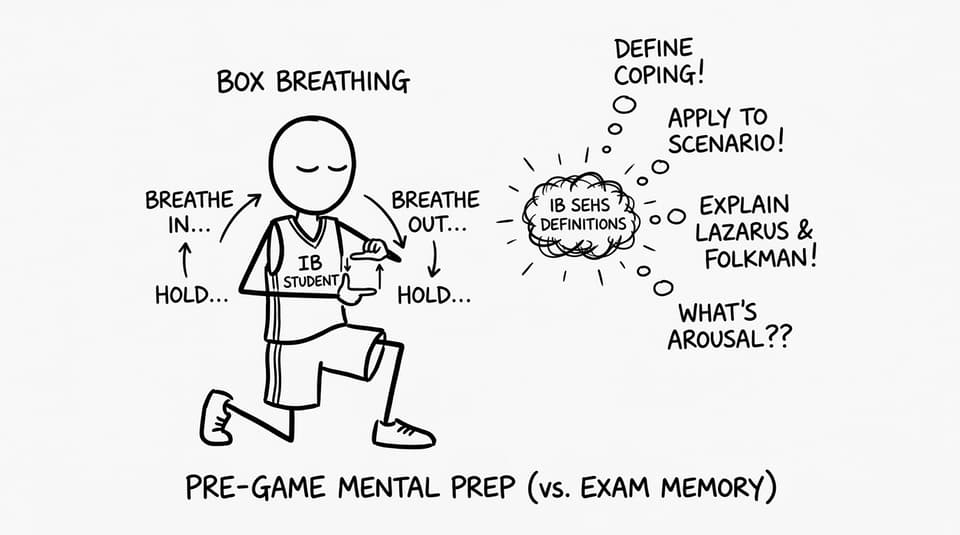
IB SEHS quick checklist: what to write for coping questions
Use this quick structure in IB SEHS:
-
Define coping (cognitive + behavioural efforts to manage stress)
-
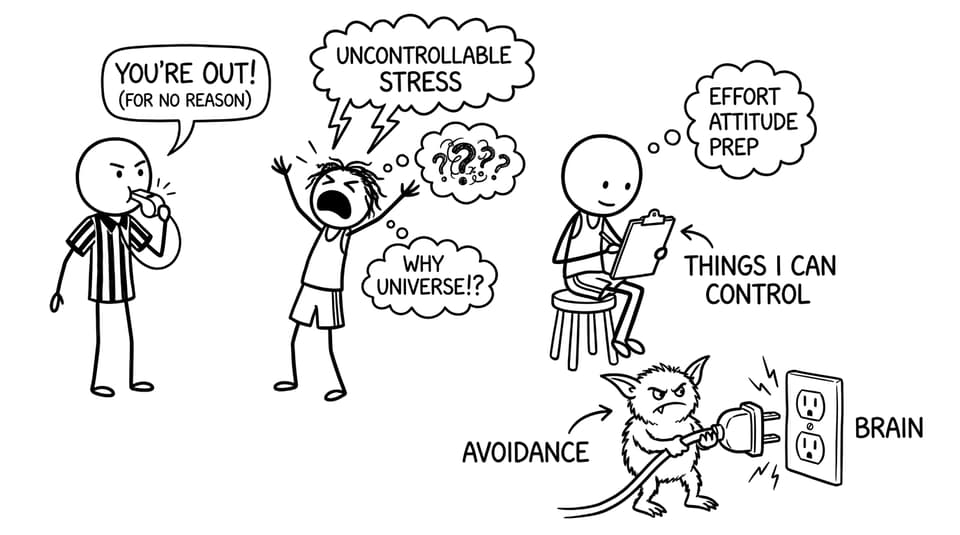
Identify the stressor (internal vs external, controllable vs uncontrollable)
-
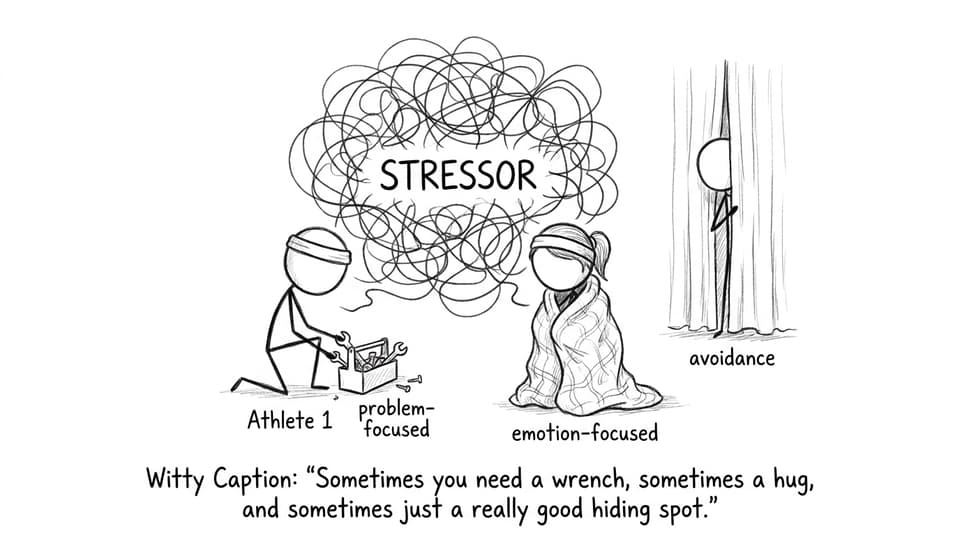
Choose a coping type (problem-focused, emotion-focused, avoidance)
-
Apply to performance (focus, arousal, decision-making)
-
Evaluate effectiveness (short-term vs long-term)
For the syllabus home base, keep C.4 Stress and coping open while you revise: C.4 Stress and coping.
What “coping” means in IB SEHS
In IB SEHS, coping is usually framed as the cognitive and behavioural efforts used to manage internal or external demands that feel stressful. It’s less about pretending stress isn’t there, and more about responding to it in a way that protects performance and wellbeing.