
The first time an interdisciplinary task lands on your desk, it can feel like someone handed you a map with two legends. Science words. Literature words. A global context. A key concept. Four criteria. And a quiet expectation that you will connect it all into something coherent.
That overwhelm is normal. But the MYP was designed for this exact kind of thinking: not just collecting facts, but transferring them, reshaping them, and proving you can use them in a new context. Done well, interdisciplinary work becomes more than a “cool project.” It becomes exam training in disguise.
If you want a grounded starting point, begin at the Middle Years Programme (MYP) hub and treat interdisciplinary practice the same way you treat exam preparation: clear criteria, repeatable structure, and fast feedback.
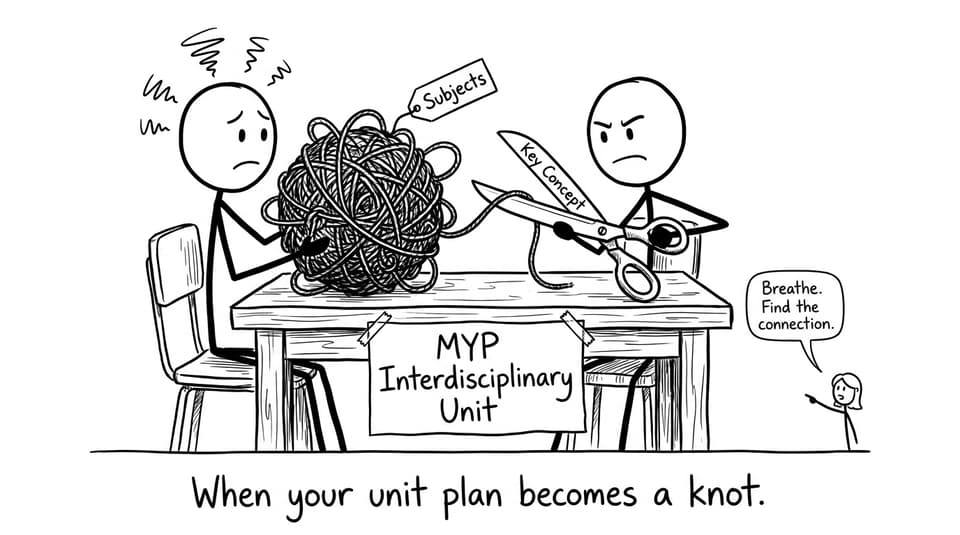
Quick checklist: what strong MYP interdisciplinary units share
Use this before you write a single activity. It keeps your MYP unit plan focused and assessable.
-
A shared key concept that both subjects genuinely use (not just the same topic)
-
One global context that gives the unit a real-world reason to exist
-
A clear statement of inquiry that forces synthesis
-
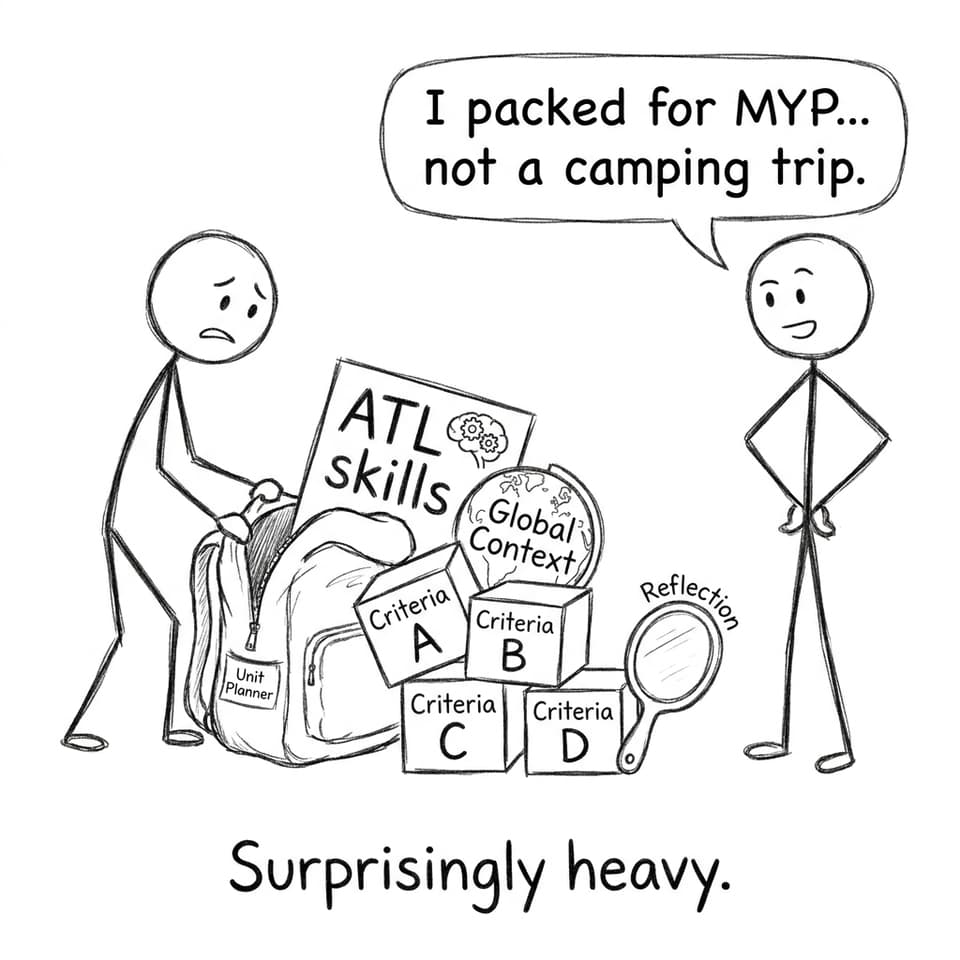
Explicit ATL skills (research, communication, critical thinking, self-management)
-
Evidence that matches the interdisciplinary criteria A--D
-
A reflection step that is planned, not improvised at the end
For a deeper breakdown of how grades are actually awarded, keep this open while planning: MYP Interdisciplinary Assessment: Criteria, Tips, Examples.
Why MYP interdisciplinary activities help with exams
Interdisciplinary learning in the MYP is often described as “connecting subjects,” but for students preparing for exams, the benefit is more practical: it trains transfer.
In exam conditions, questions rarely stay inside neat classroom borders. You’re asked to analyze unfamiliar sources, explain real outcomes, and justify choices. Interdisciplinary units rehearse that by making you:
-
move between different types of evidence (data, quotes, models, designs)
-
use concepts as tools, not definitions
-
communicate a process clearly under constraints
-
reflect on limitations and improvements (which is basically high-mark thinking)
If your revision feels scattered, the habit that fixes it is the same one that makes IDUs strong: a weekly practice loop. This guide helps: MYP Revision Guide: Study Tips for Success.
Sample MYP unit plan idea: Sustainability x Design thinking
Subjects: Sciences + Design
Key concept: Systems
Global context: Globalization and sustainability (see examples in Six Global Contexts in IB MYP: Real-World Applications)
Statement of inquiry: Human innovation changes environmental systems, and every design choice carries consequences.
Learning experiences (interdisciplinary):
-
Investigate a sustainability problem locally (energy use, plastic waste, water quality)
-
Use scientific method to test one variable (efficiency, durability, biodegradability)
-
Create a design prototype with constraints (cost, materials, user needs)
-
Present a short “design justification” that cites scientific evidence
-
Write a reflection: what each discipline could not do alone
Exam-focused twist: run a timed mini-task halfway through. Give students 30 minutes to analyze a data set and propose one design improvement. Then review using criteria language.
How RevisionDojo helps you practise this:
-
Use Study Notes to rebuild the science concept fast.
-
Drill application with the Questionbank and log mistakes.
-
Use AI Chat to challenge your reasoning: ask it to generate counterarguments to your design choices.
Sample MYP unit plan idea: Identity through literature x history
Subjects: Language and Literature + Individuals and Societies
Key concept: Culture
Global context: Identities and relationships
Statement of inquiry: Stories and historical narratives shape who belongs, who is excluded, and why.
Learning experiences (interdisciplinary):
-
Compare one literary text with a set of historical sources from the same era
-
Track how perspective changes “truth”: narrator bias vs source provenance
-
Create a comparative response: one paragraph grounded in history, one grounded in literature, one synthesis paragraph
-
Hold a seminar where students must cite both disciplines to support a claim
Exam-focused twist: build a “command term ladder.” Students rewrite one claim three ways: explain, analyze, evaluate. That single exercise trains the jump from mid-band to top-band.
If you want more task formats to borrow across subjects, use: Sample MYP Assessment Tasks for Every Subject Group.
Sample MYP unit plan idea: Mathematics in motion
Subjects: Mathematics + Physical and Health Education
Key concept: Relationships
Global context: Scientific and technical innovation
Statement of inquiry: Mathematical models reveal patterns in movement and can improve performance decisions.
Learning experiences (interdisciplinary):
-
Collect performance data (sprints, throws, accuracy drills)
-
Use statistics to identify trends, outliers, and reliability issues
-
Connect results to training decisions (what changes, what stays)
-
Produce a short report with a model, interpretation, and limitation section
Exam-focused twist: insist on “show your working” communication. In the MYP, clarity is not decoration. It is part of how you prove understanding.
How to turn these unit plans into a weekly MYP revision routine
Interdisciplinary units are great, but they become powerful when you rehearse them like exam skills.
Try this weekly structure:
-
One foundation session: quick review using Study Notes + 10 flashcards.
-
Two practice sessions: short timed tasks that mimic the product (analysis paragraph, data interpretation, design justification).
-
One improvement session: use feedback, rewrite one piece to top-band quality, and write three “error rules.”
If you need a full schedule that feels calm and specific, adapt: MYP eAssessments: 30-Day Study Plan That Works.
Closing: build interdisciplinary confidence the exam way
A good MYP interdisciplinary unit plan doesn’t feel like juggling. It feels like finding the one thread that ties ideas together, then pulling it until the structure tightens.
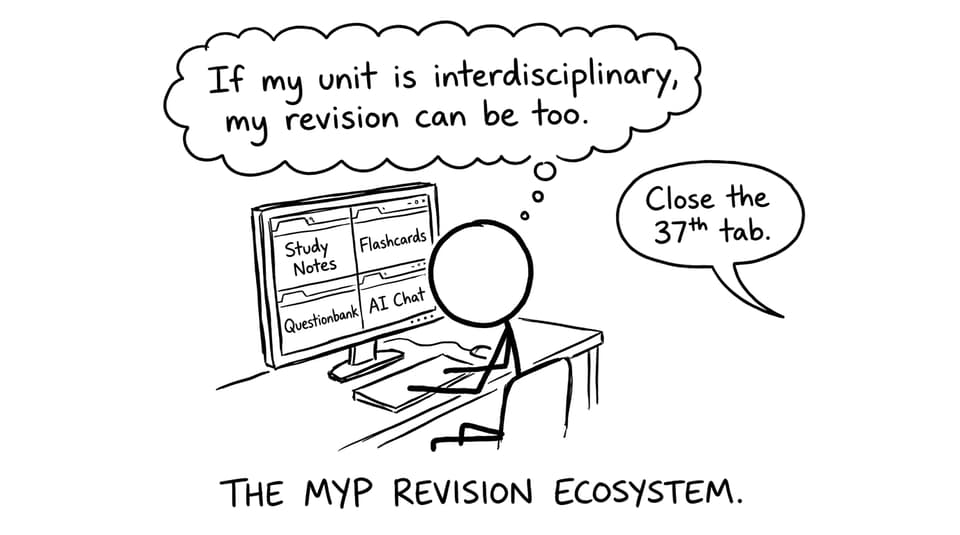
Take one of the sample MYP unit plans above, run it as a short timed task, and review your work with criteria language. Then repeat next week with a different context. If you want everything in one place--Study Notes for speed, Flashcards for retention, Questionbank for practice, AI Chat for explanations, Grading tools for feedback, and Mock Exams to rehearse pressure--start with the Middle Years Programme (MYP) hub and make your revision interdisciplinary too.
