

A disappointing IB result has a strange effect: it makes students want to rebuild everything. New timetable. New folders. New promises. Yet an IB retake usually improves for a less dramatic reason. The student discovers exactly where marks are being lost and builds a practice loop that fixes those weaknesses.
RevisionDojo is well suited to that process. Its Study Notes, Flashcards, Questionbank, AI Chat, Grading tools, Predicted Papers, Mock Exams, Coursework Library, and Tutors can connect diagnosis, practice, feedback, and timed performance in one place.
It cannot guarantee a higher result, register you for an examination, or persuade a teacher to change a predicted grade. What it can do is help you produce stronger work and clearer evidence of progress.
The short answer
Yes, RevisionDojo can be useful for an IB retake or predicted-grade improvement, especially when you need structure rather than another pile of resources.
Its value comes from helping you answer four practical questions:
-
Which topics and assessment skills are costing me marks?
-
Is the problem knowledge, application, interpretation, communication, or timing?
-
What should I practise next?
-
Can I now perform consistently without support and under time pressure?
The RevisionDojo IB resource hub brings the main study tools together. That reduces the friction of moving between disconnected notes, questions, feedback, and mock assessments.
Before preparing, contact your DP coordinator. The IB states that candidates may retake a subject in a future examination session, but registration must go through an IB World School. A school is not required to accept a retake candidate. Your coordinator must also confirm subject availability, deadlines, fees, assessment components, and whether a curriculum change affects what you need to study. According to the IB, when a subject or core requirement is retaken to improve a result, the highest grade contributes to the Diploma award.
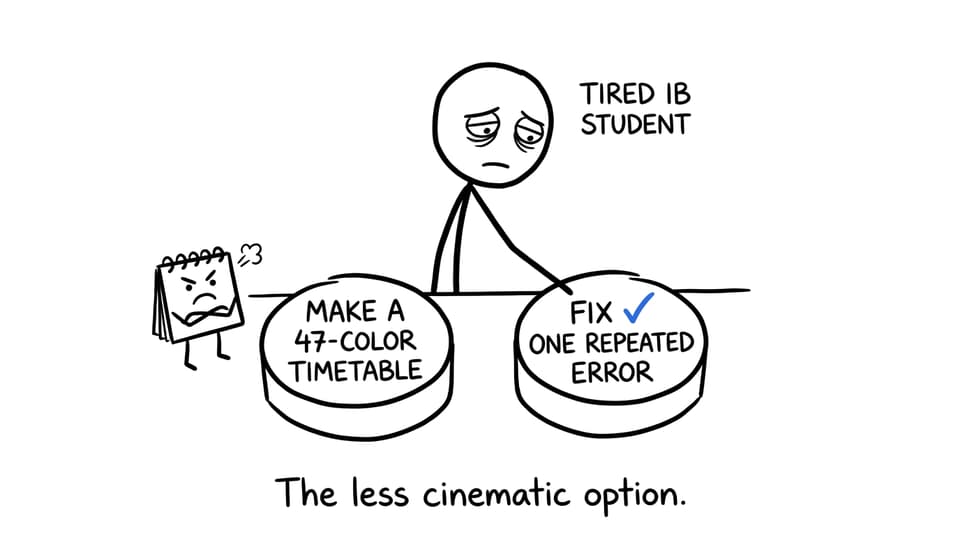
Start with a diagnosis, not a study calendar
A grade reports an outcome. It does not explain the cause.
Two students can receive the same result while needing opposite plans. One might know the content but lose marks through rushed interpretation. Another might manage time comfortably while lacking essential knowledge. Asking both students to reread the syllabus would be simple, but not useful.
Begin with a representative timed section that matches your subject, level, and current curriculum. Complete it without notes or AI assistance. Then classify each lost mark.
Error typeLikely problemBest next actionKnowledgeA definition, process, fact, or formula was unavailableReview targeted Study Notes, then retrieve it with FlashcardsApplicationYou knew the content but could not use it in contextComplete focused Questionbank setsInterpretationYou misunderstood data, command terms, or the taskAnnotate the prompt and compare your approach with the criteriaCommunicationReasoning, structure, working, or evaluation was unclearRewrite the response and seek criterion-based feedbackTimingYou understood the task but could not finish accuratelyBuild from short timed sections to longer simulations
Record the topic, error type, marks lost, and the correction needed. This turns “I need a 6” into something operational, such as “I need to show every stage of calculation” or “I must connect evaluation to the evidence in the prompt.”
The RevisionDojo exam-preparation workflow explains how learning, retrieval, application, and simulation can work as one connected cycle.
A four-stage IB retake plan
A strong plan does not require equal attention across the entire course. It concentrates effort where improvement is most likely to produce marks.
Identify the grade gap
During the opening days, complete several short diagnostic sets. Use comparable conditions, mark strictly, and look for repeated patterns rather than isolated slips.
Rank weaknesses using two questions:
-
How frequently does this problem occur?
-
How many marks could fixing it protect or recover?
A recurring failure to answer command terms properly deserves attention before an obscure fact missed once. If the size of the syllabus feels paralysing, the guide to responding after missed predicted grades offers a manageable two-week starting structure.
Rebuild only what is weak
Use Study Notes to repair concepts exposed by the diagnostic. Keep the review narrow. After reading, close the material and explain the concept from memory before checking what was missing.
Flashcards are useful for definitions, formulas, processes, and recurring distinctions, but they should test recall rather than become miniature textbooks. AI Chat can then clarify a precise misunderstanding. “Why does this conclusion not follow from the data?” is a productive question. “Teach me the entire subject” usually produces more information than direction.
AI explanations should support your reasoning, not replace independent work, current subject guidance, or teacher feedback.
Turn understanding into marks
Understanding something while reading is not the same as applying it in an unfamiliar question. That uncomfortable gap is where most useful practice happens.
Use the RevisionDojo Questionbank to focus on one weak topic, response type, or assessment skill. Start without a timer if the method is still fragile. Once accuracy improves, add realistic time constraints.
After each set, write a correction rule:
-
Next time, I will define the key term before applying it.
-
Next time, I will show the intermediate calculation.
-
Next time, I will use evidence from the prompt in my evaluation.
-
Next time, I will allocate time according to the available marks.
Attempt similar material after a delay. Immediate success may reflect memory of the feedback. Delayed success is stronger evidence that the correction has become usable.
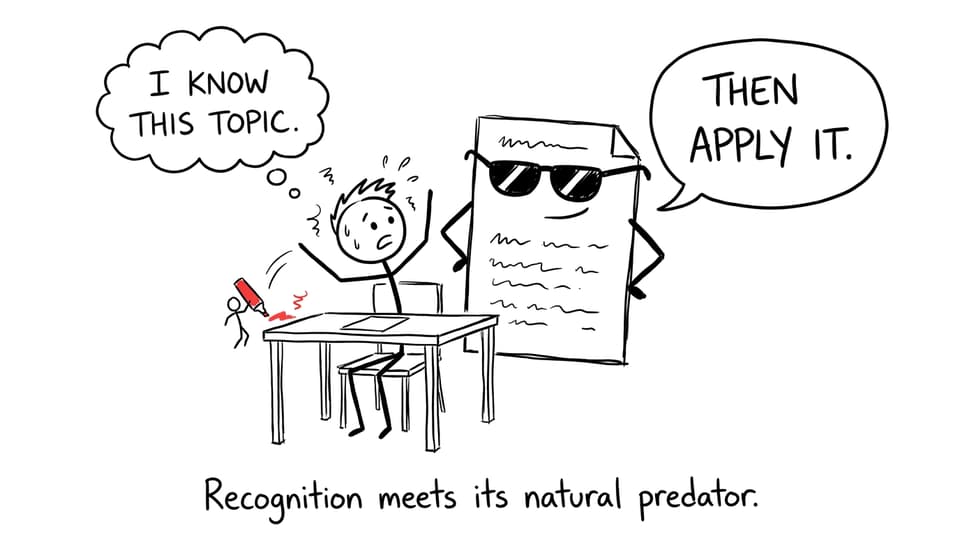
Test the whole system under pressure
Once targeted accuracy improves, begin longer timed work. RevisionDojo Mock Exams and IB Predicted Papers can train pacing, stamina, question selection, and checking habits.
Predicted Papers are simulations, not forecasts of exact examination content. The guide to predicted and specimen papers explains how each type of resource serves a different purpose.
Review a mock for at least as much care as you used to complete it. Grading tools provide a fast feedback loop, but important or uncertain judgements should still be compared with current assessment criteria and discussed with a teacher or qualified Tutor.
A sustainable week could include:
-
Short Flashcard retrieval on most days
-
Three targeted Questionbank sessions
-
One response-rewriting or feedback session
-
One timed Mock Exam section or Predicted Paper
-
One error-log review to choose the following week’s priorities
Can RevisionDojo improve a predicted grade?
RevisionDojo cannot award or directly change your predicted grade. The IB defines a predicted grade as a teacher’s expectation of the result a candidate is likely to achieve, based on evidence of the candidate’s work and the teacher’s knowledge of IB standards.
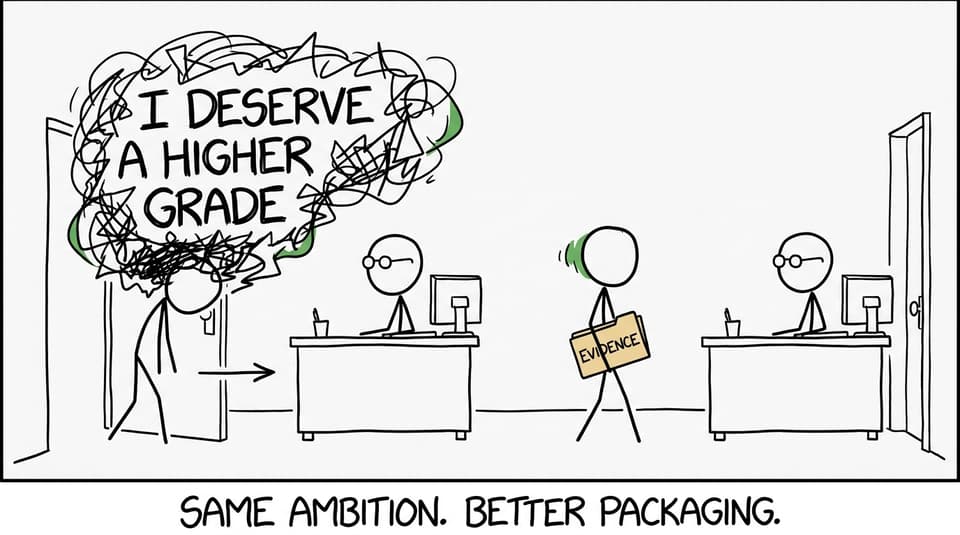
Your school decides which evidence it considers and when predictions are finalised. Therefore, the realistic way to improve a prediction is to improve the work your teacher is permitted to evaluate.
Ask your teacher:
-
Which evidence informed my current prediction?
-
Which upcoming assessments can still influence it?
-
What specifically separates my work from the next grade?
-
When is the school’s decision finalised?
-
Would improved independent practice be considered, or must evidence come from supervised school assessments?
The final question matters. Questionbank analytics and AI grading may show that your preparation is moving in the right direction, but a teacher may not treat platform scores as formal evidence. Clarify the school’s policy before building your case around them.
Use RevisionDojo to prepare for the assessments that do count. The guides to improving IB predicted grades and maximising predicted and final grades explain how to connect practice with visible performance.
Give every RevisionDojo tool one job
The platform becomes more useful when each feature has a defined role:
-
Study Notes: Repair a specific conceptual gap.
-
Flashcards: Strengthen recall through repeated retrieval.
-
Questionbank: Develop application and assessment technique.
-
AI Chat: Explain a narrow misunderstanding or missed reasoning step.
-
Grading tools: Identify weaknesses and guide the next rewrite.
-
Predicted Papers and Mock Exams: Rehearse timing, stamina, and decision-making.
-
Coursework Library: Examine how effective work addresses criteria without copying.
-
Tutors: Diagnose persistent problems requiring human judgement and discussion.
The IB Coursework Grader can support feedback on eligible work, but always follow your school’s academic integrity rules and permitted-feedback limits. Retake candidates should separately ask their coordinator which existing assessment components may be carried forward and which, if any, must be completed again.
Avoid the mistakes that waste a second attempt
The first mistake is confusing familiarity with mastery. Recognising a page of notes can feel fluent even when you cannot produce a complete answer independently.
The second is spending equal time on every topic. Your plan should devote more attention to repeated, high-impact weaknesses while maintaining stronger areas through shorter mixed practice.
The third is completing full mocks too frequently. A mock measures your current system; it does not repair the system by itself. Targeted work between simulations is what makes the next result different.
Finally, do not confuse access to tools with having a strategy. More material can create more choices without creating better decisions. RevisionDojo works best when every activity follows the same loop: attempt, diagnose, correct, delay, and retest.
Make the next result less mysterious
An IB result can feel like a verdict because months of work have been compressed into one number. A better way to see it is as an incomplete diagnosis. It shows where you arrived, but not yet why.
Confirm the official arrangements with your coordinator first. Then identify the marks you repeatedly lose, repair only the relevant gaps, practise the required skill, and test whether the improvement survives time pressure.
This is where RevisionDojo becomes the ultimate IB resource. Not because one feature can change a grade, but because the Questionbank, Study Notes, Flashcards, AI Chat, Grading tools, Predicted Papers, Mock Exams, Coursework Library, and Tutors can keep the entire improvement process connected.
Explore RevisionDojo’s IB tools and begin with one honest diagnostic set. A precise first step is more valuable than a perfect new timetable.