
A prophet is often described as someone who communicates a divine message. Yet Moses, Jesus, Muhammad and Bahá’u’lláh do not occupy equivalent positions within their respective traditions. Revelation may be understood as law, divine self-disclosure, recited speech or progressive guidance.
For IB World Religions SL, the strongest approach is to compare how communities answer deeper questions: Who reveals? Through whom? In what form? With what authority? And can revelation continue?
Paper 1 benefits from concise, tradition-specific knowledge. Paper 2 requires a sustained argument built from selected evidence. The IB World Religions resource hub supports both tasks with syllabus-aligned Study Notes, Flashcards and Questionbank practice.
A quick comparison checklist
Before writing about prophets and revelation, ask:
- Is the figure called a prophet, messenger, Son or Manifestation of God?
- Is revelation primarily a person, message, event, law or sacred text?
- How is the message believed to have been communicated?
- Which text or teaching provides a precise example?
- Does the tradition regard public revelation or prophethood as complete?
- How does interpretation continue after the founding revelation?
- Are you describing a particular community rather than every adherent?
That final question is essential. Jewish movements differ in their accounts of Torah, while Christian denominations vary in their approaches to authority. Sunni and Twelver Shi'a Muslims agree on Muhammad's final prophethood while differing over later religious authority. Careful comparison acknowledges variation without obscuring central claims.
Prophets and revelation side by side
| Tradition | Central example | Character of revelation | Important qualification |
|---|---|---|---|
| Judaism | Moses receiving Torah | Covenant, instruction and divine communication | Jewish movements differ over how revelation is understood |
| Christianity | Jesus Christ | God disclosed through the person, teaching, death and resurrection of Christ | Jesus is not understood merely as one prophet among others |
| Islam | Muhammad receiving the Qur'an | Divine speech communicated as wahy, traditionally through the angel Jibril | Muhammad is human and is identified as the Seal of the Prophets |
| Bahá’í Faith | Bahá’u’lláh as a Manifestation of God | Progressive revelation suited to humanity's developing capacities | A Manifestation reflects divine attributes but is not God's unknowable essence |
The table is a map. Analysis begins when you explain why its distinctions matter.
Judaism: Moses, Torah and covenant
In Jewish scripture, prophets communicate God's will, call Israel back to covenantal responsibility and challenge injustice. Isaiah criticizes worship disconnected from justice, Jeremiah warns of disaster and Amos condemns exploitation. Prophecy therefore functions as moral and communal correction.
Moses nevertheless holds a distinctive place. Numbers 12:6-8 contrasts ordinary prophetic visions and dreams with the directness attributed to Moses. Deuteronomy 34:10 similarly states that no prophet like Moses had arisen in Israel, one whom God knew “face to face.” His relationship to Torah and covenant gives him unparalleled status within the biblical narrative.
Classical rabbinic tradition treats the age of biblical prophecy as having ended, yet Jewish thought did not become static. Rabbinic interpretation and legal reasoning continued to apply Torah. Orthodox approaches generally affirm Torah's divine authority in a stronger traditional sense, while many Reform thinkers emphasize revelation mediated through history and moral consciousness.
Christianity: revelation through a person
Christianity inherits Israel's prophetic tradition, and John the Baptist is presented as a prophetic forerunner. The status of Jesus, however, changes the comparison.
In mainstream Nicene Christianity, Jesus is not simply a human recipient carrying information from God. He is understood as the incarnate Son and decisive self-disclosure of God. Hebrews 1:1-2 contrasts God's earlier speech through the prophets with speech through the Son. Revelation appears through Jesus' teachings and actions, but also through his identity, crucifixion and resurrection.
Catholic teaching describes Christ as the fullness of public revelation. Many Protestant traditions likewise emphasize the decisiveness of Christ and the authority of scripture, though accounts of church tradition differ. Eastern Orthodox theology emphasizes revelation within the worship and shared life of the Church. Christianity's central revelatory claim therefore concerns Christ himself, not simply a book delivered by him.
Islam: wahy, the Qur'an and final prophethood
Islam recognizes prophets including Adam, Nuh, Ibrahim, Musa and Isa as callers towards submission to the one God. Students should not assume that every Quranic figure has exactly the same role or status.
Muhammad's distinctive role is connected to the Qur'an. Islamic tradition holds that revelation began with the command to recite, associated with Qur'an 96:1-5, and continued across approximately 23 years. The angel Jibril is traditionally understood as the intermediary. The Qur'an is treated as revelation conveyed to Muhammad, not as his personal reflections about God.
Qur'an 33:40 calls Muhammad the Messenger of God and the Seal of the Prophets. Sunni and Twelver Shi'a Muslims affirm his final prophethood, although they differ over authority after his death. Twelver Shi'a Imams possess distinctive divinely guided authority, but they are not new prophets. Students should also distinguish the Qur'an from hadith, which report words, actions or approvals attributed to Muhammad but do not have the same status.
The Bahá’í Faith: progressive revelation
The Bahá’í Faith places individual revelations within a continuous framework. Its teachings describe Abraham, Krishna, Zoroaster, Moses, Buddha, Jesus, Muhammad, the Báb and Bahá’u’lláh as Manifestations of God. A Manifestation reflects divine attributes and communicates guidance, but is not God physically incarnate. God's essence remains unknowable.
This framework is called progressive revelation. The Manifestations share a divine source and spiritual purpose, while their social laws differ according to humanity's needs at particular stages of history. Difference is not treated as proof that only one revelation was genuine or that every doctrine is interchangeable.
Bahá’u’lláh is regarded by Bahá’ís as the Manifestation for the present age, preceded by the Báb. Bahá’ís anticipate future divine guidance, although Bahá’u’lláh's writings state that another Manifestation will not appear before at least a thousand years have passed. Muslims commonly understand the Seal of the Prophets as closing prophethood, while Bahá’í theology distinguishes that prophetic cycle from the future appearance of Manifestations. An IB answer should present these as theological claims rather than declare one correct.
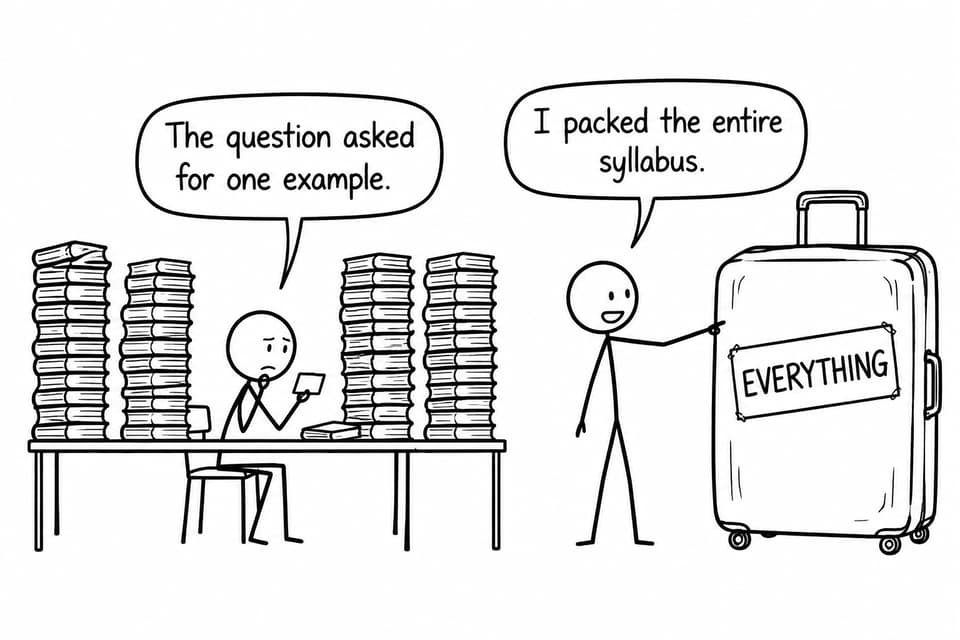
One precise example usually carries more analytical value than an uncontrolled pile of facts.
The comparisons that create analysis
Strong comparisons use a shared axis rather than placing four summaries beside one another.
The identity of the mediator
Moses is the uniquely authoritative prophet of Torah within Judaism. Muhammad receives and transmits the Qur'an but remains human. In mainstream Christianity, Jesus is the divine Son and content of revelation, not merely its carrier. In the Bahá’í Faith, Bahá’u’lláh is a Manifestation who reflects God's attributes without becoming God's essence.
The form of revelation
Torah joins revelation to covenant and instruction. Christianity centers divine self-disclosure in Christ while receiving testimony through scripture. Islam emphasizes the Qur'an as revealed recitation. The Bahá’í Faith understands the writings and mission of each Manifestation within a continuing revelatory process.
Finality and interpretation
Rabbinic Judaism distinguishes the completed era of classical prophecy from continuing interpretation. Christianity generally treats revelation in Christ as definitive, while theology develops its implications. Islam affirms Muhammad's final prophethood while sustaining jurisprudence, theology and commentary. The Bahá’í Faith anticipates revelation unfolding across history. These positions shape religious authority and responses to change.
Turning comparison into Paper 1 marks
Paper 1 answers need controlled knowledge. Identify the figure, provide one specific textual or doctrinal example, and explain its significance.
A compact response might state that Moses is distinguished from other prophets in Numbers 12 because his communication with God is portrayed as unusually direct. A strong final sentence explains that this supports his unique authority in relation to Torah and covenant. That is better than listing prophets without connecting them to the question.
Use World Religions Flashcards and Questionbank resources to practise claim, evidence and significance. Spaced repetition for IB revision can help keep references such as Deuteronomy 34:10, Hebrews 1:1-2 and Qur'an 33:40 distinct.
Building stronger Paper 2 arguments
Paper 2 rewards depth rather than a tour through every tradition. Begin with a defensible thesis, organize paragraphs around concepts and compare selectively to reveal what is distinctive about your chosen in-depth study.
An essay might argue that revelation preserves continuity while enabling adaptation. A paragraph on Judaism could distinguish Torah's authority from later rabbinic interpretation. Comparison with Bahá’í progressive revelation clarifies that adaptation occurs differently: one model develops interpretation around inherited revelation, while the other expects successive Manifestations.
Build each paragraph through five moves:
- Make a direct claim answering the question.
- Give a named teaching, passage or practice.
- Explain how the evidence supports the claim.
- Add a precise comparison or internal variation.
- Evaluate what the comparison reveals.
The World Religions mock exam preparation guide can help turn knowledge into timed writing. RevisionDojo's Predicted Papers and Mock Exams provide broader rehearsal, while AI Chat and Grading tools can expose unsupported comparisons. The guide to common World Religions misconceptions helps remove claims such as “all prophets have the same role.”
Precision is the real comparative skill
Comparative religion does not flatten traditions until they look alike. It asks a shared question, then examines why traditions answer it differently. For prophets and revelation, the decisive categories are identity, medium, authority and finality.
RevisionDojo brings that process together. Study Notes and Flashcards establish knowledge; the Questionbank tests retrieval; AI Chat and Grading tools strengthen explanation; Predicted Papers and Mock Exams build timing. The Coursework Library and Tutors support deeper research and qualified writing. Together, these tools turn comparison from a revision topic into a reliable method of analysis.