
If you have ever watched yourself repeat the same skill until it feels smooth, then tried it the next day and felt clumsy again, you have met the quiet gap between performance and learning. In IB SEHS, practice methods are the bridge across that gap. They explain why some training plans produce short-term improvement, while others build long-term skill retention you can actually describe (and apply) in an exam.
IB SEHS practice methods: a quick checklist
Use this as a fast memory cue before writing any IB SEHS answer:
-
Massed practice = lots of reps, minimal rest
-
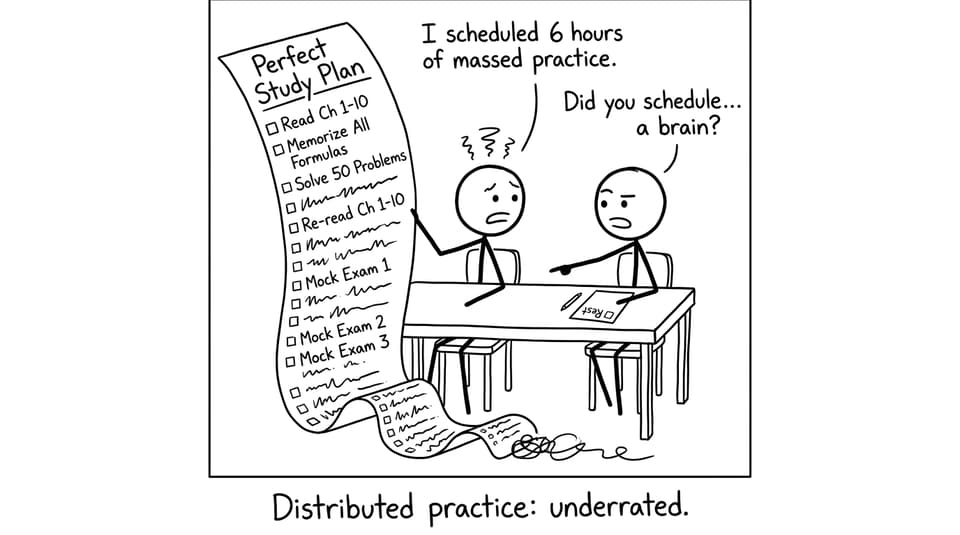
Distributed practice = reps separated by planned rest
-
Fixed practice = same skill, same conditions
-
Variable practice = same skill, changing conditions
When you revise, anchor these to motor learning by linking them to fatigue, concentration, feedback, and transfer to game-like performance.
Massed practice in IB SEHS (when it helps, when it hurts)
Massed practice means practising continuously with little or no rest. In IB SEHS, the key word you should feel is fatigue. Fatigue can reduce movement quality, lower attention, and make feedback harder to process.
That is why massed practice tends to fit simple skills or experienced performers who can keep technique stable even when tired. For a beginner learning a complex routine, massed practice can look productive while quietly building sloppy repetitions.
To practise this like an examiner expects, try an exam-style application question in the RevisionDojo SEHS Questionbank and force yourself to justify your choice with one clear mechanism (e.g., fatigue reduces concentration).
Distributed practice in IB SEHS (the surprisingly powerful option)
Distributed practice adds regular rest intervals between attempts. In IB SEHS, this usually earns marks because it is easy to connect to:
-
reduced fatigue
-
improved concentration
-
more time to process feedback
Distributed practice is especially useful for beginners and physically demanding or complex skills. In exam terms, it is often the safest recommendation when the scenario includes low fitness, low motivation, or high error rates.
If your definitions feel shaky, build them from the syllabus pages on C.2 Motor learning and then condense them into your own deck using RevisionDojo Flashcards.
Fixed practice vs variable practice in IB SEHS
Fixed practice repeats the same skill in the same environment. Variable practice repeats the skill while changing constraints (angle, speed, distance, opponents, surface). In IB SEHS, fixed practice often fits the early stage of learning because it reduces cognitive load and helps consistency.
Variable practice shines once basics are stable because it improves adaptability and transfer. Examiners love when you say why: variable practice builds flexible movement solutions, not one perfect solution for one perfect situation.
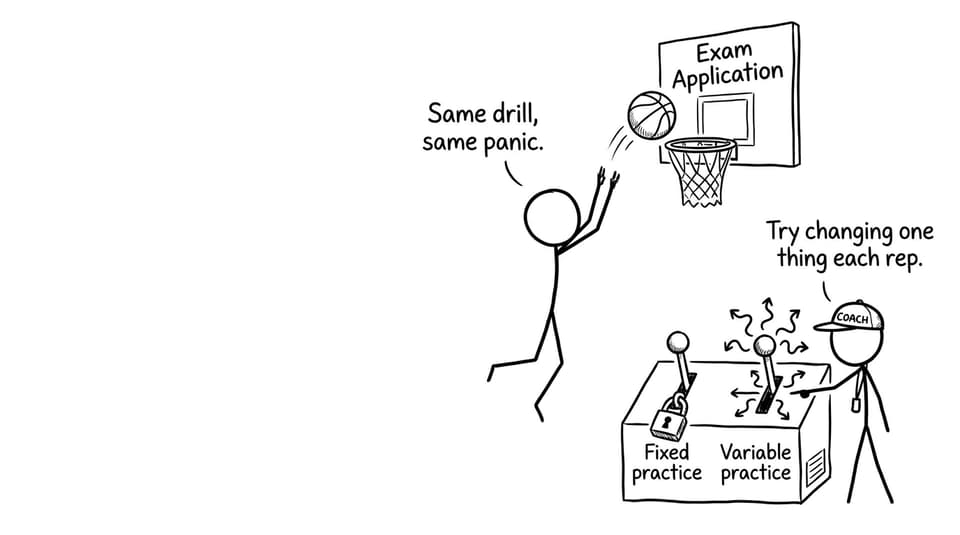
For a strong link to motor learning language, revise the definitions and learning/performance distinction in What Is Motor Learning? - IB SEHS, then practise applying fixed/variable choices to different performers.
How to choose the best IB SEHS practice method (a simple decision rule)
When you are stuck in an IB SEHS question, use this rule:
-
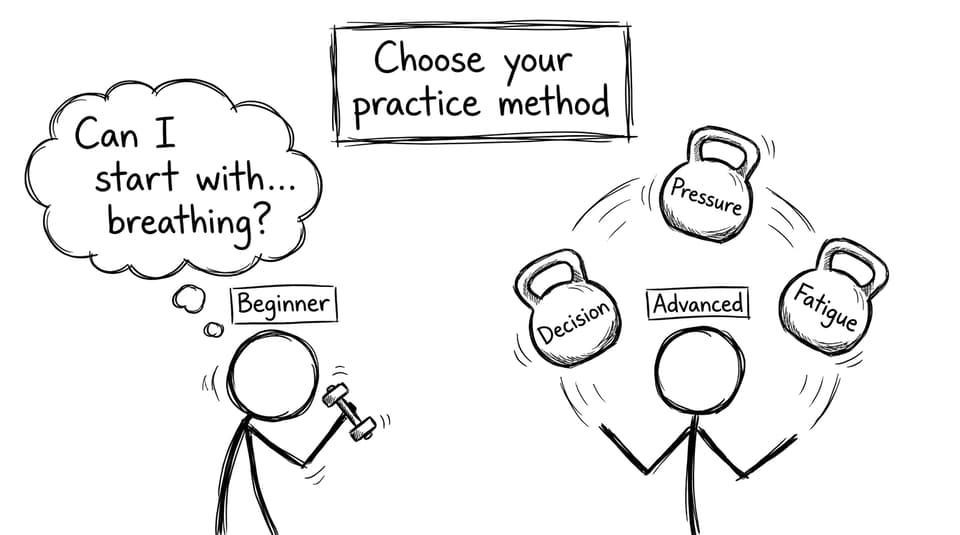
If the skill is new/complex or the performer tires easily: choose distributed and fixed first.
-
If the skill is stable and the goal is real-world transfer: add variable practice.
-
If the performer is experienced and the skill is simple: massed practice can be justified.
RevisionDojo makes this easier to train because you can move from Study Notes to Questionbank to Grading tools in one loop, tightening the wording until your explanations sound like markscheme logic. Start from the IB Sports, exercise and health science Resources hub.
Bring it home: turn IB SEHS theory into exam marks
Practice methods are not just training vocabulary. In IB SEHS, they are a way to prove you understand how learning happens over time. Build a simple revision loop: learn the definitions, connect them to fatigue and transfer, then practise applying them under time pressure.
If you want one place to do that efficiently, RevisionDojo is built for it: syllabus-aligned Study Notes, active-recall Flashcards, targeted Mock Exams, Predicted Papers, and a deep Questionbank that turns motor learning into repeatable exam performance. Start with the Ultimate Guide to IB Sports, Exercise and Health Science and make IB SEHS practice methods one of your easiest scoring topics.