
Motor learning is one of those IB SEHS ideas that feels obvious until you have to explain it in exam language. You watch yourself miss ten serves, then suddenly land one perfect shot and think, “I learned it.” But did you? Or did you just get lucky, less tired, or more focused for thirty seconds? IB SEHS exam questions love that gap between what we feel and what we can prove.
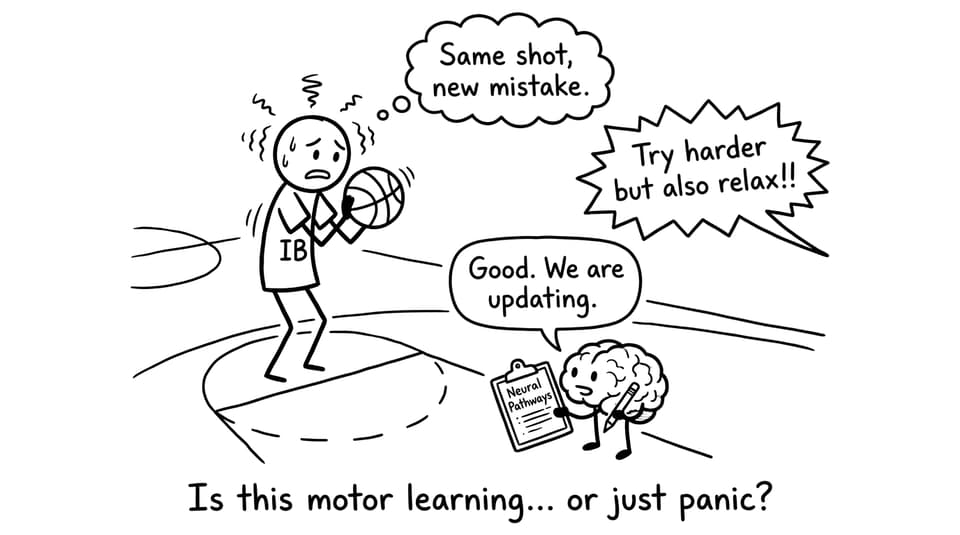
What is motor learning in IB SEHS?
In IB SEHS, motor learning refers to the internal processes that happen through practice or experience and lead to a relatively permanent change in the ability to perform a movement skill. That phrase “relatively permanent” matters: it separates true learning from a short-lived performance spike.
If you want the syllabus-aligned framing, start your revision from RevisionDojo’s Motor learning hub: C.2 Motor learning and then zoom into C.2.1 Motor learning processes.
Quick exam checklist (definition-ready)
Use this mini-checklist for any IB SEHS definition question:
-
Mention practice/experience
-
State internal processes (not just “getting better”)
-
Include relatively permanent change
-
Say it changes capability, not just today’s score
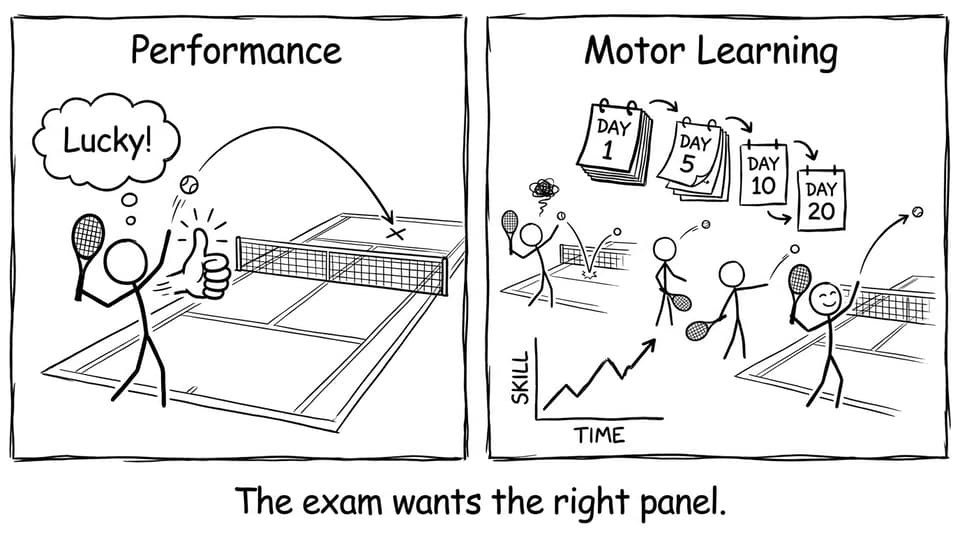
Motor learning vs performance (the mark-winning comparison)
A clean IB SEHS answer separates learning from performance.
-
Motor learning: long-term change in skill capability; shows up after time, rest, and varied conditions.
-
Performance: what you can do right now; fluctuates with fatigue, arousal, motivation, and feedback.
A single great attempt is evidence of performance. A consistent pattern across sessions is evidence of learning.
Why practice drives IB SEHS motor learning
Practice is the engine of IB SEHS motor learning because repetition gives the nervous system chances to refine coordination. Over time, the movement becomes more efficient: fewer errors, better timing, and more consistency.
But quality beats quantity. “Twenty rushed reps” can build sloppy habits, while “ten focused reps with a clear goal” often builds cleaner control. This is exactly why exam responses should discuss how practice is structured, not just that it happened.
To reinforce the topic with exam-style practice, use RevisionDojo’s SEHS Questionbank and the topic-specific C.2.1 Questionbank.
Feedback: the shortcut (and the trap)
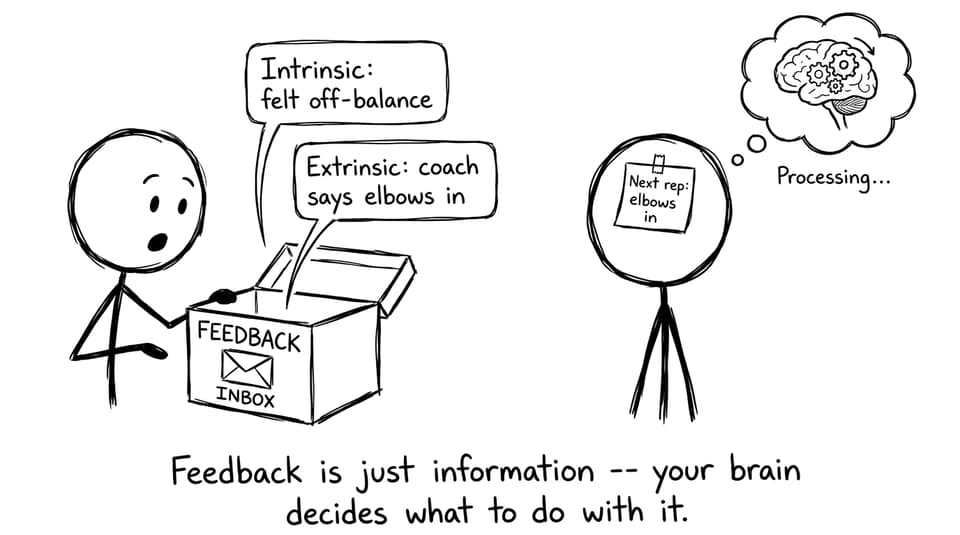
In IB SEHS, feedback matters because it helps performers detect errors and adjust. You’ll typically describe:
-
Intrinsic feedback: information from your senses (feel, balance, timing)
-
Extrinsic feedback: information from outside (coach, video, data)
Good feedback is specific and actionable. Too much feedback, too often, can create dependency, where performance improves temporarily but learning is weaker.
For deeper revision, pair this article with IB SEHS Feedback: Improve Skills Faster With Better Cues.
How to revise motor learning with RevisionDojo
Motor learning becomes easier when you study it the same way it works: repeat, correct, retain.
A simple IB SEHS loop on RevisionDojo:
-
Read the IB SEHS resources hub for aligned Study Notes
-
Convert definitions into Flashcards
-
Practice with the Questionbank and check explanations
-
Use AI Chat when a command term (explain/compare) trips you up
-
Build confidence with Mock Exams and Predicted Papers
-
For written responses and coursework, use Grading tools and the Coursework Library
If you want more SEHS exam strategy, browse all IB SEHS posts and improve your workflow with IB SEHS Note-Taking Tips That Actually Work.
Final takeaway
If you remember one thing for IB SEHS, make it this: motor learning is not a good day; it’s a lasting change. Define it precisely, compare it to performance, and anchor your explanations in practice and feedback. Then prove it under exam conditions using RevisionDojo’s Study Notes, Flashcards, Questionbank, AI Chat, Grading tools, Predicted Papers, Mock Exams, Coursework Library, and Tutors. That’s how the theory turns into marks, and how IB SEHS revision stops being vague and starts being measurable.