

Nature vs nurture in sport (and why your friend improves faster)
Two students join the same team. Same sessions, same coach, same drills. By week six, one looks transformed and the other feels stuck. In IB SEHS, that uncomfortable gap is the doorway into one of the most useful debates in sport: nature vs nurture in sport.
It’s tempting to pick a side. “They’re just naturally gifted.” Or, “They simply work harder.” But examiners reward a calmer, more realistic idea: performance is usually an interaction. IB SEHS wants you to explain the ingredients, then evaluate how they combine.
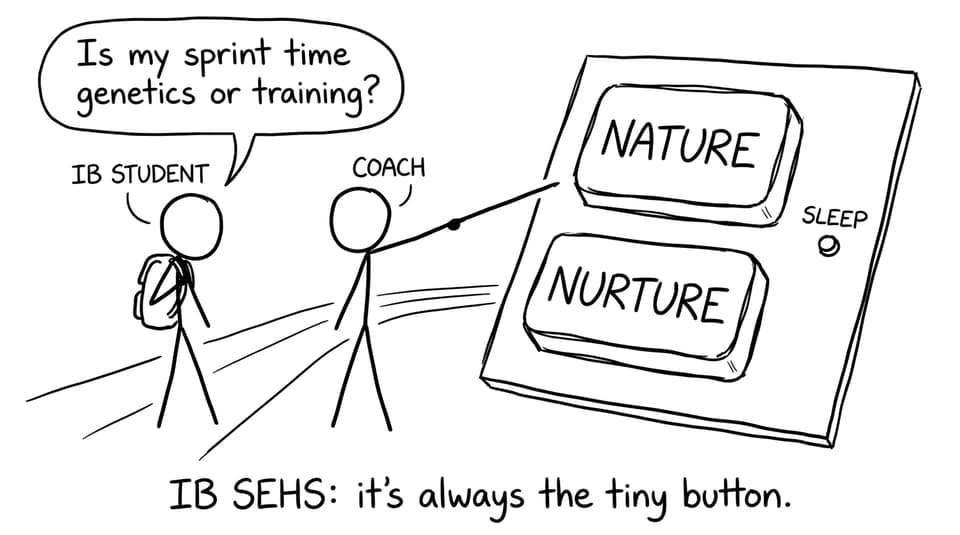
Quick exam checklist for IB SEHS answers
-
Define nature (genetic/biological influences) and nurture (environmental/experiential influences).
-
Use 2-3 applied sporting examples (not vague ones).
-
Explicitly state the interaction between nature and nurture in sport.
-
Add a limitation: measurement, access, motivation, or time.
-
Finish with a balanced judgement (no “it’s all genetics”).
If you need a structured home base for the course, start at the IB SEHS resource hub.
Nature in sport: what you’re born with
In IB SEHS, nature refers to inherited and biological factors that shape performance potential. Think of it as the starting conditions of the system.
Common nature influences you can mention:
-
Muscle fibre type distribution (e.g., a tendency toward power vs endurance)
-
Anthropometry (height, limb length, leverage)
-
Aerobic capacity potential (ceiling for adaptations)
-
Hormonal profile and maturation timing
Nature is not a guaranteed outcome. It’s a set of constraints and advantages. Your job in IB SEHS is to link a trait to a performance demand, not to label someone “talented.”
Nurture in sport: what shapes the athlete over time
Nurture is the environment: what happens to the athlete, what they practise, and what resources support them.
Strong nurture examples include:
-
Training quality and quantity (progression, overload, specificity)
-
Coaching feedback and motor learning environment
-
Nutrition and recovery habits
-
Access to facilities, medical support, and competition
This is where two athletes with similar potential can diverge fast. If you want extra practice writing applied responses, the free Questionbank feature is built for exam-style repetition with feedback.
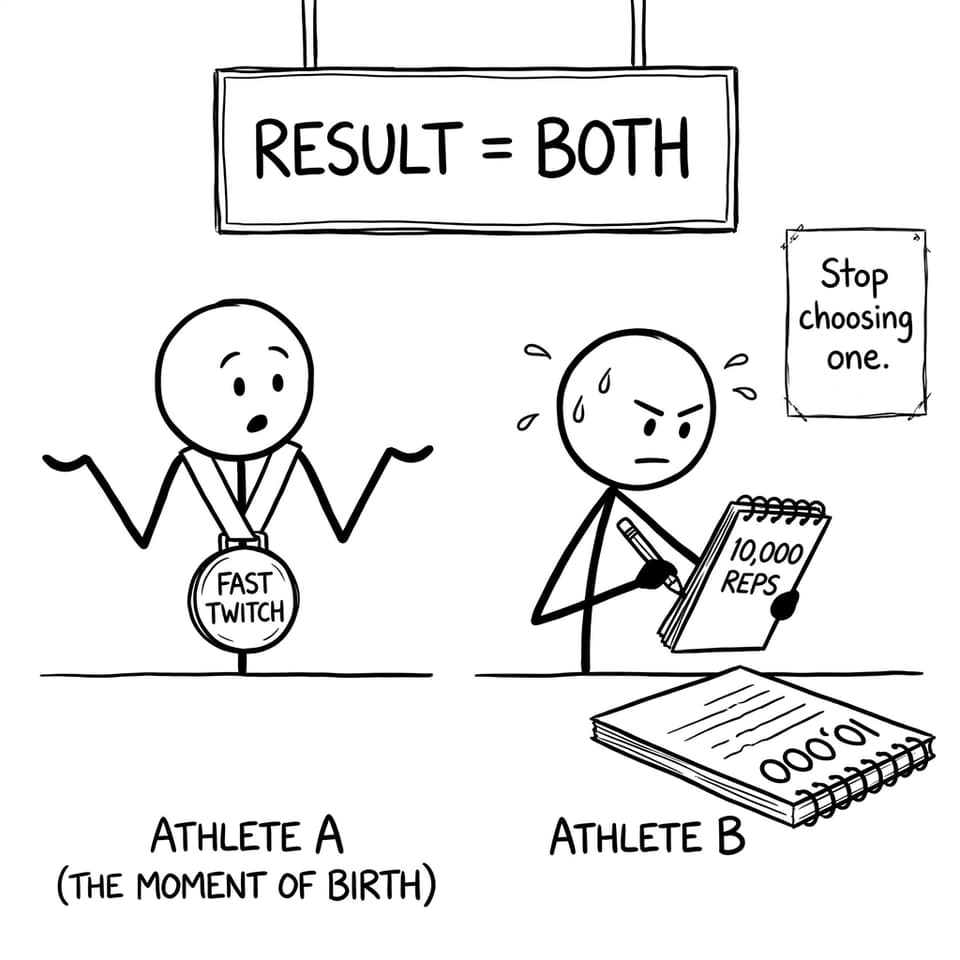
Nature vs nurture in sport: the interaction earns the marks
The highest-scoring IB SEHS responses treat nature vs nurture in sport like a feedback loop.
-
Favourable genetics can make early success more likely, which can increase motivation, which increases training adherence (nurture), which accelerates improvement.
-
Average genetics can still lead to high performance when training is optimised, recovery is consistent, and psychological skills are developed.
A clean way to phrase evaluation: “Genetics may set the range of potential, while environment influences the extent to which potential is expressed.”
To connect this to syllabus areas, the C.1 Individual differences topic page is a good anchor.
Sporting examples you can adapt in IB SEHS
-
Basketball: height and limb length (nature) matter, but decision-making, shooting mechanics, and deliberate practice (nurture) decide consistency.
-
Endurance events: aerobic capacity potential (nature) is relevant, but aerobic training, pacing skill, and recovery routines (nurture) often separate athletes.
-
Strength/power sports: fibre type tendencies and leverage (nature) interact with resistance training quality and technical coaching (nurture).
For supporting content, use C.1 notes and quick recall via C.1 flashcards.
Common IB SEHS mistakes to avoid
-
Writing as if nature and nurture in sport are separate “teams” that never interact.
-
Using vague examples like “some people are born fast” without linking to a performance demand.
-
Forgetting the command term. “Evaluate” needs a judgement with reasons and limits.
For exam technique, the IB SEHS note-taking guide helps you turn content into retrievable points.
Closing: the calm answer wins
Nature vs nurture in sport is rarely a courtroom verdict. It’s a systems question. In IB SEHS, the best answers show how biology sets conditions, environment shapes expression, and the interaction explains real performance gaps.
If you want to practise writing that balanced evaluation repeatedly (until it sounds like a markscheme), build your revision around RevisionDojo’s Study Notes, Flashcards, AI Chat, Questionbank, and Mock Exams, and make IB SEHS feel predictable again.