
Introduction
The hardest part of IB SEHS usually is not the content. It is the moment, three weeks before exams, when you open your notes and realise they are technically “complete” but practically unusable. Definitions are buried. Diagrams look beautiful but explain nothing. And your lab reflections are… somewhere.
Good notes do something quieter and more powerful: they reduce panic by making revision predictable. In IB SEHS, where anatomy, physiology, biomechanics, nutrition, and psychology collide, predictability is a competitive advantage.
Quick checklist for better IB SEHS notes
-
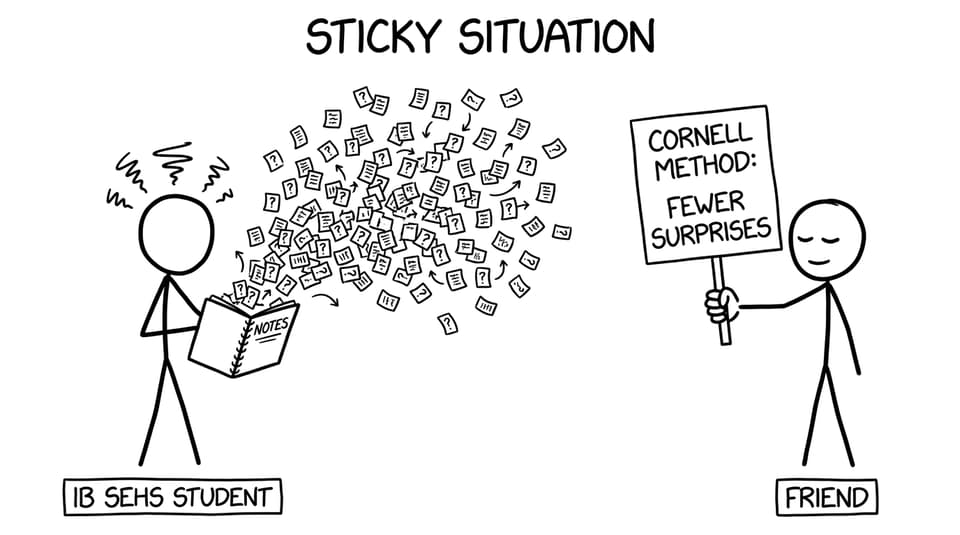
Pick one structure (Cornell or outline) and keep it consistent
-
Write key IB SEHS definitions in your own words, then verify them
-
Tag command terms (explain, evaluate, compare) next to content
-
Add one visual per subtopic (diagram, table, or mini-graph)
-
Link every topic to at least one lab, data set, or real athlete example
-
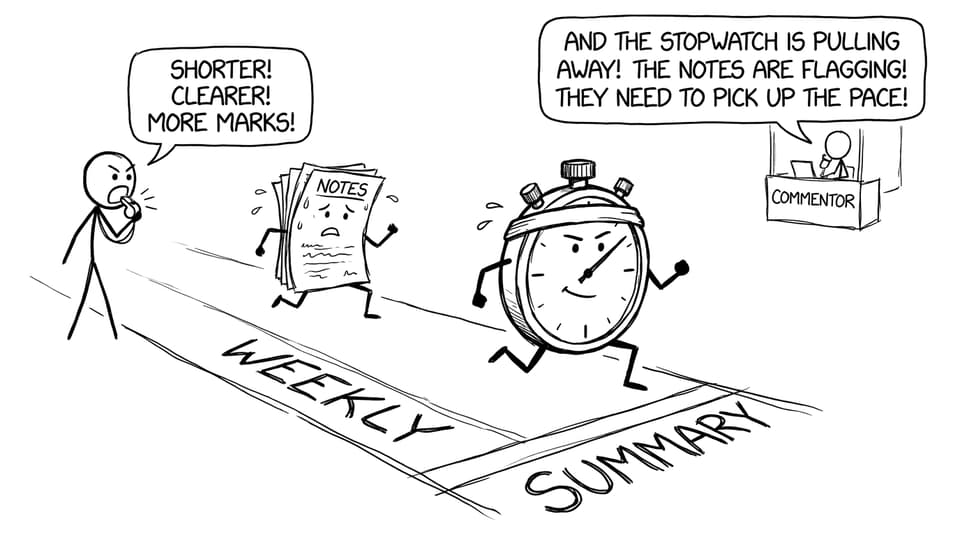
Do a weekly summary page that fits on one screen or one sheet
If you want a clean foundation while you build your own system, start with RevisionDojo’s IB SEHS subject hub and its syllabus-aligned resources.
Choose a note-taking system that matches how IB SEHS is examined
In IB SEHS, marks often go to students who can retrieve precise language quickly. That means your note format should make definitions and relationships easy to find.
Cornell notes for exam-friendly recall
Cornell works because it forces retrieval. Split the page into cues (left), notes (right), and a summary (bottom). In the cue column, write questions like “How does cardiac output change with intensity?” or “Evaluate anthropometry limits.”
Then, when you revise, cover the right side and test yourself. Pair this with RevisionDojo’s Study Notes feature to quickly confirm you are using accurate phrasing.
Outline notes for systems and processes
Outline notes shine for sequences: energy pathways, sliding filament steps, ventilation mechanics. Use indentation to show hierarchy (system → component → function → example).
Want to see how clean, structured content looks in real time? Use a topic page such as A.1.3 Transport as a model for organising concepts.
Treat IB SEHS vocabulary like a training plan
Vocabulary in IB SEHS is not decoration. It is how examiners decide if you understand the mechanism or are guessing around it.
Use a simple code:
-
One colour for definitions
-
One symbol for command terms (e.g., a small “E” for evaluate)
-
One margin box for common mistakes or confusions
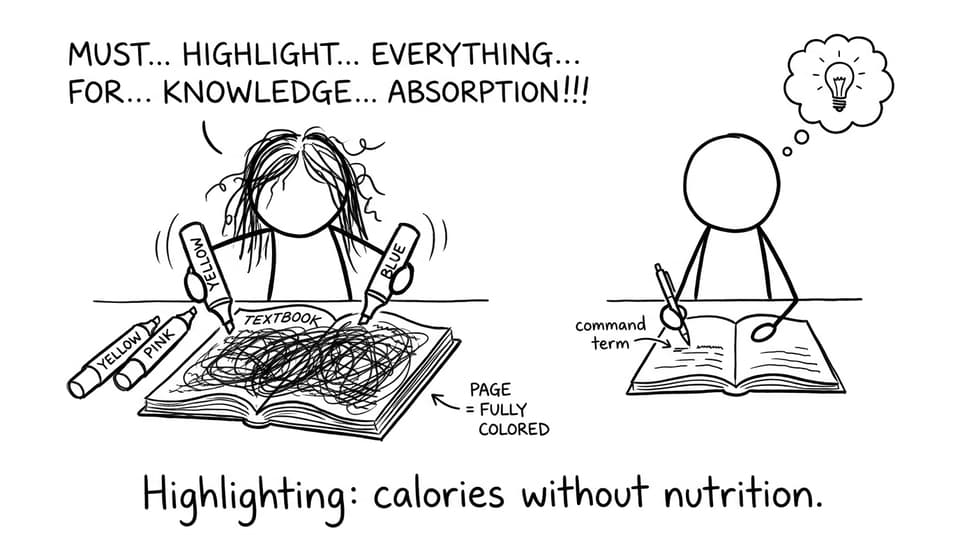
Avoid the trap of highlighting everything.
When you meet a dense topic (like sport psychology terms), open one precise note page (for example, Goal orientation theory notes) and build a mini glossary directly from it. Then convert that glossary into spaced repetition using RevisionDojo’s Flashcards.
Use visuals, but make them earn their space
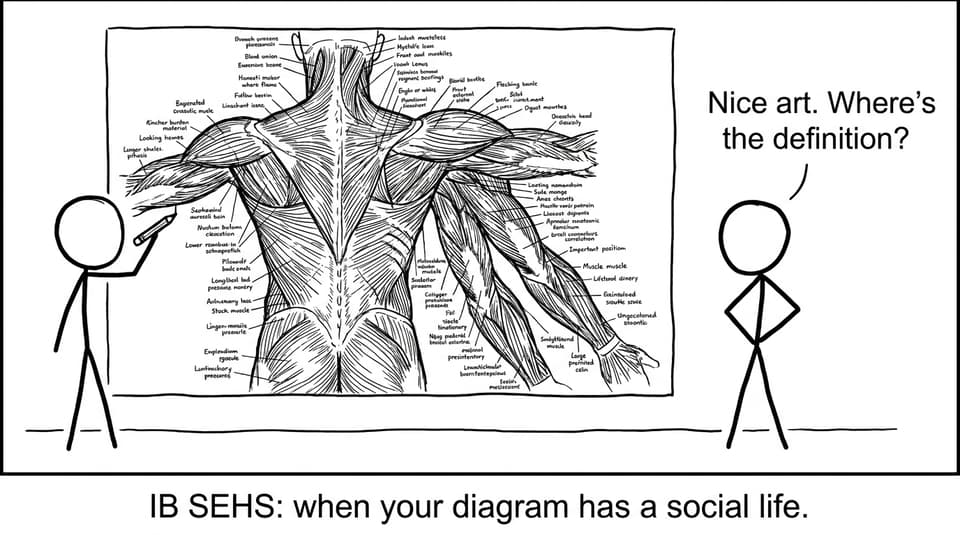
Visuals are essential in IB SEHS: muscle actions, lever systems, graphs relating intensity to performance. But visuals only help if they answer an exam question.
A quick rule: every diagram needs three labels and one sentence explaining why it matters.
Example:
-
Diagram: heart structure
-
Labels: left ventricle, aorta, pulmonary artery
-
Sentence: “Structure supports function: thicker left ventricle wall enables higher systemic pressure.”
If you need content inspiration, RevisionDojo topic notes like Sliding filament theory (HL) show how visuals connect back to mechanisms and marks.
Link notes to labs so revision feels real
A lab is not an “extra.” In IB SEHS, it is a memory anchor. After each practical, add a small “Lab link” box:
-
Aim
-
Method snapshot (3 bullet points)
-
Results (one table or graph)
-
One evaluation sentence (limitation + improvement)
This pays off twice: your understanding improves now, and you have ready-made examples for extended responses later.
To reinforce the theory around your practical work, use a syllabus section like A.2 Hydration and nutrition to cross-check what belongs in your notes.
The weekly summary: where IB SEHS becomes manageable
Once per week, write a one-page summary for each major area you touched. It should include:
-
5 key definitions
-
2 mechanisms (in arrow form)
-
1 graph or table
-
3 “exam-style prompts” you could answer
Then test yourself with targeted practice from RevisionDojo’s Questionbank so your notes turn into marks, not just pages.
Conclusion
Effective IB SEHS note-taking is not about making perfect pages. It is about building a small, reliable system you can repeat until exams: structured notes, precise vocabulary, visuals that earn their space, lab links that make ideas stick, and weekly summaries that keep everything retrievable.
When you are ready to make that system faster, RevisionDojo helps you turn notes into outcomes with Study Notes, Flashcards, AI Chat, the Questionbank, Grading tools, Predicted Papers, Mock Exams, the Coursework Library, and Tutors. Build your next IB SEHS notes with the exam in mind, and your future self will feel the difference.