
The quiet moment when marks disappear (and you don't notice)
In the MYP Personal Project, students rarely lose marks in one dramatic mistake. It's usually quieter than that.
It happens when your goal sounds inspiring but can't be measured. When your "research" is mostly scrolling. When your product looks impressive, but your report can't prove how you got there. And when reflection becomes a final-night paragraph instead of the thread that holds the whole project together.
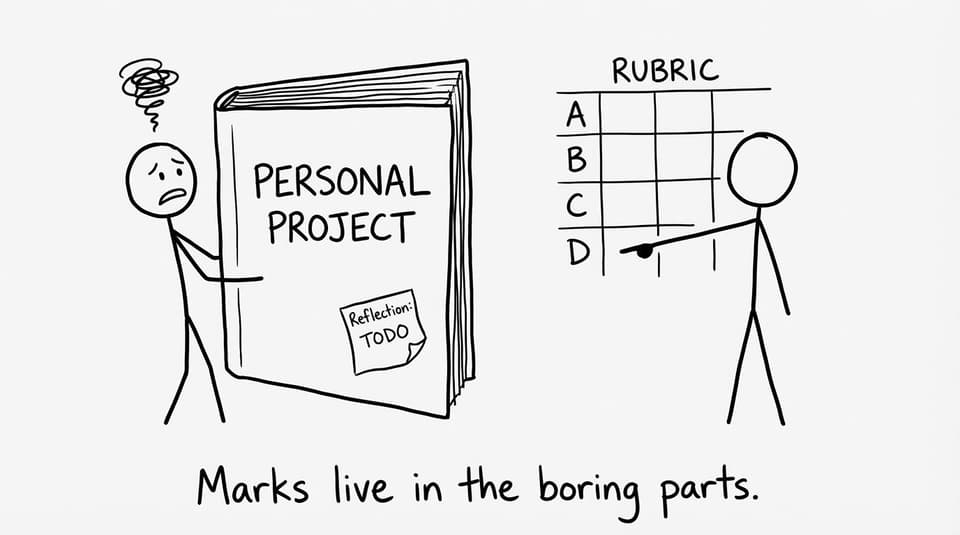
That's the twist of the MYP Personal Project: the marks often live in the parts that feel least exciting. The planning. The evidence. The honest self-assessment.
This guide breaks down the most common reasons students lose marks in the Personal Project, and exactly what to do instead. Along the way, we'll show you how RevisionDojo can help you practise the skills that matter most in MYP assessments: clarity, criteria-awareness, and proof.
Quick checklist: stop the mark leaks early
Use this MYP Personal Project checklist as a fast self-audit:
- Your goal is specific and measurable (someone else could judge success).
- Your Global Context link is explained, not just named.
- Your research includes credible sources and shows what changed because of it.
- Your plan is a timeline with milestones, not a list of intentions.
- Your process journal contains evidence (dates, decisions, drafts, photos, feedback).
- Your product is clearly connected to your goal and success criteria.
- Your reflection evaluates impact, learning, and next steps (with examples).
If two or more of these feel shaky, that's where marks usually go missing in the MYP.
Why MYP Personal Project marking rewards "proof" more than "potential"
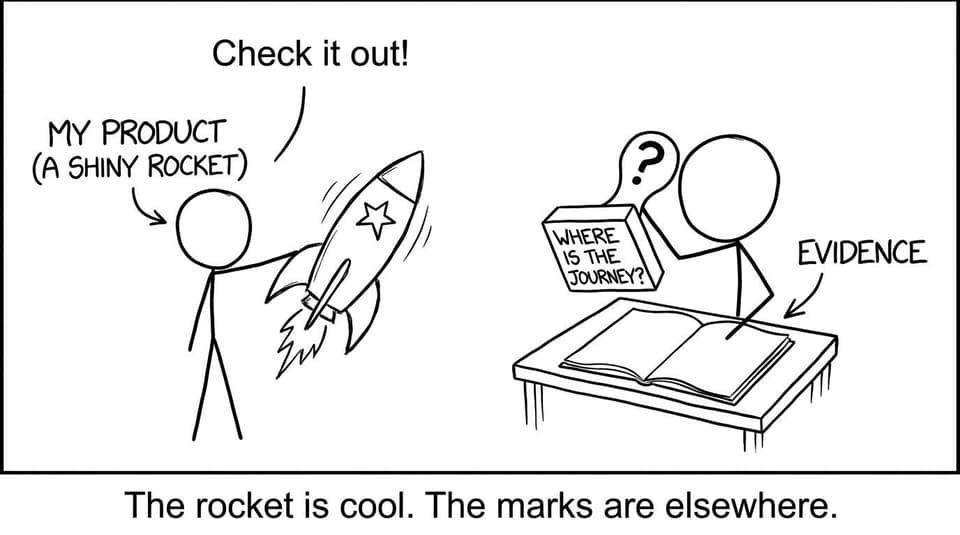
A lot of students treat the Personal Project like a talent show: "Look what I made." But the MYP treats it like a learning story: "Show how you learned."
The report is where you demonstrate Investigating, Planning, Taking Action, and Reflecting. That's why it helps to read strong models early, not at the end. RevisionDojo's Personal Project resources make this easier because you can compare expectations across the rubric and see what high-quality work looks like.
Helpful starting points:
- MYP Personal Project: Report Writing Breakdown
- Writing an Outstanding MYP Personal Project Report
- IB Personal Project (MYP) Exemplars
Common reason students lose marks: the goal is vague or unmeasurable
In MYP language, "I want to learn about photography" is not a goal. It's a direction.
A strong goal has a finish line and a way to judge success. If you can't write clear success criteria, you're likely losing marks in the Investigating strand because the project becomes impossible to evaluate.
What it looks like in real projects
- Vague: "Create an app to help students."
- Clear: "Create a prototype vocabulary app with 30 words, 3 quiz modes, and test it with 10 students to measure usability."
The second version still leaves room for creativity, but it gives the MYP assessor something solid to assess.
Fix it fast
Write your goal in one sentence with:
- a product/outcome
- a target audience (if relevant)
- a measurable feature (quantity, performance, testing, constraints)
If you're stuck, ask Jojo for three measurable goal versions, then choose the one you can actually finish. Start here:
Common reason students lose marks: the Global Context is "named" but not "used"
A surprisingly common MYP mark-loser: students pick a Global Context early, paste its title into the introduction, and never truly return to it.
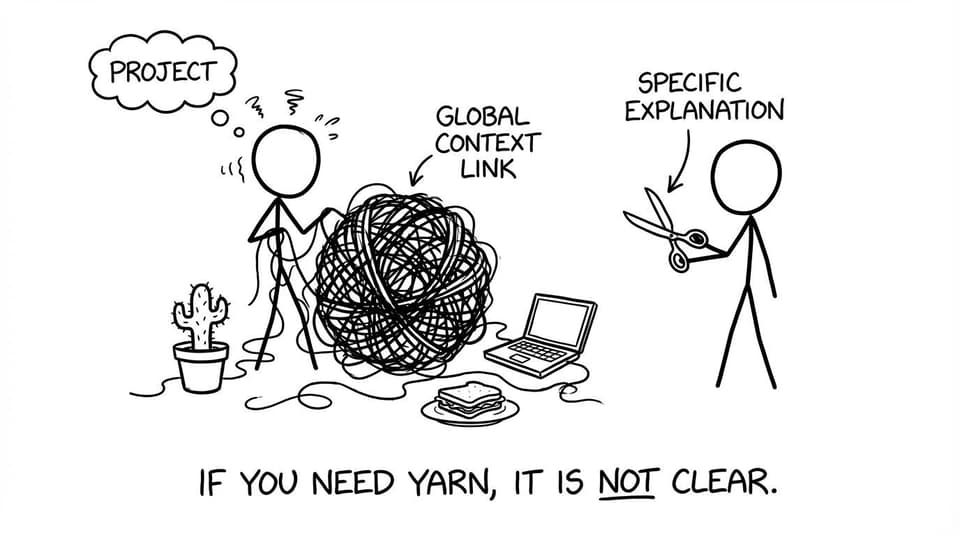
The assessor isn't looking for the correct label. They're looking for a convincing explanation of how your project fits that lens.
The difference between a label and a link
- Label: "My Global Context is Globalization and Sustainability."
- Link: "Because my product aims to reduce single-use plastics at my school, the project explores sustainability through local consumption habits and feasible alternatives."
That second sentence does the work. It makes the Global Context feel inevitable.
Fix it fast
Use the "Because, therefore, so that" structure:
- Because (what problem or theme matters?)
- Therefore (what does your project explore?)
- So that (what change, insight, or outcome results?)
To tighten your topic early, this helps:
Common reason students lose marks: research exists, but it doesn't change decisions
In the MYP, research is not a bibliography. Research is decision-making fuel.
Students often include sources, but they don't show how those sources shaped the project. That's when marks slip: your report reads like two separate stories (research story + making story) instead of one connected journey.
What strong research evidence looks like
- "Source X showed that beginners struggle with feature Y, so I redesigned my prototype to simplify it."
- "After comparing three methods, I chose method B due to cost and time constraints, even though method A would be higher quality."
Notice the pattern: evidence leads to a choice.
Fix it fast
For every key source, write one sentence:
- "Because I learned , I changed ."
If you can't complete that sentence for most sources, you're not using research in a way the MYP can reward.
Common reason students lose marks: planning is a list, not a plan
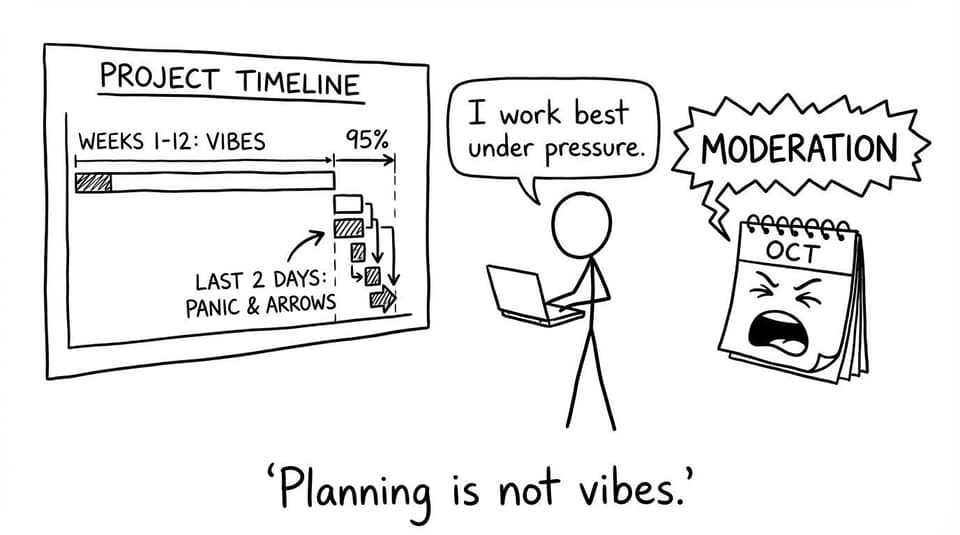
A plan isn't "Week 1 research, Week 2 create." That's a wish.
The MYP expects planning to show sequence, time awareness, and adjustments when reality hits. Marks are lost when planning doesn't include milestones, resources, or a method for tracking progress.
Fix it fast
Build a plan with three layers:
- Milestones (big checkpoints)
- Tasks (what you do to reach them)
- Evidence (what proves you did it)
And if you want the MYP to see you as reflective, don't hide plan changes. Document them and explain why they were smart.
Common reason students lose marks: the process journal is empty of evidence
This is the most painful mark-loser because it's avoidable.
Students do the work, but they don't capture it. Then, when writing the report, they can't prove the learning journey. In MYP terms, that usually weakens Taking Action and Reflecting.
What counts as evidence (and what doesn't)
Good evidence:
- dated photos of prototypes or drafts
- screenshots of versions and feedback
- meeting notes with supervisor
- testing results
- brief reflections after setbacks
Weak evidence:
- "I worked hard."
- "I improved."
- "It was challenging."
The MYP doesn't grade effort you claim. It grades effort you demonstrate.
Fix it fast
Adopt the "two-minute capture" habit:
At the end of each session, save one artifact and write three lines:
- What I did
- What problem appeared
- What I will do next
Those small entries become your strongest paragraphs later.
Common reason students lose marks: the product is impressive, but success criteria are unclear
Some students build something genuinely cool. A film. A prototype. A campaign.
Then they lose marks because they never clearly evaluate it against their own success criteria. In the MYP, the evaluation is not optional. It's the bridge between "I made something" and "I achieved something."
Fix it fast
Create a small table in your report:
- Success criterion
- Evidence (data, screenshots, feedback)
- Judgment (met/partly/met not)
- Next improvement
If you want a second opinion on whether your evidence matches the rubric, RevisionDojo's grader can help you see where marks are likely being won or lost:
Common reason students lose marks: reflection is too general (or too late)
Reflection in the MYP is not "I learned time management."
Reflection is: what happened, what you learned, what you would change, and what that reveals about you as a learner. The best reflection reads like someone thinking carefully, not someone summarizing politely.
Fix it fast
Use reflection prompts that force specifics:
- "A moment I changed my mind was , because ."
- "The biggest constraint was . I responded by ."
- "If I repeated the project, I would keep and change ."
For deeper reflection habits across MYP assessment, this article helps:
How to use RevisionDojo to protect marks (without adding stress)
The Personal Project can feel separate from "exam prep," but it's still MYP criteria-based assessment. The same skills you use to score higher in on-screen exams help here too: understanding command terms, writing with evidence, and matching the rubric.
Here's a simple workflow many students use:
- Use Study Notes to clarify terminology like Global Contexts, ATL skills, and criteria language.
- Use Flashcards for quick recall of rubric phrasing and reflection prompts.
- Use Jojo AI to generate measurable success criteria and stronger reflection sentences.
- Use the Questionbank to practise command terms like evaluate, justify, and explain (these transfer directly into report writing).
- If you're stuck, get accountability and feedback from Tutors (scroll to Tutors), especially for goal clarity and reflection depth.
And for broader MYP exam readiness, keep this nearby:
Closing: treat MYP marks like a trail, not a trophy
The MYP Personal Project rewards students who leave a clear trail. Not because the IB loves paperwork, but because learning is invisible unless you capture it.
If you're preparing for exams and juggling deadlines, the best strategy is simple: make your work easy to assess. Define a measurable goal. Use research to justify decisions. Document evidence as you go. Reflect with specifics. Do that, and the marks stop leaking.
When you're ready to tighten your report, practise criteria-based thinking, and get faster feedback, RevisionDojo is built for this exact kind of MYP success: Questionbank, Study Notes, Flashcards, Jojo AI Chat, Grading tools, Predicted Papers, Mock Exams, a Coursework Library, and Tutors, all in one place.