

IB students preparing for exams: the moment it gets real
The first time you feel it is usually ordinary.
You open a past paper "just to see what it looks like," and suddenly your brain starts doing mental accounting: How many topics are there? How many days are left? Why does every question feel like it was written by someone who dislikes joy?
That's the hinge moment for IB students preparing for exams. Not because you lack ability, but because the IB is a system that rewards a specific kind of preparation: calm, repeated, exam-style practice with feedback.
And here's the good news: the students who look "naturally good at exams" often aren't. They're just better at building a loop: practice, feedback, fix, repeat.
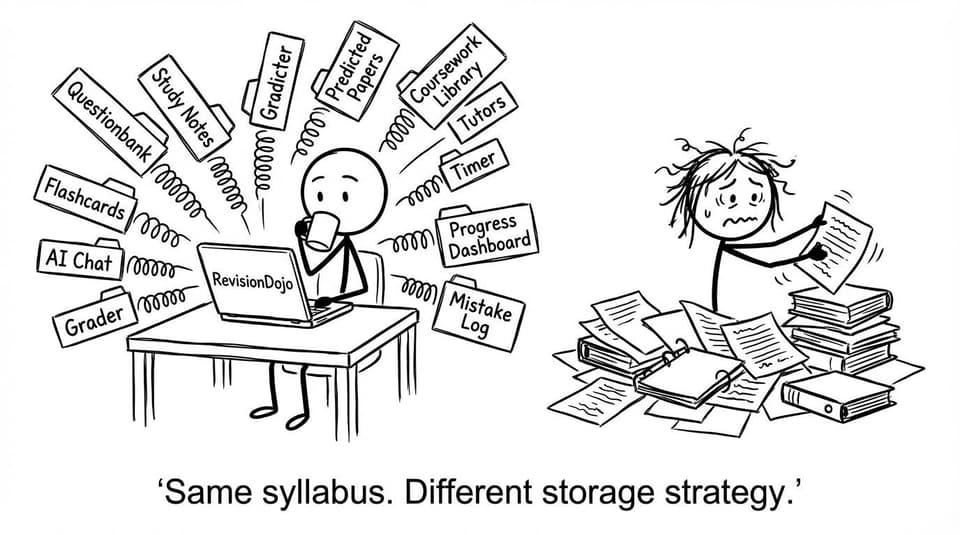
RevisionDojo exists for exactly that loop: Questionbank, Study Notes, Flashcards, Jojo AI Chat, grading tools, Predicted Papers, Mock Exams, a Coursework Library, and Tutors when you need a human to steady the ship.
A quick checklist for IB students preparing for exams
If you only do one thing today, do this. This checklist is built for IB students preparing for exams who want traction fast.
- Choose your next 14 days (not "the whole syllabus").
- Split tasks into: learn (notes), recall (flashcards), perform (past-paper questions).
- Do timed practice early (don't save it for the last week).
- Track mistakes by category: concept gap, method gap, command term gap, time-pressure gap.
- Use feedback within 24 hours so errors don't fossilize.
- Rotate subjects to avoid burnout and improve transfer.
For targeted practice, build sets from the Questionbank and pair them with Flashcards so you're revising what you're actually forgetting.
Why "more hours" fails (and what works instead)
A quiet trap for IB students preparing for exams is assuming effort scales linearly.
It doesn't.
Two hours of frantic rereading often produces less exam-day performance than 30 minutes of retrieval practice with immediate review. The IB doesn't just test what you know. It tests whether you can produce it under constraints.
That's why strong IB revision has three gears:
Learn gear: build clean understanding
Use concise explanations. Make it easy to see what matters.
RevisionDojo's Study Notes are designed for that "clean understanding" phase, especially when class notes have become a patchwork of half-finished diagrams and uncertain definitions.
If you want a broader strategy lens, What's the Best Way to Revise for IB Exams? is a solid starting point.
Recall gear: force your brain to fetch
This is where most students undertrain.
Spaced repetition, active recall, and short daily sessions beat occasional marathons. It's not glamorous. It's effective.
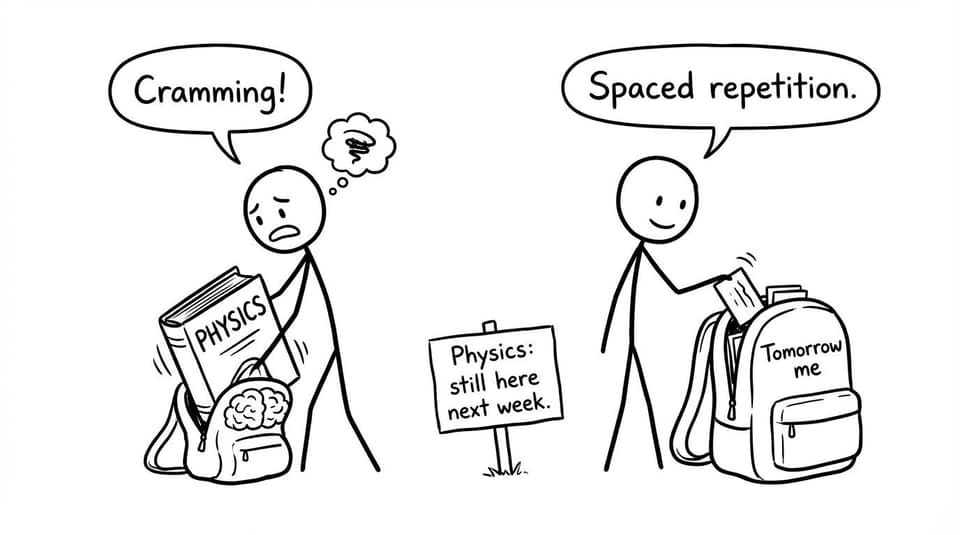
Use flashcards like you brush your teeth: small, consistent, non-negotiable.
Perform gear: simulate the exam
Performance is its own skill.
That means timed sets, mixed-topic questions, and learning the feel of IB mark schemes. If you're relying on "I understand it," you're missing the point. The exam asks: "Can you show it?"
Try the past-paper approach outlined in IB Science Revision: How to Use Past Papers Effectively, even if you're not in sciences: the logic transfers.
Build the loop: practice, feedback, fix, repeat
Here's a simple story you may recognize.
Two students, same predicted grade, same subject combo.
- Student A does a lot of revision. Mostly reading, highlighting, and rewriting notes.
- Student B does fewer total hours, but every session ends with questions, marking, and one written fix.
A month later, Student B is calmer.
Not because they "care less." Because they have evidence: they've trained with friction. They've rehearsed under time.
For IB students preparing for exams, this loop is the entire game.
Use custom practice tests to attack weak areas
Generic revision is comforting. Targeted revision is transformative.
Use How to Build Perfect IB Practice Tests for Your Weak Areas to create short, specific sets that zoom in on what's actually costing marks.
Then, log what went wrong in plain language:
- "Misread command term: evaluated but only described."
- "Didn't justify step, lost method marks."
- "Knew concept, panicked under time."
That clarity is how IB students preparing for exams stop repeating the same mistakes.
Use Jojo AI Chat to close gaps fast
When you get stuck, you need help in the moment.
Jojo AI Chat is that "instant tutor" layer: explain a concept, test your understanding, and translate mark scheme language into something you can actually apply.
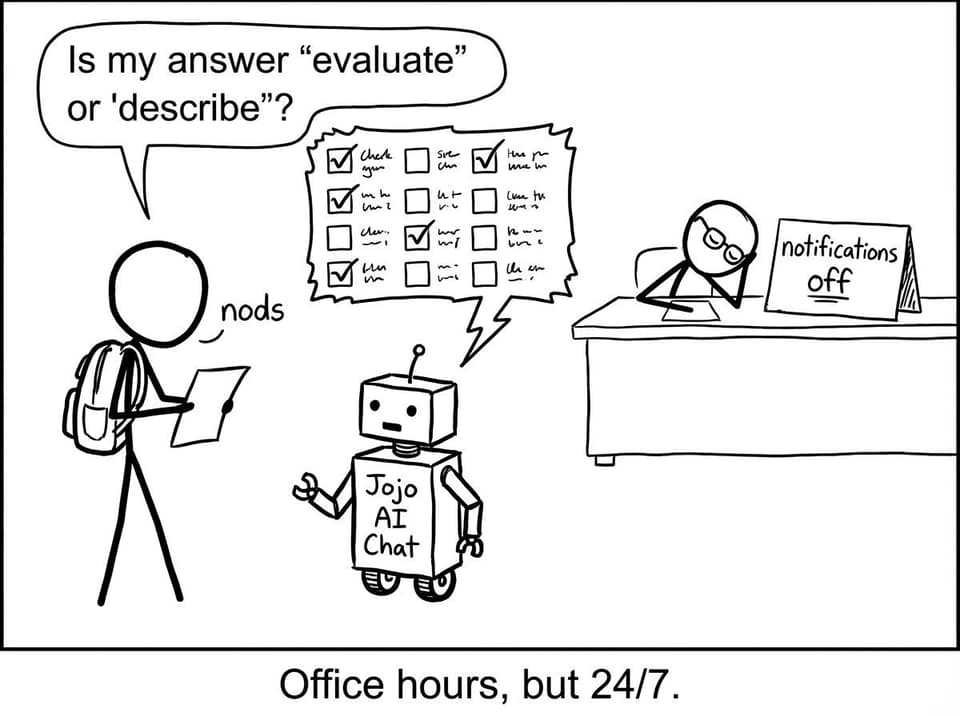
Pair that with the workflow from Jojo AI Question Bank: Unlimited Practice Questions so your confusion turns into a focused drill, not a spiral.
Use grading tools for EE/IA/TOK so coursework doesn't leak into exam stress
A hidden burden for IB students preparing for exams is that coursework anxiety quietly drains revision energy.
RevisionDojo's grading tools help you get rubric-aligned feedback on EE/IA/TOK drafts faster, so the "I don't know if this is good" feeling doesn't follow you into your exam weeks.
And when you need examples to benchmark quality, the Coursework Library gives you real models instead of vague reassurance.
Mock exams and predicted papers: confidence with receipts
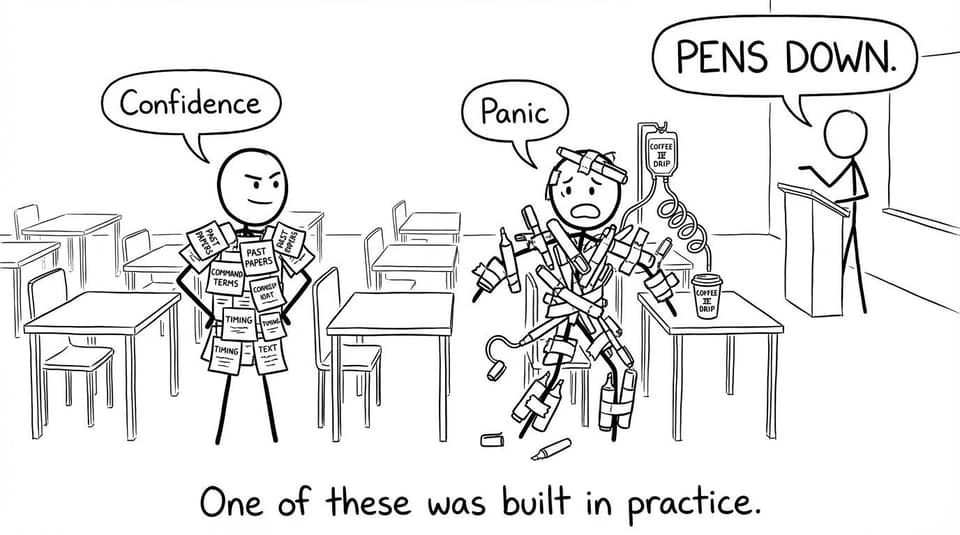
Mocks are where preparation becomes honest.
Not "I studied."
But: "I can do Paper 2 under time, and I know exactly what to fix next."
For IB students preparing for exams, mocks create that honesty.
A simple mock schedule that doesn't destroy your life
Start earlier than feels necessary, but smaller than feels dramatic.
- 8-10 weeks out: one mini-mock per subject per week.
- 6 weeks out: one full paper per subject every 1-2 weeks.
- Final month: one full mock per week for your toughest HLs, plus targeted drills.
Use IB Mock Exam Schedule: How Often Should You Practice? to calibrate volume realistically.
Predicted papers for strategic coverage
Predicted Papers are not magic. They're leverage.
When written well, they help IB students preparing for exams rehearse current-style questions and likely emphasis areas.
Start here: IB Predicted Papers by IB Examiners (Free).
Make mocks worth it with analysis
The score is not the point. The pattern is.
After each mock, ask:
- Where did I lose marks consistently?
- Was it knowledge, method, or command term interpretation?
- Did time pressure change my thinking quality?
For a deeper system, use Ultimate Guide to IB Mock Exams.
A realistic weekly structure (that you can actually follow)
Most plans fail because they assume you'll become a different person.
Instead, build a week that fits a normal student life. For IB students preparing for exams, consistency beats intensity.
A simple weekly template
- Mon-Thu: 2 focused sessions per day (45-60 minutes each)
- Session 1: Questionbank (timed) + review
- Session 2: Flashcards + Notes for weak spots
- Fri: lighter review + one "maintenance" set for a strong subject
- Sat: one full paper or mock section + deep review
- Sun: reset day: fix notes, update mistake log, plan next week
If you want a ready-made routine, adapt ideas from The Ultimate Daily IB Study Schedule.
Closing: a calmer way to finish strong
The IB is not a contest of who can suffer the most.
It's a contest of who can practice the right way, consistently, long enough for the exam to feel familiar.
If you're one of the many IB students preparing for exams who feel the pressure rising, don't aim for a perfect plan. Aim for a repeatable loop: targeted questions, fast feedback, honest reflection, and steady improvement.
Open RevisionDojo and build that loop with the tools that match the real IB experience: Questionbank, Study Notes, Flashcards, Jojo AI Chat, grading tools, Predicted Papers, Mock Exams, the Coursework Library, and Tutors when you want a human edge.
Start small today. But start.