


If you have ever looked at your MYP timetable and thought, “How can we possibly fit everything in?” you are not alone. The MYP is built to feel broad on purpose. It is training you to think across disciplines, not hide inside your favorite subject. But breadth only works if schools protect learning time for every subject group. That is why the IB sets minimum curriculum time requirements for the MYP, and why they matter even to students preparing for exams.
The surprising part is that meeting MYP minimum hours is not about squeezing in more lessons. It is about designing a schedule that stays balanced, stays documented, and still leaves room for deep learning.
Quick checklist for meeting MYP minimum curriculum time
Use this as a simple “sanity scan” of your MYP plan (and yes, it helps for exam prep too):
-
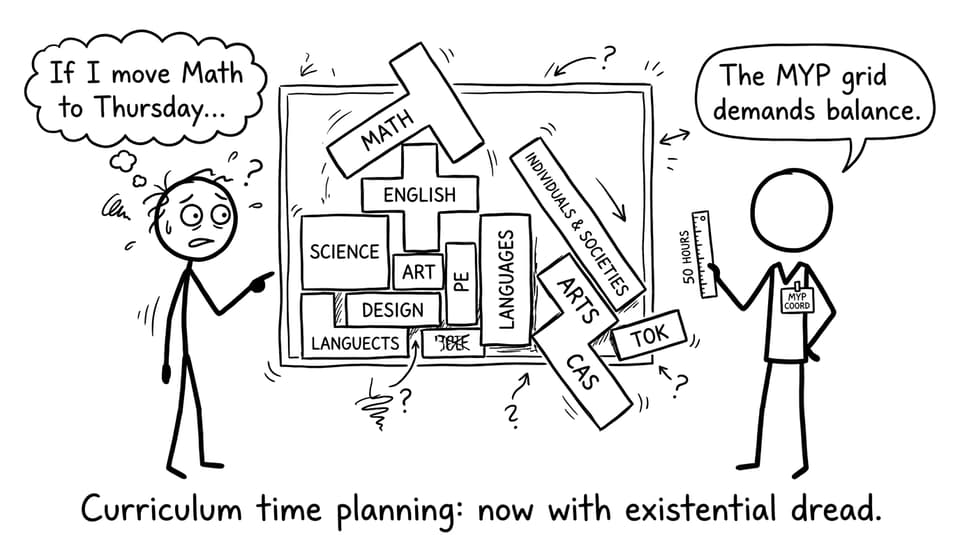
Confirm each MYP subject group gets at least 50 hours per year
-
Check the balance across all eight MYP subject groups
-
If your school uses interdisciplinary units, make sure time is clearly credited and recorded
-
Make Service as Action realistic by embedding it into existing learning time
-
Review the schedule yearly and adjust before gaps become habits
If you are a student and want the bigger picture of how the MYP works (and how it connects to assessments), keep the Middle Years Programme (MYP) Hub open as your reference point.
What are the MYP minimum time requirements?
The MYP expectation is straightforward: students should receive at least 50 teaching hours per subject group per year. This applies across the eight MYP subject groups:
-
Language and Literature
-
Language Acquisition
-
Individuals and Societies
-
Sciences
-
Mathematics
-
Arts
-
Design
-
Physical and Health Education
Why does the MYP insist on this? Because the program is trying to build a well-rounded learner. A schedule that quietly starves one subject group will eventually show up as gaps in skills: writing stamina, data analysis, research habits, or even the ability to explain your thinking clearly under time pressure.
If you want student-friendly guidance on preparing for assessment season, the MYP Revision Guide: Study Tips for Success pairs well with understanding these MYP requirements.
Why MYP time requirements matter for exam students
It is easy to hear “minimum curriculum hours” and assume it is just for coordinators. But in the MYP, time distribution shapes what you can do confidently in exam-style tasks.
When MYP time is balanced:
-
You practice different command terms across subjects (explain, evaluate, justify)
-
You build ATL skills repeatedly instead of “learning them once”
-
You experience more unfamiliar contexts, which is what MYP assessments reward
This is also where RevisionDojo becomes practical. If one subject has had less time in your schedule, you can compensate intelligently: rebuild foundations with Study Notes, then convert weak points into retrieval practice using platform Flashcards, then test yourself with targeted Questionbank sets.
For example, if your MYP Mathematics contact time felt thin, use a structured resource hub like MYP Standard Mathematics Resources to organize what to fix first.
Scheduling models that help schools meet MYP minimum hours
Schools meet MYP minimum curriculum time in different ways. The best model is the one that creates clarity, protects time, and avoids “fake coverage” where you rush through topics.
Rotational timetables
Rotations spread subjects across a cycle so each MYP subject group receives equitable time over weeks. This can work well when school calendars are disrupted by events, because the rotation protects long-term totals.
Block scheduling
Longer periods fewer times per week can support MYP inquiry properly. A real investigation, a lab write-up, or a design cycle often needs uninterrupted time. Blocks can reduce the feeling of always starting and never finishing.
Integrated learning periods
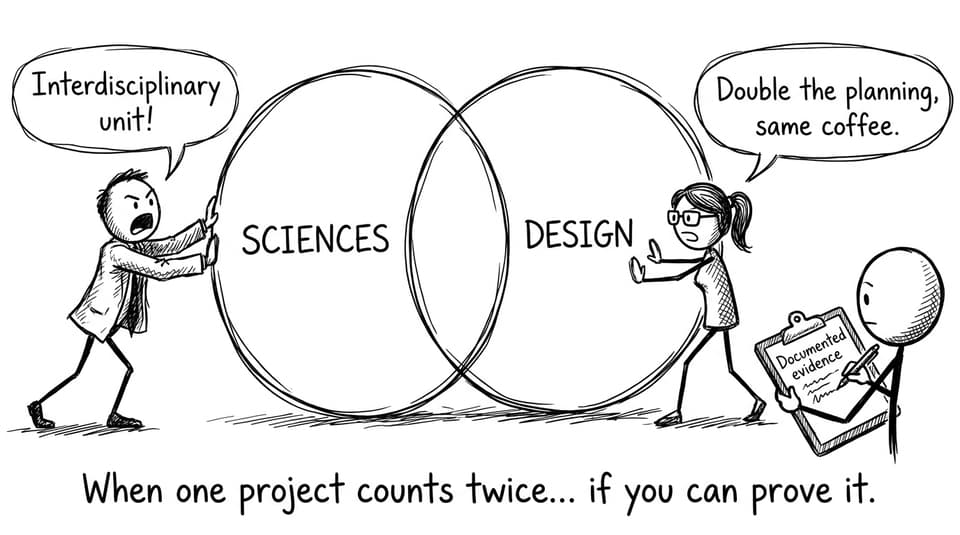
Some schools combine disciplines for shared projects. It can be powerful, but it only counts toward MYP time requirements when learning goals and assessment evidence for each subject group are explicit and documented.
A student-friendly way to think about this: if your school says something “counts for both,” ask yourself whether you could point to criteria-based evidence in both areas. If not, it may be a great project that still does not solve the MYP hours problem.
The documentation piece students rarely see (but still benefit from)
The IB cares about evidence. Schools need to show that their MYP timetable and unit plans actually deliver the minimum hours, not just in theory.
As a student, documentation matters to you because it creates consistency. When a school tracks time carefully, teachers plan with realistic pacing, assessments align better, and you are less likely to experience chaotic “we ran out of time” teaching in the final months.
If you want to turn that stability into marks, build your own evidence loop using RevisionDojo: practice with the Questionbank, get fast feedback from AI Chat, and run timed sessions with Mock Exams and Predicted Papers when available.
Using Service as Action and ATL without overloading the timetable
MYP requirements are not asking schools to bolt on endless extras. The healthiest schedules weave skills into existing subject time.
-
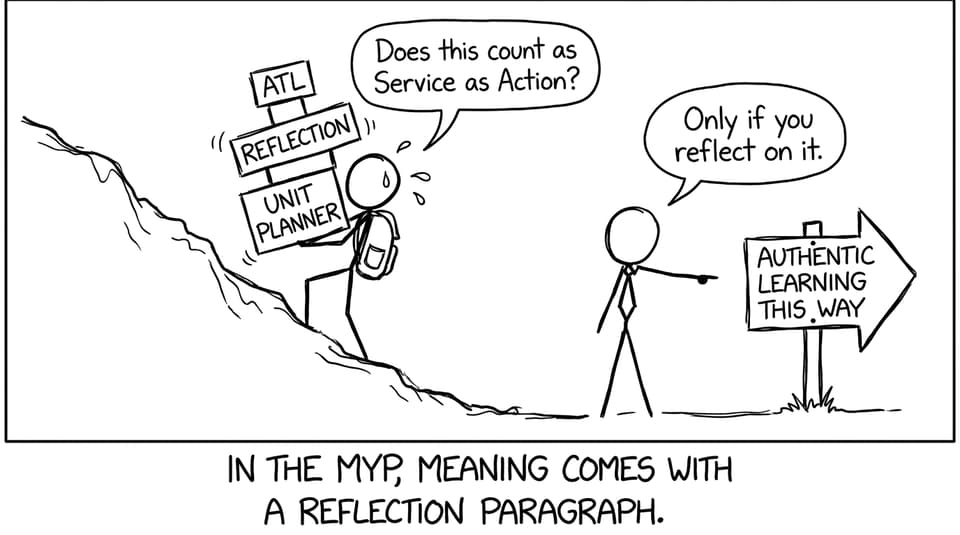
Service as Action works best when it connects to what you are already learning
-
ATL skills stick when they are trained repeatedly in different subjects
-
Reflection matters because it forces you to name what changed in your thinking
This is why the MYP sometimes feels “philosophical.” It is not trying to make you poetic. It is trying to make you conscious of how you learn, so you can repeat success under exam pressure.
Conclusion: meeting MYP hours is really about protecting your future self
MYP minimum curriculum time requirements sound like a technical rule, but they are really a promise: you will not be shortchanged in any one area of your education. When schools meet MYP minimum hours thoughtfully, you get balance without chaos, depth without panic, and learning that actually compounds.
If you are preparing for MYP assessments, use that same philosophy in your revision. Keep your study time balanced, document your weak spots, and practice under realistic conditions. RevisionDojo pulls that whole loop together: Questionbank for targeted practice, Study Notes for fast clarity, Flashcards for recall, AI Chat and Grading tools for feedback, Mock Exams and Predicted Papers for timing, a Coursework Library for models, and Tutors when you need a steady guide.
Start at the Middle Years Programme (MYP) Hub, then build a schedule that meets the MYP standard and makes exam season feel less like a surprise.