
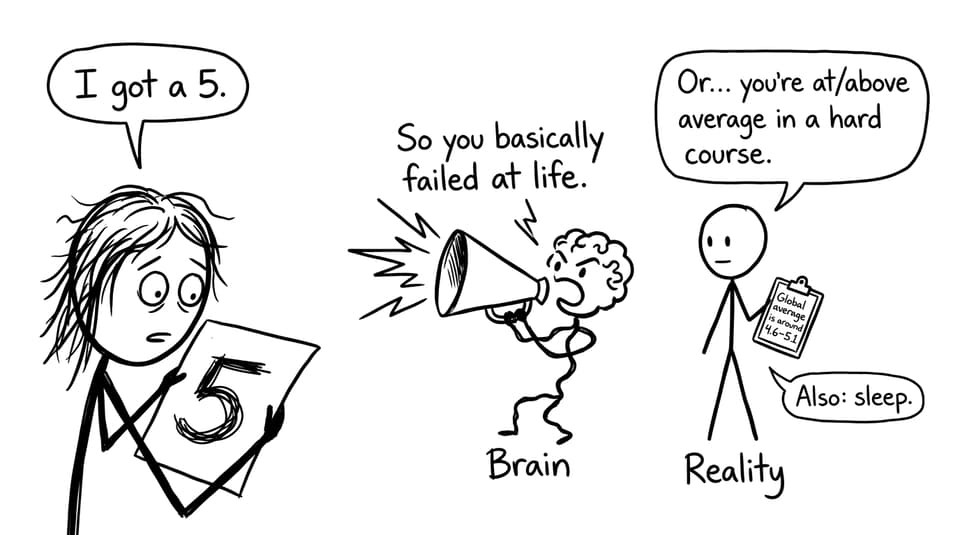
A 5 can feel like an awkward number in the IB world. It’s not the shiny 7 people screenshot. It’s not the “barely survived” 4 you joke about later. It’s the grade that makes students quietly ask, “Is this actually good… or am I falling behind?”
Here’s the honest answer: yes, a 5 in IB is a good score. Not perfect, not a guaranteed ticket to every competitive program, but solid, respected, and often strategically strong depending on where you’re applying and what the subject is.
What a 5 means on the IB scale
The IB scale runs 1 to 7 per subject. It’s criterion-referenced, which means you’re graded against standards, not against other students in your class. A 5 generally signals you’re consistently meeting the criteria well, including on unfamiliar questions.
In plain terms, a 5 means you understand the course and can perform under exam conditions. That matters because IB is designed to test application and judgment, not just memorization.
If you want to sanity-check your current performance, use the IB Grade Calculator and compare it with the IB Grade Boundaries. In IB, boundaries shift by session and subject, so “good” always has context.
Is a 5 in IB above average?
Often, yes. Global averages vary by year and subject, but they typically sit around the high-4s to low-5s. That means a 5 is usually at or slightly above the world average.
This is why a 5 in IB deserves more respect than students give it. Your brain compares you to the loudest success stories. Universities compare you to the difficulty of the curriculum and how reliably you can handle it.
For a bigger picture view, read What Is a Good Score in the IB Diploma?. It’s calming in the way a weather forecast is calming: not magical, but clarifying.
How colleges see an IB 5 (US, UK, and beyond)
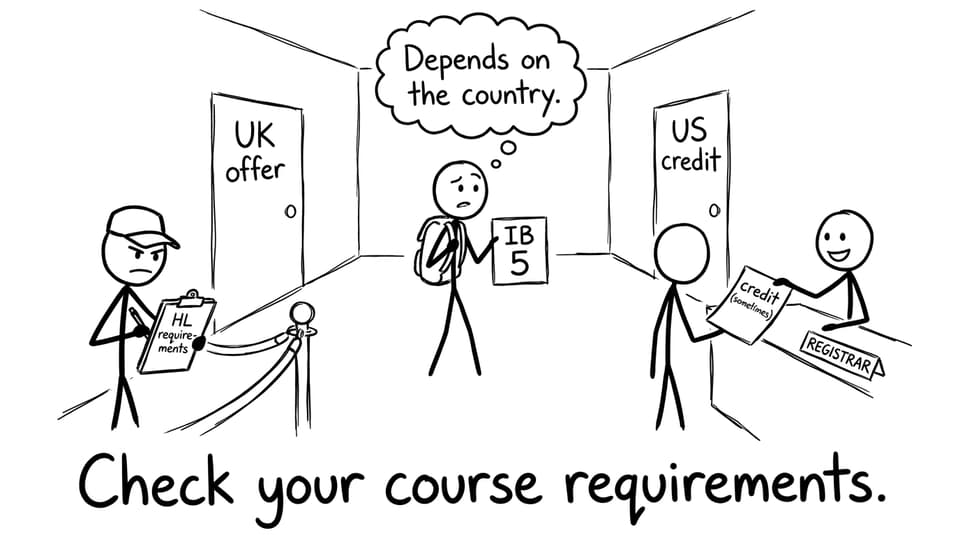
Admissions teams generally understand IB grading. But how they interpret a 5 depends on the country and the specific course.
United States
A 5 in IB is commonly viewed as strong academic performance, especially at HL. Some universities may award credit or placement for HL results around this level, but policies vary a lot by institution and department.
What matters most in the US is the whole picture: course rigor, grades over time, and how your subjects match your intended major.
United Kingdom
The UK is more requirement-driven. A 5 at SL is often fine, while competitive programs may want higher HL scores in required subjects. A 5 becomes an issue mainly when a course explicitly demands a 6 or 7 in a specific HL.
Canada, Europe, Australia
In many systems, a 5 can meet entry requirements and sometimes contributes to advanced standing or exemptions. Again, it’s program-dependent, but a 5 is rarely treated as a weak outcome in IB.
When a 5 is “more than enough”
A 5 is usually more than enough if:
-
You’re aiming to earn the full IB Diploma and keep your total comfortably above the minimum
-
The subject isn’t a strict prerequisite for your intended degree
-
Your overall profile is balanced (strong coursework, consistent performance, solid core)
-
You’re not targeting a tiny handful of ultra-competitive programs with explicit score demands
If you’re trying to move from a 5 to a 6, that’s a different conversation. But it’s important to see the difference between “not maximal” and “not good.” In IB, a 5 is good.
A quick checklist: how to turn a 5 into your advantage
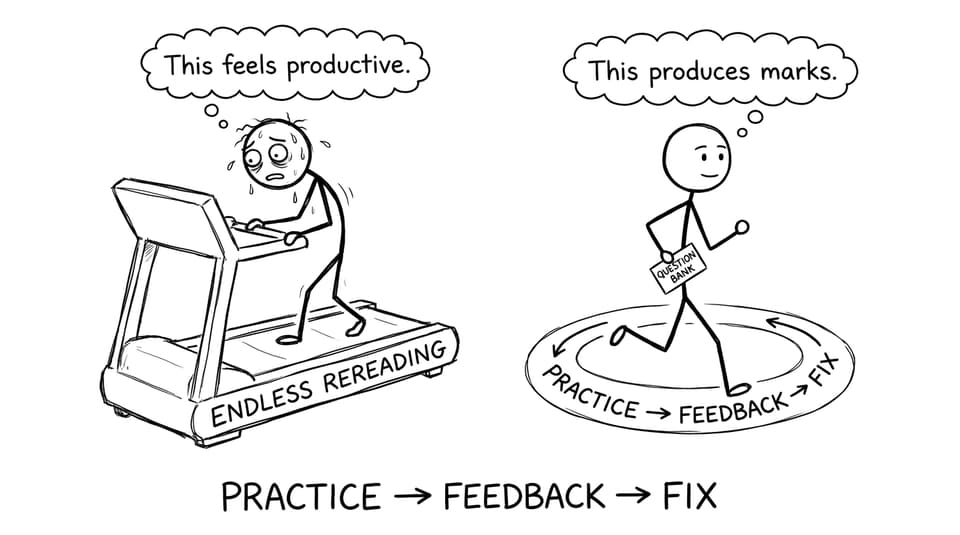
Most students don’t need a total reinvention. They need a tighter loop.
-
Diagnose your weak topics with targeted practice (not broad rereading)
-
Train timing early so exam pressure isn’t a surprise
-
Protect coursework marks with rubric-focused feedback
-
Use spaced recall daily so knowledge doesn’t leak between sessions
RevisionDojo is built around that loop. Start with the free Questionbank to practice like the IB writes questions, then use IB Flashcards for daily recall. When coursework is the difference between a 5 and a 6, the IB Coursework Grader helps you align with the rubric quickly. And when you want exam realism, explore IB Predicted Papers and timed practice routines like How 45-Point IB Students Prepare for Exams.
Common misconceptions about getting a 5 in IB
Students tend to misunderstand a 5 in three predictable ways:
-
They assume a 5 is “average” in a negative sense, when it often reflects above-average performance in a demanding system.
-
They assume universities only respect 6s and 7s, when many admissions readers see a 5 as proof of readiness.
-
They assume improvement requires “more hours,” when IB improvement usually comes from better feedback, better targeting, and better timing practice.
If you want a reality check on what raw percentages can translate to, see Can 60% Get You a 5 in IB? 2025 Reality Check.
The honest bottom line
A 5 in IB is a good score. It’s proof you can learn hard material, apply it under pressure, and meet international standards. If you need higher for a specific course, treat that as a tactical problem, not a personal failure.
If you want to turn your current IB 5 into calmer, more predictable results, build your loop in RevisionDojo: Study Notes, Flashcards, Questionbank practice, AI Chat for quick explanations, Grading tools for coursework, and timed Mock Exams with Predicted Papers. That’s how a “good” score becomes a score you can rely on when it matters.
