




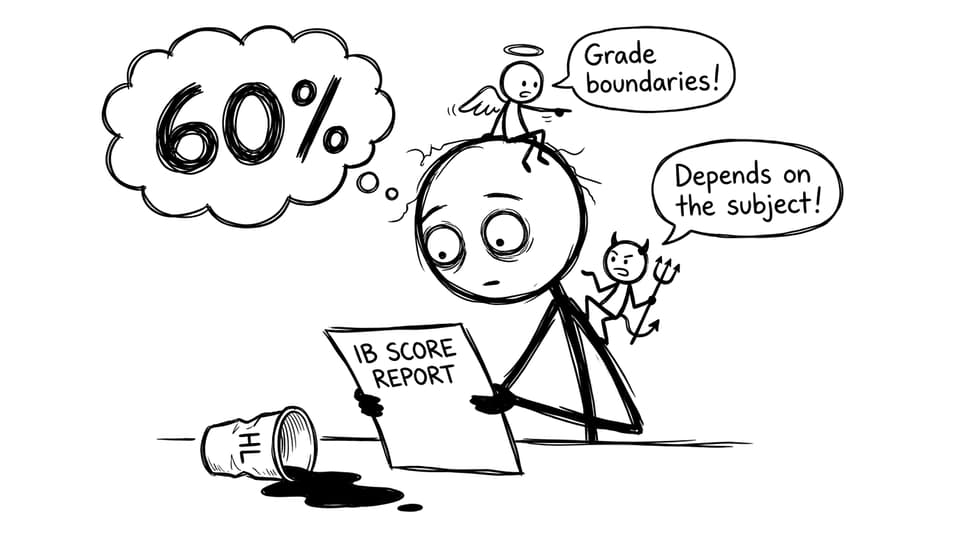
You finish a practice paper, do the math, and see 60%. Your brain instantly asks the only question that matters right now: is that a 5 in IB?
Here’s the honest 2025 reality check for IB students: sometimes yes, sometimes no. Not because the system is random, but because IB grade boundaries move with exam difficulty, cohort performance, and the specific subject and level (SL vs HL). If you understand that one idea, you stop guessing and start planning.
What a “5” means in IB (and why it matters)
In IB, each subject is graded from 1 to 7. A 5 is widely seen as a strong, above-average result: not perfection, but proof you can handle the course and communicate understanding under exam conditions.
For most IB students, a 5 is the sweet spot because it’s:
-
A solid outcome for diploma momentum
-
Often acceptable for many university subject expectations
-
Achievable without needing every topic to be flawless
If you want a quick refresher on the programme itself, start at International Baccalaureate (IB).
So… can 60% be a 5 on most IB exams?
Often, 60% can land around a 5 in IB, but it’s not a guarantee.
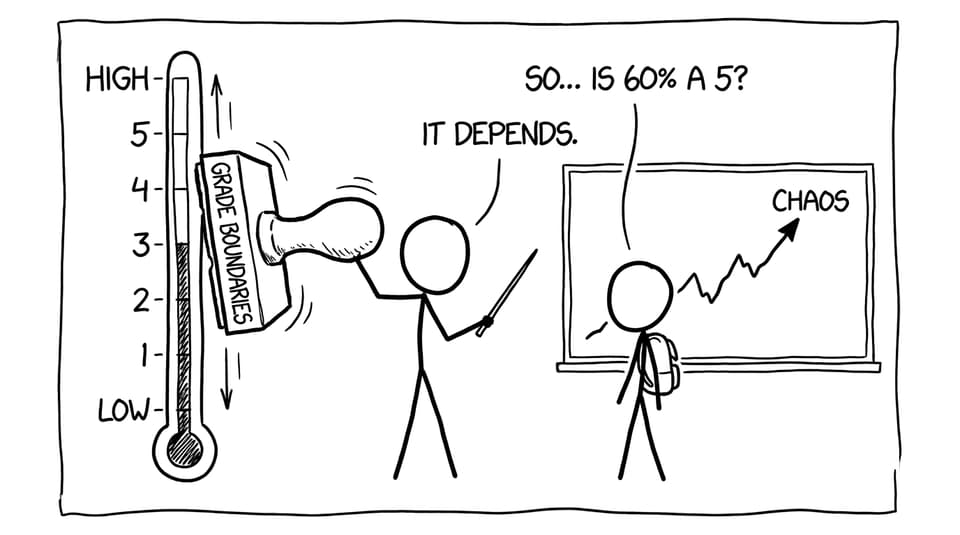
Why? Because grade boundaries change each session. A tougher paper can pull boundaries down. An easier one can push them up. That means 60% might sit safely in the 5 band for one subject, and feel uncomfortably close to a 4/5 border in another.
A practical way to think about IB scoring is:
-
60% is a “possible 5”
-
65% is a “safer 5”
-
70%+ is where 5 turns into 6 pressure
What shifts your IB boundary (even if you did the same work)
In IB, boundaries are influenced by:
-
Subject difficulty that year
-
Global student performance
-
HL vs SL demands
-
Whether a paper is more data-heavy, writing-heavy, or method-heavy
That’s why two students can both score 60% and walk away with slightly different outcomes depending on the paper and session.
Quick checklist: how to make 60% work for you in IB
If 60% is where you’re hovering, use this as your IB plan:
-
Track your weakest topics (don’t just “revise everything”)
-
Train mark scheme thinking (especially for structured responses)
-
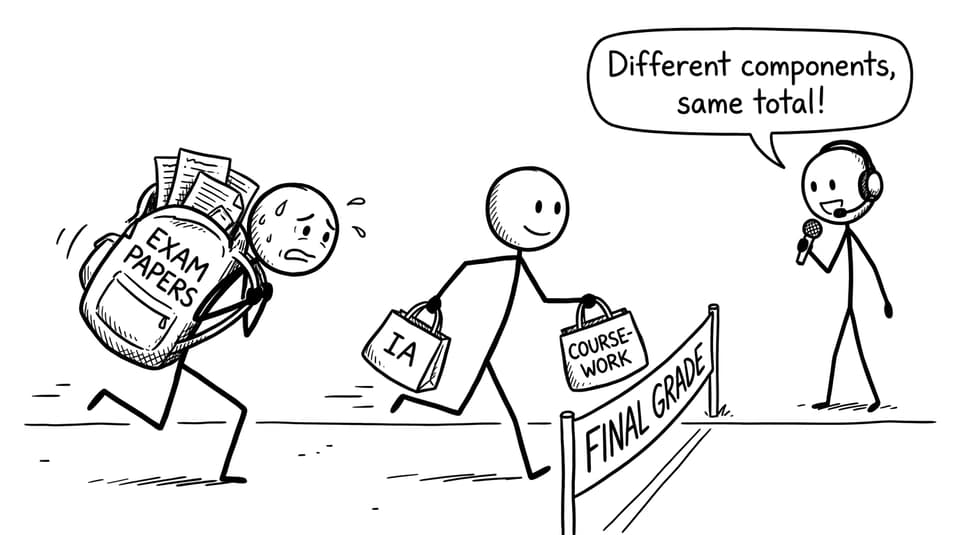
Protect your coursework marks (they can lift a borderline exam)
-
Do one timed paper block weekly to reduce surprise
RevisionDojo makes this loop simple:
-
Drill exam-style practice with the Questionbank
-
Build stamina using IB Predicted Papers by IB Examiners (Free)
-
Use the calm workflow in RevisionDojo App: The Smarter Way to Prep for IB Exams
Examples that show why “60% = 5” depends on the IB subject
Instead of memorizing one magic number, anchor to real variability across IB subjects and levels:
-
In science-heavy courses like Biology, content plus application can make boundaries feel forgiving in harder sessions, so explore the IB Biology Resources hub.
-
In maths, method marks matter, and boundaries can shift depending on paper style; see IB Mathematics Analysis and Approaches Resources.
The point isn’t that one subject is “easier” in IB. It’s that 60% behaves differently depending on how marks are distributed.
The bottom line: 60% can be a 5 in IB, but don’t leave it to luck
In IB, 60% is often in the 5 conversation, but the boundary isn’t something you control. What you can control is how reliably you pick up method marks, how well you match command terms, and whether you’ve trained under time.
If you want a calmer path to a 5 (or higher), build one loop and repeat it: Study Notes, Flashcards, AI Chat, targeted Questionbank drills, and weekly Mock Exams or IB Predicted Papers by IB Examiners (Free). RevisionDojo is built to keep that entire IB system in one place, with Grading tools, a Coursework Library, and Tutors when you need a human check.
Your 60% isn’t a verdict. In IB, it’s a starting point you can convert into a 5 with the right structure.