


You can feel it in the week before an assessment.
Your notes look fine. Your flashcards are done. You even promised yourself you would start early this time.
And yet the moment you open a timed task, something else decides the outcome: how you think under pressure, how you recover from mistakes, how you communicate clearly when you are tired. In the MYP, those “invisible skills” are not random personality traits. They are trained on purpose through the IB Learner Profile.
This matters for exam preparation because the Learner Profile is not just a poster. In MYP classrooms, it becomes a set of repeatable behaviours you can practice: inquiry, clarity, integrity, reflection, balance. When you treat the Learner Profile like a training plan, your revision gets calmer, more targeted, and more effective.
If you want a simple starting point, begin with the Middle Years Program (MYP) hub and build your study loop from there.
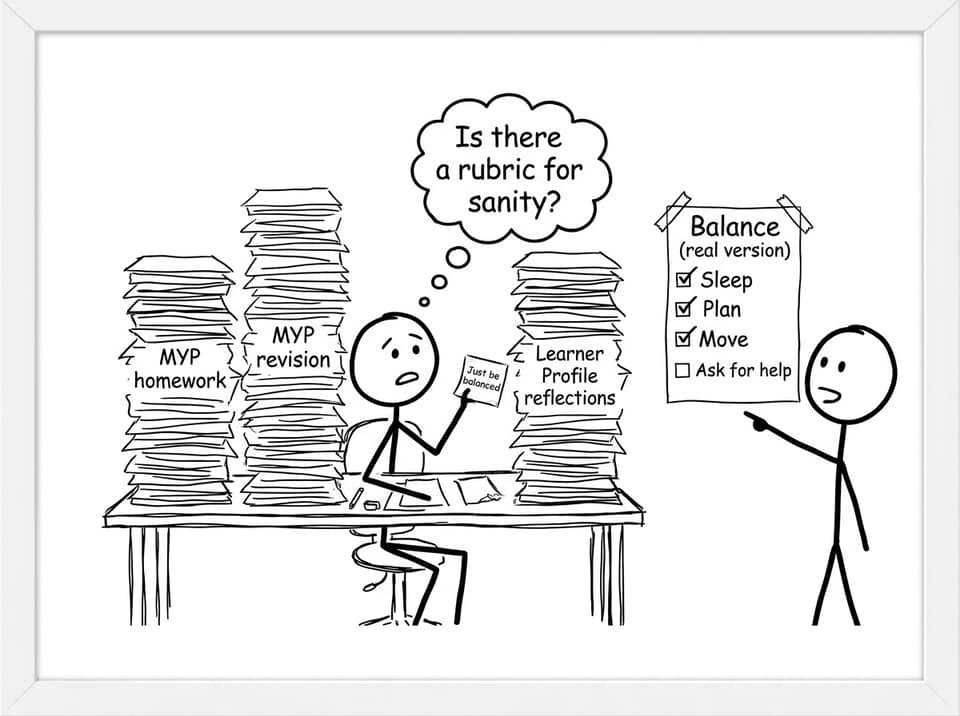
A quick MYP checklist: turning Learner Profile into exam habits
Use this quick checklist to make the Learner Profile practical during MYP revision:
-
Pick one Learner Profile trait per study session (not all ten).
-
Do one piece of evidence-based practice (a quiz set, a short response, a timed task).
-
Review mistakes using criteria language (what the rubric wanted, not what you “meant”).
-
Write a 4-sentence reflection: what happened, why, what to change, when you will retest.
-
Use tools that shorten the loop: Questionbank for practice, Study Notes for quick repairs, Flashcards for retention, AI Chat for explanations, and Grading tools for writing quality.
For a full study routine built around this approach, keep MYP Revision Guide: Study Tips for Success open while you plan your week.
What is the IB Learner Profile in the MYP?
The IB Learner Profile is a set of ten attributes the IB aims to develop across all programmes. In the MYP, these traits show up inside everyday learning: unit questions, global contexts, projects, group work, and reflection cycles.
The ten traits are:
-
Inquirers
-
Knowledgeable
-
Thinkers
-
Communicators
-
Principled
-
Open-minded
-
Caring
-
Risk-takers
-
Balanced
-
Reflective
A useful way to understand them for MYP exams: each trait describes a behaviour that improves performance when tasks get unfamiliar. And exams are full of unfamiliar moments.
If you want extra context on how these traits connect to assessment success, see How Is the IB Learner Profile Reflected in Assessments?.
The 10 Learner Profile traits developed in MYP (and how to train them)
Inquirers: practising better questions
In MYP, inquiry-based learning trains you to ask questions that lead somewhere: What do I already know? What evidence would change my mind? What is the pattern?
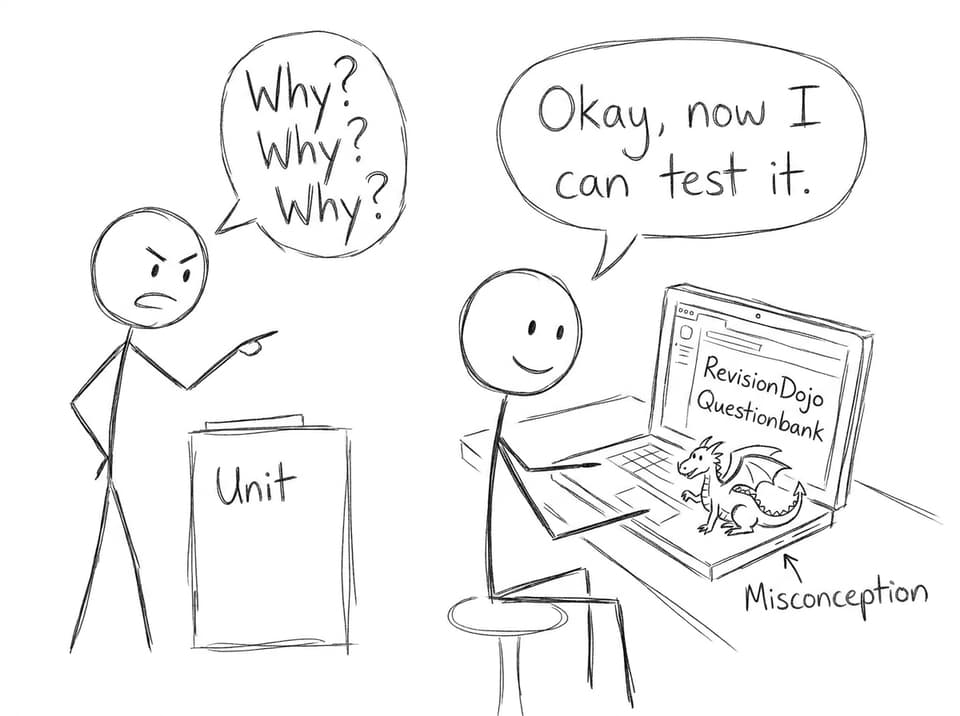
For exam prep, being an inquirer means you do not just reread. You test.
A practical training move: run a short set in the RevisionDojo Questionbank, then use your mistakes to write three “why” questions. That is inquiry with direction.
If you need a structured plan for timed practice, follow MYP eAssessments: 30-Day Study Plan That Works.
Knowledgeable: connecting ideas, not collecting facts
The MYP encourages breadth across subject groups, but “knowledgeable” in IB terms is not just memory. It is the ability to connect concepts and apply them in context.
For exam prep, this means you revise for transfer: can you use the idea in a new scenario?
Use RevisionDojo Study Notes to rebuild a topic quickly, then check transfer by practising questions immediately. (If you only read notes, you will feel knowledgeable without being ready.) You can explore the notes system via Study Notes | RevisionDojo.
Thinkers: turning information into judgment
The MYP trains thinking through analysis, evaluation, design cycles, and decision-making.
In exams, “thinker” shows up when you:
-
explain why a method works,
-
weigh two explanations,
-
justify a conclusion with evidence,
-
spot limitations.
To train this, use a simple rule: after every practice question, write one sentence beginning with “Therefore…”. It forces reasoning, not retelling.
Communicators: earning marks through clarity
The MYP asks you to communicate across formats: essays, presentations, lab reports, designs, discussions.
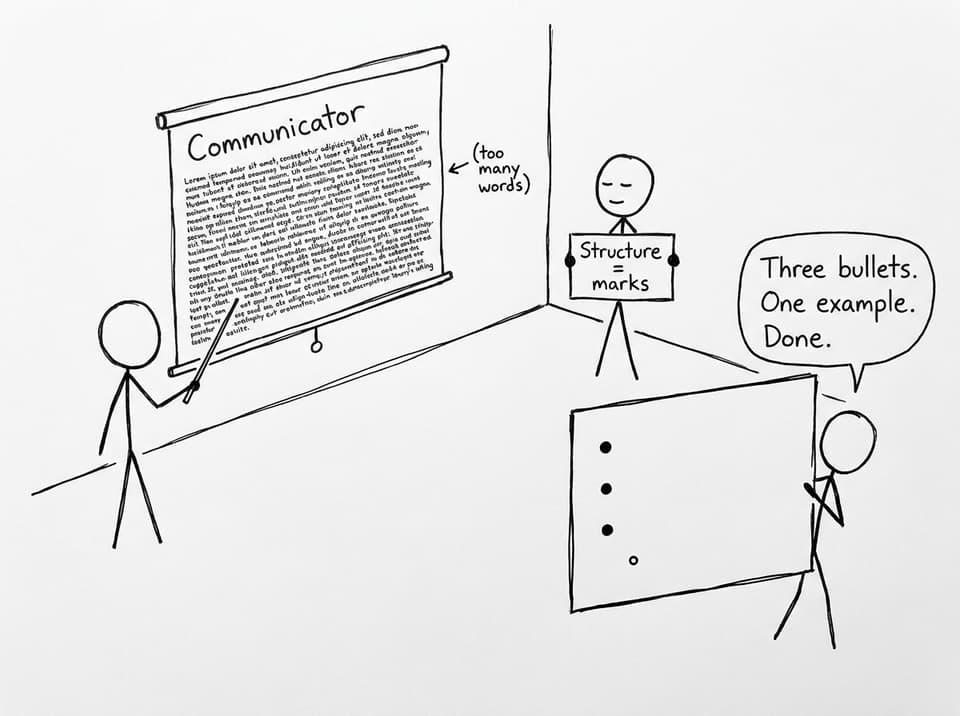
In exam season, being a communicator is not “sounding smart.” It is making your thinking easy to mark.
Two training habits:
-
Use command terms as headings in your response (even in practice).
-
Build answers in small structures: claim, evidence, explanation.
If you need content practice that reinforces clear writing, explore a subject hub like MYP English Lang & Lit and combine it with Grading tools for feedback.
Principled: integrity that protects your progress
In the MYP, principled behaviour includes academic honesty, fair collaboration, and taking responsibility.
For exam prep, this becomes surprisingly practical:
-
you stop “marking generously” when you self-check,
-
you track errors honestly,
-
you cite sources properly in projects.
If you are doing major coursework alongside revision, the Coursework Library and exemplars can help you model ethical and high-quality work, especially for big MYP tasks.
Open-minded: learning faster by considering alternatives
Open-mindedness in MYP grows through global contexts and diverse perspectives.
For exams, open-minded students improve faster because they can accept: “My first approach is not working.” They try another method, not another hour.
A fast practice technique: after you miss a question, ask AI Chat to explain the topic using a different analogy or method, then retest with a new question set.
Caring: service as action, and collaboration under stress
In MYP, caring becomes action through Service as Action and everyday classroom culture.
During exam preparation, caring can look like:
-
sharing notes responsibly,
-
giving a friend feedback that helps them improve,
-
creating study groups that are calm and focused.
Ironically, caring often improves your own grades because teaching and feedback force clarity.
Risk-takers: practising what you cannot do yet
In MYP, risk-taking is not recklessness. It is the willingness to attempt challenging tasks and learn from failure.
In exam prep, this is the moment you stop avoiding your weakest question type.
RevisionDojo makes “safe risk-taking” easier because you can practise in smaller units: use Mock Exams and exam-style sets, get feedback, and try again. You can also build courage through projects like the Personal Project; see MYP Personal Project: The Ultimate Student Guide.
Balanced: sustainability beats intensity
The MYP encourages balance across academic, creative, physical, and emotional development.
In exams, balance is a strategy, not a vibe. It means:
-
you can keep going for weeks,
-
your sleep is protected,
-
your plan has recovery built in.
If you want a realistic structure, use smaller daily sessions and let the Questionbank guide what matters most, instead of rewriting perfect notes.
Reflective: the skill that turns effort into improvement
Reflection is built into the MYP through journals, feedback cycles, portfolios, and project reviews.
For exam preparation, reflective students do three things consistently:
-
name what happened with evidence,
-
identify a cause they can control,
-
change one thing and retest.
If you want reflection prompts that actually lead to better scores, read Creating Actionable Reflection Prompts for IB Students and keep the prompts beside your revision timetable.
How RevisionDojo helps you train the Learner Profile in MYP
The easiest way to make the Learner Profile real in MYP exam prep is to connect traits to tools:
-
Questionbank: trains inquirers, thinkers, and risk-takers through targeted practice.
-
Study Notes: supports knowledgeable learning without drowning in textbooks.
-
Flashcards: builds retention so you can communicate under time pressure.
-
AI Chat: helps you stay open-minded when one explanation does not click.
-
Grading tools: strengthens communicator and principled habits through rubric-aligned feedback.
-
Predicted Papers and Mock Exams: build exam stamina and balanced routines.
-
Coursework Library: models quality and integrity for major tasks.
-
Tutors: add calm, strategy, and accountability when you are stuck.
If you want to see how the Learner Profile can be tracked and strengthened across learning, How RevisionDojo Elevates IB Learner Profile Development Across the Curriculum gives a helpful bigger-picture view.
Closing: the MYP Learner Profile is your exam advantage
The Learner Profile in the MYP is not asking you to become a different person. It is asking you to practice a different set of habits: test what you know, think in evidence, communicate clearly, act with integrity, reflect so you improve, and stay balanced long enough for the work to compound.
If you want those traits to show up when it matters, build a simple routine and let RevisionDojo hold the structure: start at the Middle Years Program (MYP) hub, practise with the Questionbank, use Study Notes and Flashcards to repair and retain, and use Mock Exams, Predicted Papers, and Tutors when you need realism and support.
In the end, MYP success is less about intensity and more about training the right behaviours until they feel normal.