The quiet difference between “good art” and a 7
A lot of IB Visual Arts students have the same fear: What if my work is strong, but my portfolio still reads like a random folder of images? That fear is rational. Because in IB Visual Arts, the highest marks rarely go to the student who only makes “pretty” outcomes. They go to the student who makes their thinking unmistakable.
That’s what level 7 portfolios do. They don’t just show final pieces. They show the trail: experiments that failed, research that changed a direction, reflections that sound like a real person, and a theme that quietly keeps everything connected.
If you want a bigger course overview first, keep What is IB Visual Arts? open in another tab.
Level 7 checklist (save this before you build another screen)
High-scoring IB Visual Arts portfolios tend to make five things easy for an examiner to spot:
-
Variety with intention: multiple media/techniques, not random chaos
-
Coherence: a theme or inquiry that links pages across weeks
-
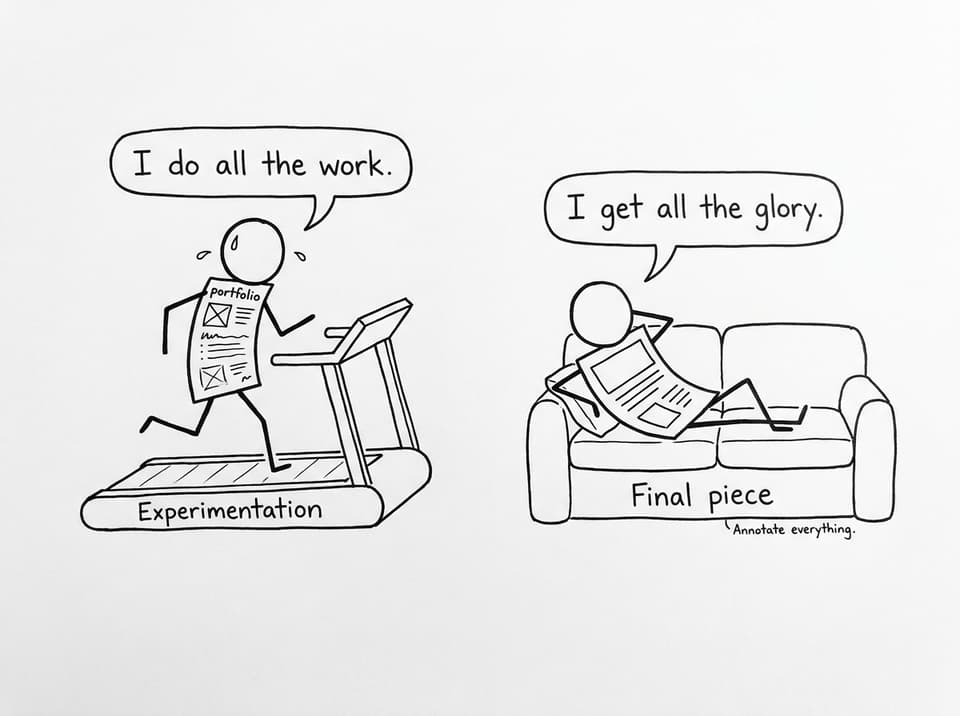
Experimentation: visible trials, iterations, material tests, compositional changes
-
Critical reflection: short, specific notes about decisions and learning
-
Context: artists and cultural sources that genuinely influence what you do next
To align with examiner language, review IB Visual Arts Assessment Criteria Explained Simply.
IB Visual Arts portfolio examples that score a 7 (patterns worth copying)
These are not “templates” to imitate. Think of them as proven strategies that work across themes.
Mixed media exploration with one guiding question
A classic level 7 IB Visual Arts approach is to hold one idea steady (like identity, memory, or place) while changing the method: charcoal studies, stitched photo transfers, digital distortion, and painted overlays.
What makes this score high is the cause and effect. Each experiment answers a question: What happens to meaning when I remove colour? When I change scale? When I switch from hand-made marks to digital glitches? If you need help making that progression clear, use How to Structure Your IB Visual Arts Process Portfolio.
Cultural connections that are more than “I researched an artist”
Another 7-level IB Visual Arts pattern: students explore heritage, diaspora, or community by combining contextual research with material choices that carry meaning (textiles, archives, family photographs, found objects).
The difference is that research is not decoration. It changes the work. A student might study traditional pattern-making, then deliberately break symmetry to show tension between inherited identity and modern life. If your Comparative Study is where you build that contextual muscle, see How to Integrate Cultural Context into Your IB Visual Arts Comparative Study.
Artist influence that becomes a decision, not a copy
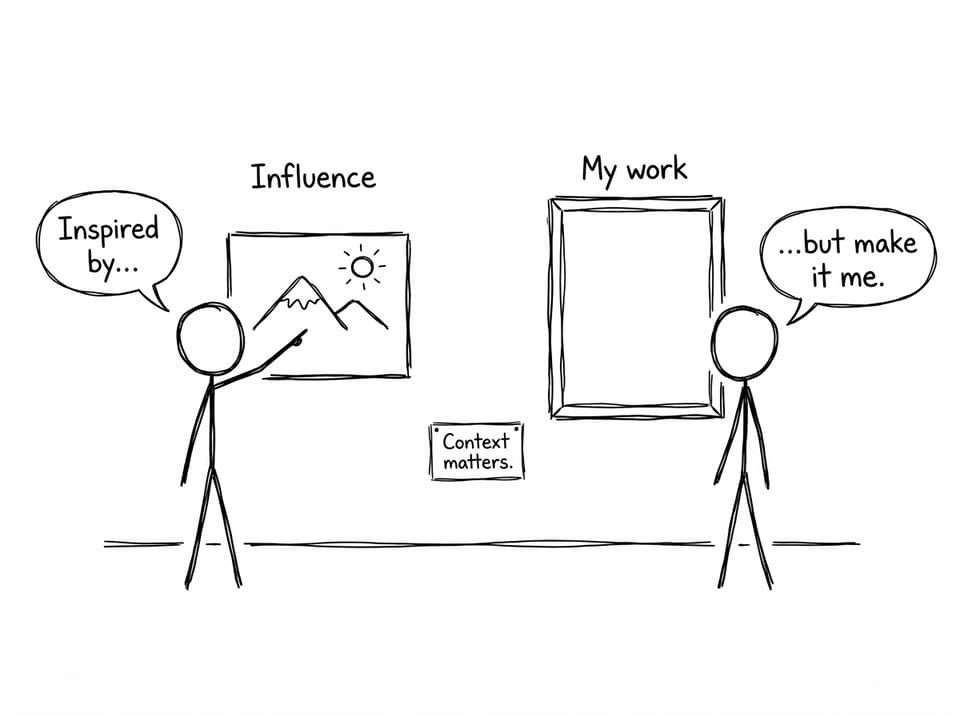
Top IB Visual Arts portfolios reference artists in a practical way: I adopted this compositional strategy, tested it twice, then rejected it for this reason.
A strong example: comparing a symbolic self-portrait approach (Frida Kahlo energy) with contemporary digital portrait manipulation, then explaining exactly how those references shaped the student’s own experimentation. If you want example-driven support here, read IB Visual Arts Comparative Study Examples That Score.
Thematic consistency with visible variety
A 7 doesn’t mean every page looks the same. It means everything belongs to the same conversation.
One practical test for IB Visual Arts coherence: if you remove the captions, could someone still guess the inquiry from the images alone? For theme ideas that naturally produce variety (without feeling scattered), use Best IB Visual Arts Themes for Process Portfolios.
Risk-taking that includes the “bad pages”
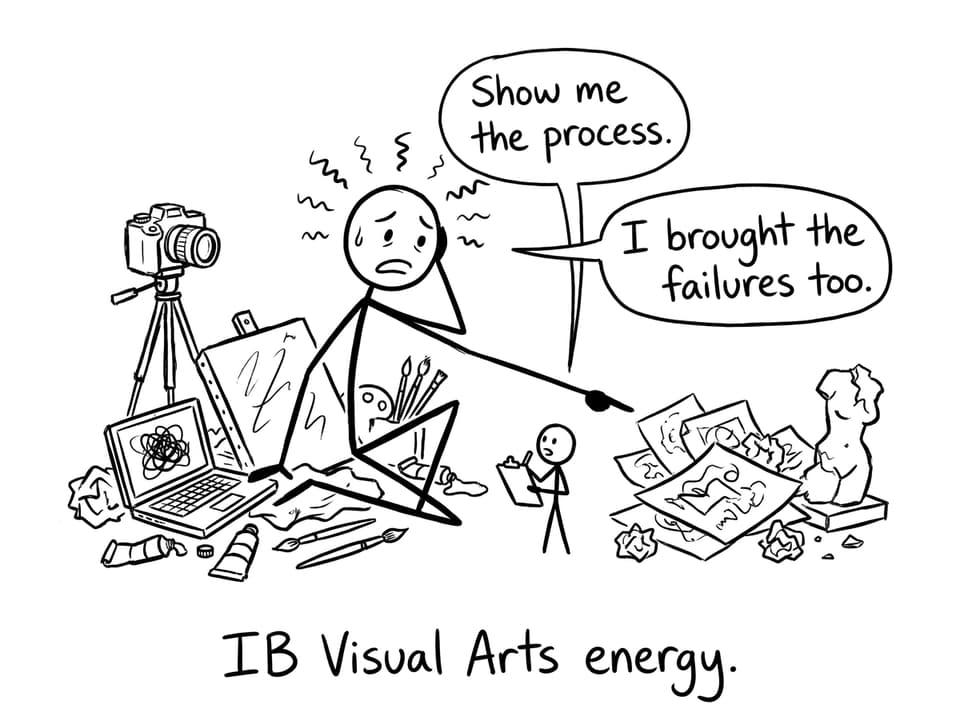
Many students hide failures. Level 7 students curate them.
In IB Visual Arts, a failed print, a muddy painting test, or a distorted photo that “didn’t work” can be powerful evidence if you annotate precisely what you learned and how you adjusted. If you want a simple standard for what counts as experimentation, use How to Show Experimentation in Your IB Visual Arts Process Portfolio.
How to build your own “7-ready” system (without copying anyone)
A reliable IB Visual Arts workflow is boring in the best way:
-
Plan one weekly focus (one technique, one artist reference, one question)
-
Make 2-3 experiments fast
-
Photograph everything
-
Write reflections in plain language (what you changed, why it mattered)
-
Keep linking back to exhibition intentions
If you’re overwhelmed, follow the rhythm in How to "Study" IB Visual Arts Effectively. And when you need a rubric-aligned check, RevisionDojo’s Grading tools can guide you screen-by-screen with the IB Visual Arts Process Portfolio Grader.
FAQ
Can I score a 7 in IB Visual Arts without being “naturally talented?”
Yes, because IB Visual Arts is not graded like a social media art account. Examiners reward evidence of investigation: trials, intentional choices, and reflection that proves growth. A student with moderate technical skill but excellent experimentation often outperforms a student with strong technique and weak documentation. Your annotations are where you show the thinking behind the work, and thinking is learnable. This is why building a repeatable process matters more than a single breakthrough piece. RevisionDojo’s AI Chat can help you turn vague reflections into clear, criteria-based notes without losing your voice.
Do photography-only IB Visual Arts portfolios ever score a 7?
They can, but “only photography” still needs variety in approach. In IB Visual Arts, variety can come from lighting tests, lens choices, editing workflows, sequencing, staging, mixed-media outputs (like photo transfer or stitching), and presentation experiments. The portfolio must show development, not just a gallery of strong shots. Context also matters: artist research should push your decisions on composition, symbolism, and method. You should also show failures, because they demonstrate control gained over time. If you need models of what strong work looks like, RevisionDojo’s Coursework Library includes IB Visual Arts Examples.
How many experiments do I need for a 7?
There is no magic number in IB Visual Arts, but there is a clear pattern: top portfolios show repeated testing and refinement. One experiment rarely proves anything; a sequence of experiments proves learning. Aim for clusters: 2-4 quick trials around one question, then a reflection that states what changed and what you’ll do next. Over time, those clusters create a story an examiner can follow without guessing. If your pages feel crowded or thin, the issue is usually structure, not volume. RevisionDojo’s Study Notes, Flashcards, and Tutors can help you plan a balanced portfolio timeline and keep your evidence consistent.
Closing: make it easy to award you the mark
The best IB Visual Arts portfolio examples that score a 7 aren’t “perfect.” They’re readable. They make experimentation obvious, reflection specific, and context meaningful. Most importantly, they show a student becoming an artist in real time.
If you want to build that kind of clarity faster, RevisionDojo is built for it: use the Coursework Library for exemplars, the Grading tools for rubric-aligned feedback, AI Chat to sharpen reflections, and the Questionbank, Mock Exams, and Predicted Papers to stay steady across your full IB load. Your work already has a voice. Your job now is to document it so well that a 7 feels inevitable.

