Choosing an IB subject is one of those decisions that feels small on paper, but huge at 11:47 p.m. when you are staring at a syllabus and thinking: Will I still like this in six months?
If you are torn between IB SEHS and IB Psychology, you are not alone. Both subjects reward curiosity. Both teach research skills. And both can make you feel smart one day and completely lost the next. The difference is where your curiosity naturally goes: toward the body in motion or the mind under pressure.
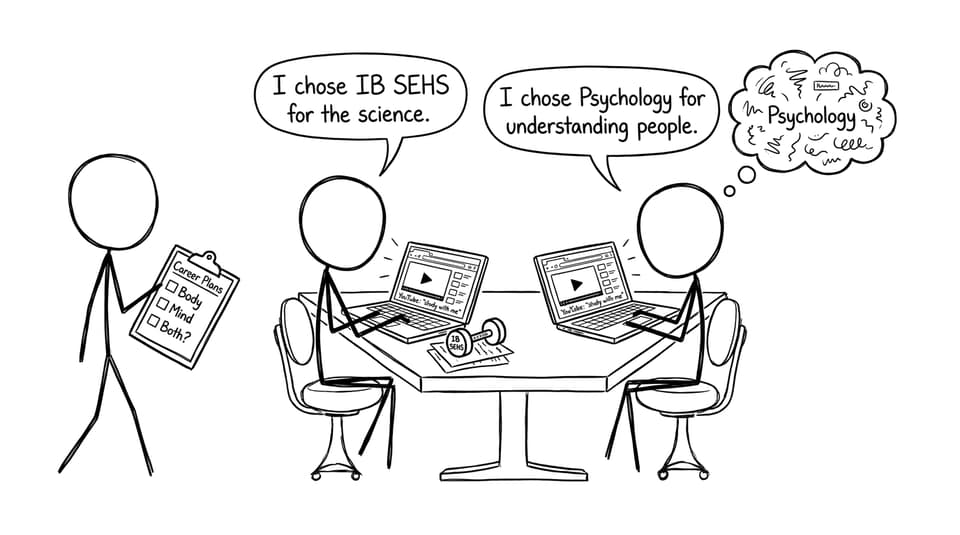
Students choosing between IB SEHS and Psychology
Quick checklist: IB SEHS vs Psychology
Use this fast checklist before you read the deeper comparison.
Choose IB SEHS if you like biology-style explanations, numbers, performance, and health.
Choose Psychology if you like theories, studies, writing, and explaining behavior.
Pick the subject whose assessment style matches how you earn marks under timed pressure.
Pick the subject you can imagine revising weekly without resenting it.
What you actually study in IB SEHS (and why it feels different)
IB SEHS (Sports, Exercise and Health Science) is the subject where “real life” shows up constantly. You are studying anatomy and physiology, movement, training principles, energy systems, and health contexts. Even the psychology angle exists, but usually as a tool for performance rather than the entire focus.
The simplest way to remember it: IB SEHS is body-centered. You will often be asked to explain mechanisms and apply them to scenarios. The content can feel broad, but it is usually grounded in systems, cause-and-effect, and evidence.
A good test: open a topic like Psychology of Sport. If the blend of performance + science makes your brain light up, IB SEHS is probably your kind of hard.
What you actually study in IB Psychology (and why it can be surprisingly technical)
Psychology is often misunderstood as “common sense with feelings.” In the IB, it is closer to structured thinking with evidence. You learn approaches (biological, cognitive, sociocultural), research methods, and you practise building arguments with studies and evaluation.
The simplest way to remember it: Psychology is mind-centered. You will write, compare, and evaluate. You will learn studies and use them as tools, not trivia.
Assessment differences that matter when exams get close
Here is the part most students ignore until revision season, then regret.
IB SEHS assessment feel
In IB SEHS, your Internal Assessment is a scientific investigation. If you like designing something measurable, collecting data, and analyzing results, that can feel satisfying. If you hate uncertainty and messy data, it can feel stressful.
If you want a rubric-aligned shortcut to understanding the standard, see IB SEHS IA Examples.
Psychology assessment feel
In Psychology, the IA is typically a replication-style experiment write-up. In exams, you must connect theory to evidence, use studies accurately, and evaluate with balance.
A key difference: many students lose marks not because they “did not know,” but because they did not match the command term. RevisionDojo’s Questionbank | RevisionDojo helps here because you can train the exact question style, then get feedback while it still matters.
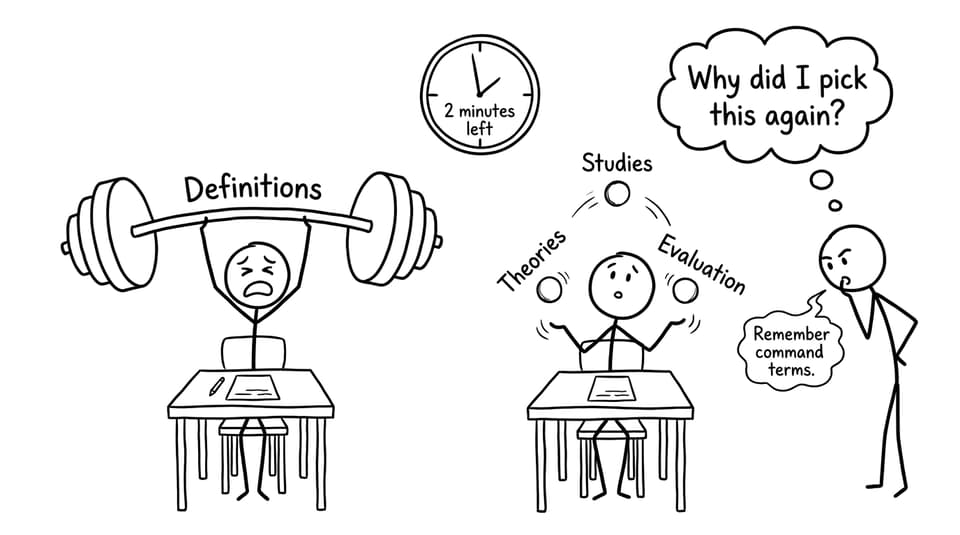
Exam hall stress joke
The skills you build (and which one fits your strengths)
Both subjects create strong thinkers, but they build different muscles.
IB SEHS tends to reward
Explaining biological and physiological processes clearly
Applying concepts to performance, injury, and health scenarios
If essays are your comfort zone, Psychology may feel like a subject you can “grow into” with consistent practice.
Careers and university pathways: choose the door, not the poster
It is tempting to choose a subject because of a career poster in your head: “sports scientist,” “therapist,” “doctor,” “researcher.” Real life is messier, but also more flexible.
IB SEHS is commonly aligned with kinesiology, sports science, physiotherapy, rehab, health, and some pre-med style interests.
Psychology is aligned with psychology degrees, education, HR/organizational routes, social sciences, and mental health pathways.
If you are equally split, the smarter move is to choose the subject you will revise better. Exams reward consistency more than identity.
Then commit to a mini-study loop you can actually maintain: Study Notes to understand, Flashcards to retain, Questionbank to apply, AI Chat to unblock confusion, and timed practice with Predicted Papers and Mock Exams when exams get close. If you need structure, How to Study for IB Mocks (Without Burning Out) | RevisionDojo lays out a calm, repeatable plan.
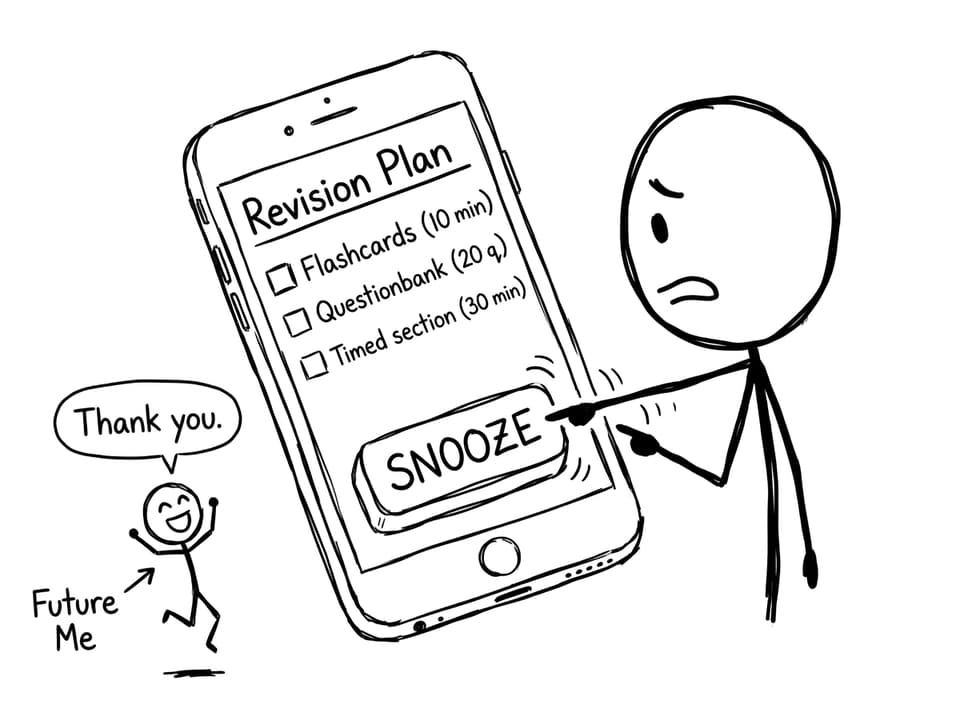
Revision plan procrastination joke
FAQ
Is IB SEHS easier than Psychology?
“Easier” depends on what kind of difficulty you handle well. IB SEHS often feels straightforward when you like systems, processes, and applying science to real scenarios. But it can become difficult if you avoid data analysis, struggle with precise terminology, or dislike planning investigations. Psychology can feel easier if you are naturally strong at writing and argument structure. But it becomes difficult when you have to recall studies accurately and evaluate them under time pressure. The best predictor is not which subject has a friendlier reputation, but which one matches how you learn and revise.
Can I choose both IB SEHS and Psychology?
Many schools allow it, and the combination can be powerful. IB SEHS gives you a physiological and biomechanical foundation, while Psychology builds your ability to evaluate behavior and research evidence. Together, they can be especially useful if you are interested in sports psychology, coaching, education, or health behavior change. The risk is workload if both sit in your “high effort” category. If you take both, you need a plan that prevents passive rereading. Use RevisionDojo’s Study Notes, Flashcards, and Questionbank to keep both subjects active and measurable week to week.
Which subject helps more with exams and grades?
Both can score well, but they reward different exam habits. IB SEHS often improves fastest when you practise application questions and tighten definitions, because small wording errors can leak marks. Psychology improves fastest when you practise structured responses, because your knowledge must be organized into exam-ready paragraphs with evaluation. A smart approach for either subject is to train like it is a skill: short daily recall with Flashcards, then targeted Questionbank sets that mirror the paper style. When you are closer to exams, add timed practice using predicted papers and mock exams to build pacing and confidence. RevisionDojo is built for that full loop, including AI Chat when you get stuck and grading tools when you need clear feedback.
Conclusion: choose IB SEHS or Psychology based on what you will practise
If you love the logic of the human body, performance, and health systems, IB SEHS is likely the better fit. If you love theories of behavior, research evidence, and building arguments in writing, Psychology is likely the better fit. The real secret is simpler: choose the subject you will practise consistently, because that is what turns stress into marks.
When you are ready to commit, build your plan inside RevisionDojo: use Study Notes to learn faster, Flashcards to retain daily, the Questionbank to practise exam-style questions, AI Chat to unblock confusion, and Predicted Papers plus Mock Exams to make exam day feel familiar.