
A calm truth about May 2026: your grade follows your calendar
The night before an exam, most people do not panic because they forgot everything. They panic because they cannot decide what matters next.
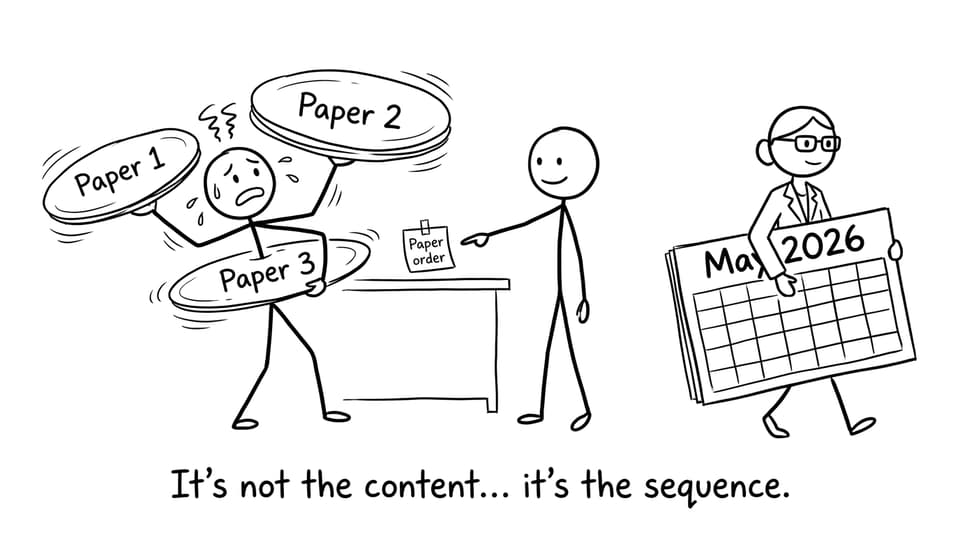
That is why the IB Psychology May 2026 schedule matters. Not because the papers are mysterious, but because the paper order quietly changes what “good revision” looks like. If you treat every topic as equally urgent all the time, you end up revising in circles. If you revise in the same sequence the exams demand, you stop guessing and start executing.
This guide explains the IB Psychology exam dates context for May 2026 (at a high level), the paper order, what HL and SL share, and how to plan revision around the reality of Paper 1, Paper 2, and (for HL) Paper 3.
IB Psychology May 2026: the fast checklist
Use this as your one-screen reminder while you plan:
-
Paper 1 (HL & SL) comes earlier in the session (commonly in Week 2) and rewards clean SAQ/essay structure.
-
Paper 2 (HL & SL) follows near Paper 1 and punishes students who “left options for later.”
-
Paper 3 (HL only) usually appears later than Papers 1 and 2 and feels different because it is research-methods heavy.
-
The best IB Psychology strategy is to revise in streams: Core (Paper 1) + Options (Paper 2) + Research methods (Paper 3).
If you want a syllabus-aligned home base while you do this, keep IB Psychology Resources open as your hub.
Paper order explained: what IB Psychology is really testing
People call IB Psychology “content-heavy,” but the exam papers test different versions of understanding.
Paper 1 (HL & SL): core approaches + methods under time pressure
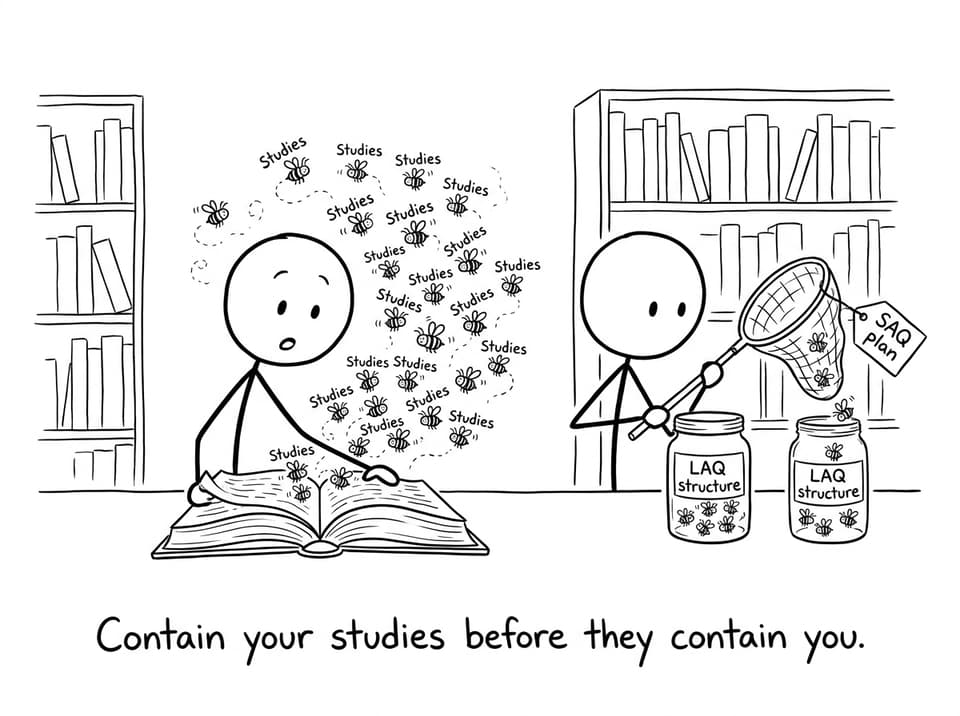
Paper 1 asks you to be precise when time is loud. You are moving between biological, cognitive, and sociocultural ideas, and you must select studies that actually match the question.
A strong Paper 1 student is not the one with the longest list of studies. It is the one who can choose quickly, write in a clean structure, and evaluate with control.
To revise Paper 1 efficiently, build your core understanding first, then practise retrieval and application. RevisionDojo helps you keep that loop tight using connected tools like Study Notes, Flashcards, and the Questionbank with feedback. Start from Study Notes when a concept is fuzzy, then immediately convert it into practice.
Paper 2 (HL & SL): optional topics and deeper evaluation
Paper 2 is where confident students get surprised. Not because it is unfair, but because it requires a different kind of readiness: depth, flexibility, and evaluation that does not collapse into memorised paragraphs.
If your option is human relationships, you can make revision feel more “real” by keeping all materials in one place: IB Psychology Option 4: Human Relationships is a good example of how to revise with notes, questions, and flashcards aligned.
The paper order matters here because Paper 2 often sits close to Paper 1. That means you cannot treat options as an “after Paper 1” problem. In IB Psychology, Paper 2 is not a side quest. It is half your story.
Paper 3 (HL only): qualitative research thinking
HL students also sit Paper 3, and it can feel like a different subject on a different day. It rewards method literacy: knowing what qualitative research is good for, how to design it, and how to evaluate it without generic comments.
If Paper 3 is your weak point, do not wait until the week before. Make it a light but consistent stream throughout your revision. Use IB Psychology Paper 3 as your anchor, then practise small sets regularly.
IB Psychology exam dates May 2026: what you should assume (and how to verify)
For the May 2026 session, Psychology papers are typically placed around Week 2, with HL Paper 3 commonly scheduled later than Papers 1 and 2. Schools can run different timetables by timezone, so the smart move is to treat the paper order as fixed, and confirm your exact dates through your coordinator.
What you can control is your preparation sequence. If you revise the right content in the wrong order, it still feels like chaos. If you revise in the paper order, the same content feels manageable.
For a broader view of what each component expects, read IB Psychology: Structure, Skills & Assessment (SL/HL).
A practical revision plan built around the paper order
Here is a plan that matches how the IB Psychology May 2026 paper order usually bites students.
Build three streams (and do not let them merge)
-
Stream A (Paper 1 Core): biological + cognitive + sociocultural + research methods basics.
-
Stream B (Paper 2 Options): one option at a time, with its own study set and essay plans.
-
Stream C (Paper 3 HL): qualitative methods, sampling, interviews/focus groups, thematic analysis, ethics.
Then decide what “done” means:
-
Paper 1 done = you can answer SAQs with accurate studies and write a controlled essay.
-
Paper 2 done = you can write two different essays for your option without relying on the same single study.
-
Paper 3 done = you can design and evaluate a qualitative study with clear terminology.
Practise like the exam will feel
Content revision feels safe. Exam practice feels honest.
On RevisionDojo, that honesty comes from tools that simulate pressure: Mock Exams, Predicted Papers, and the Questionbank. Then you close the loop with AI Chat for explanations and the Grading tools for feedback.
If you need a routine that stays sustainable across multiple subjects, borrow the structure from Ultimate Daily IB Study Schedule (Low Stress, High Marks) and adapt the blocks to IB Psychology.
Use a planner that starts from the exam, not from Monday
Most students plan forward from good intentions. The better plan works backward from the exams.
RevisionDojo makes this easier with RevisionDojo Study Planner plus connected resources (notes, flashcards, questions, and feedback) so your Paper 1 and Paper 2 streams do not collide.
FAQ
When are the IB Psychology exams in May 2026?
Most schools will see IB Psychology papers placed around Week 2 of the May 2026 session, with Paper 3 (HL) often scheduled later than Papers 1 and 2. Your exact day and start time can vary by timezone and school administrative details. That is why the safest approach is to confirm the official timetable through your IB coordinator as soon as it is released. Still, you do not need the exact day to revise well right now. If you plan around the paper order and the different skills each paper demands, your preparation stays stable even if dates shift slightly. Think of the calendar as the container, and your revision streams as what you control.
Are IB Psychology HL and SL exams on the same days?
For IB Psychology, HL and SL students typically sit Paper 1 and Paper 2 in the same session window, because those papers are shared across both levels. The key difference is that HL students also have Paper 3, which SL students do not take. This creates a planning trap: HL students often over-focus on Paper 1 and Paper 2 and then scramble for Paper 3 late. A better approach is to keep Paper 3 as a light weekly routine, so it never becomes a last-minute burden. If you are balancing multiple HLs, this is where tools like RevisionDojo’s Study Planner and Flashcards matter, because they keep progress consistent when motivation fluctuates. The goal is not more hours, but fewer panicked switches.
Which IB Psychology paper feels hardest for most students?
Many HL students say Paper 3 feels hardest because it is structurally different: it demands research thinking, not just essay writing. But “hardest” in IB Psychology is often about familiarity. Paper 1 can feel brutal if your SAQ structure is shaky or you cannot select studies quickly. Paper 2 can feel brutal if you delayed your option and cannot produce evaluation under time pressure. The pattern is simple: whichever paper you practised least under timed conditions becomes the scariest. This is why RevisionDojo’s Mock Exams, Predicted Papers, and Grading tools can change the experience fast: they turn vague worry into specific fixes. When you know exactly what to improve, difficulty stops feeling personal.
Closing: make the paper order your advantage
The May 2026 exams will arrive whether you feel “ready” or not. The calm advantage is choosing a plan that matches the IB Psychology paper order: core first, options alongside, and Paper 3 (HL) as a steady rhythm.
If you want one place to run that system, use RevisionDojo as your hub: Questionbank, Study Notes, Flashcards, AI Chat, Grading tools, Predicted Papers, Mock Exams, a Coursework Library, and support from Tutors when you need a human explanation.
Build your schedule around the order of the papers, and your confidence will start to look like something you can measure. That is how IB Psychology revision stops feeling heavy and starts feeling directed.