Join 650k+ students breezing through the IBReady to breeze through the IB?
The quiet moment when numbers start to matter
The strange thing about IB Spanish A is that it rarely feels like a “numbers” subject. It feels like late-night rereads, a line of dialogue you can’t stop thinking about, and that one symbol you didn’t notice until your teacher pointed it out.
Then the exam season gets closer, and you realize you’re also playing a marks game. IB Spanish A grade boundaries don’t tell you what to write, but they do tell you what’s worth polishing first. In this guide, you’ll find the IB Spanish A: Literature HL 2025 grade boundaries for each component, plus a simple way to turn those ranges into a calm revision plan.
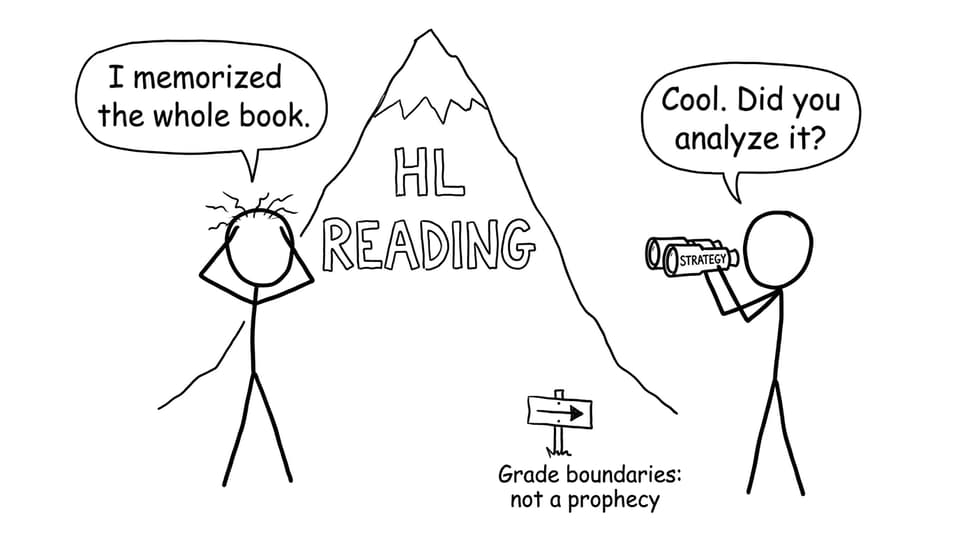
Staring at the HL reading mountain
Quick checklist: how to use IB Spanish A grade boundaries
Turn boundaries into targets per component (Essay, Oral, Paper 1, Paper 2).
Identify your fastest mark gains: structure, evidence, and criterion language.
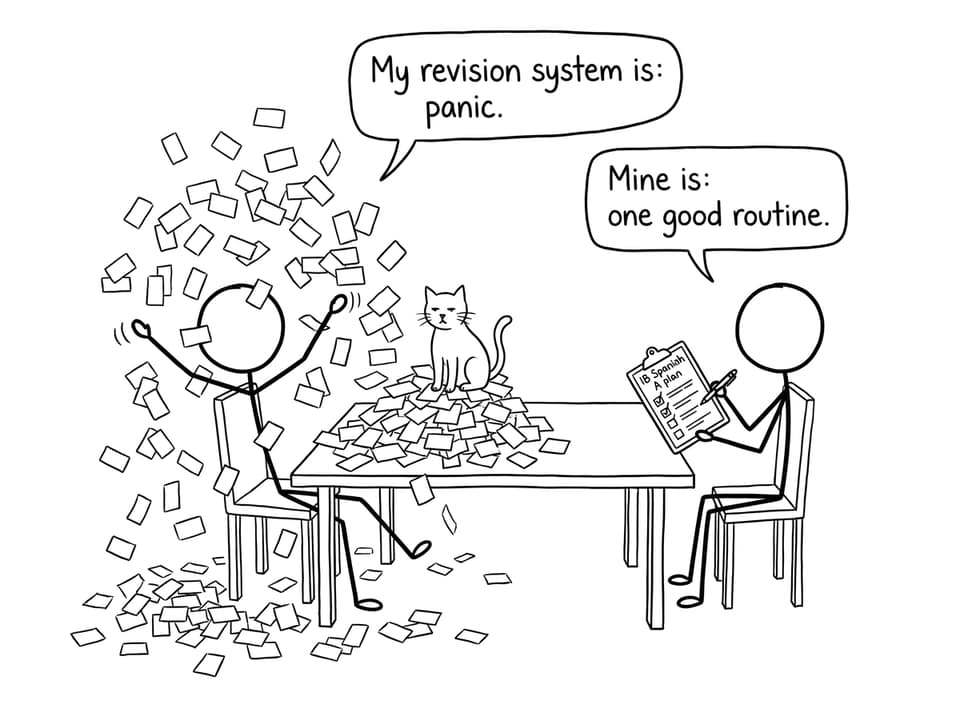
Train under time pressure using exam-style practice from RevisionDojo.
Track your progress with a calculator, not vibes: use the IB Grade Calculator.
For topic practice and skills support in IB Spanish A, start here: IB Spanish A Resources.
IB Spanish A: Literature HL 2025 grade boundaries (by component)
Use these as aiming points for IB Spanish A HL. They’re most useful when you treat them like a dashboard: “Which component can I raise by 3-5 marks with the least friction?”
Essay (out of 20)
Grade 7: 18-20
Grade 6: 15-17
Grade 5: 13-14
Grade 4: 10-12
Grade 3: 7-9
Grade 2: 4-6
Grade 1: 0-3
Internal Assessment (Oral) (out of 40)
Grade 7: 34-40
Grade 6: 29-33
Grade 5: 24-28
Grade 4: 19-23
Grade 3: 13-18
Grade 2: 7-12
Grade 1: 0-6
Paper 1 (out of 40)
Grade 7: 32-40
Grade 6: 27-31
Grade 5: 21-26
Grade 4: 16-20
Grade 3: 12-15
Grade 2: 6-11
Grade 1: 0-5
Paper 2 (out of 30)
Grade 7: 26-30
Grade 6: 22-25
Grade 5: 17-21
Grade 4: 13-16
Grade 3: 9-12
Grade 2: 5-8
Grade 1: 0-4
Final IB Spanish A HL grade boundaries (out of 100)
What boundaries mean for your revision (and what they don’t)
A boundary range is not a prediction of your grade. It’s a target zone that helps you decide what to practice next in IB Spanish A.
If you’re sitting around a 5, the jump to a 6 often comes from repeatable habits: clearer thesis lines, more consistent quotation use, and analysis that names a technique and explains its effect. If you’re already near a 6, the move to a 7 is usually about precision: tighter topic sentences, sharper comparisons, and fewer “plot retells.”
RevisionDojo is built for that kind of improvement loop: Study Notes to clarify technique, Flashcards to lock in terminology, Questionbank to apply it, and AI Chat to get unstuck mid-draft. Explore the full toolkit inside IB Spanish A Resources and targeted practice in the IB Spanish A Questionbank.
A simple Level 7 strategy for IB Spanish A (HL)
Build marks where the criteria live
In IB Spanish A, the examiner rewards what’s visible: argument clarity, textual evidence, and interpretation. So revise by producing examiner-friendly outputs.
Paper 1: Do timed commentaries, then rewrite only your introductions and topic sentences. That’s where clarity is won.
Paper 2: Plan faster. A clean comparative thesis plus 2-3 strong points beats 10 scattered ideas.
Oral: Practice your opening 45 seconds until it’s calm and controlled. Then train follow-up questions.
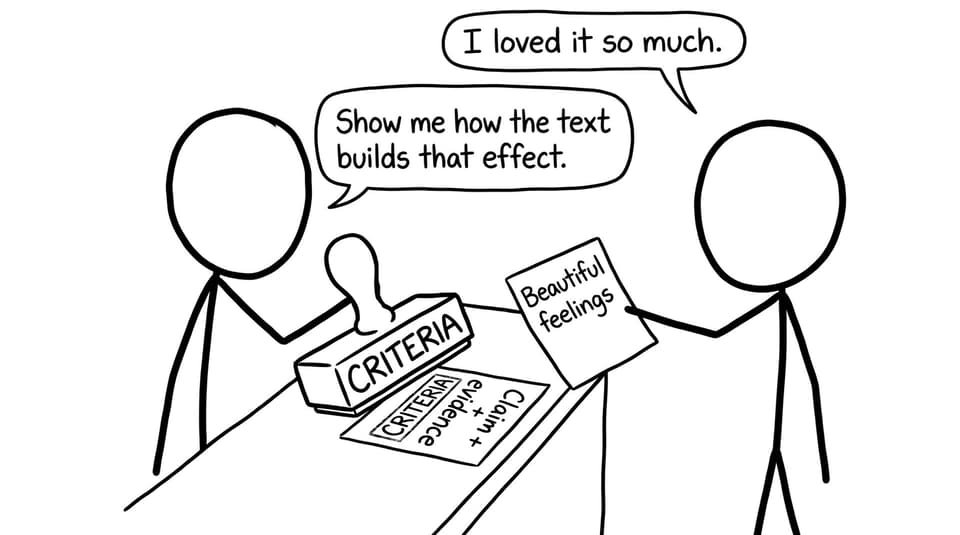
Essay: Draft with a “claim, evidence, technique, effect” rhythm, not just personal response.
FAQ: IB Spanish A: Literature HL 2025 grade boundaries
Are IB Spanish A grade boundaries fixed before the exam?
No, IB Spanish A grade boundaries are set after marking, not before students sit the exams. That’s why boundaries can shift from session to session. The IB uses statistical evidence and expert judgment to keep standards consistent across years. This means a harder paper can lead to lower boundaries, and an easier paper can push them higher. Practically, you shouldn’t revise by guessing the boundary. You should revise by building a buffer above the boundary range you’re aiming for.
Which IB Spanish A HL component is the fastest to improve?
For many students, Paper 1 is the fastest place to gain marks because technique and structure improve quickly with repetition. Once you learn to write a focused introduction, track authorial choices, and avoid summary, your score can jump in a few weeks. The Oral can also improve fast if you rehearse your structure and train follow-up responses. The Essay often improves more slowly because it rewards depth and sustained control. The key is to pick one component for short-term gains and one for long-term gains. RevisionDojo’s Questionbank, Flashcards, and AI Chat are ideal for building that weekly rhythm in IB Spanish A.
How should I use grade boundaries without obsessing over them?
Treat the IB Spanish A boundary table like a map, not a horoscope. First, decide a realistic target grade for each component (not just the final). Next, do one timed task per week and record your raw mark out of 20, 30, or 40 depending on the component. Then compare it to the boundary range and choose one specific fix (like “stronger thesis” or “more technique language”). Finally, reattempt after 48 hours so the improvement becomes a habit. If you want a clean place to track totals, use the IB Grade Calculator alongside the IB Grade Boundaries.
Closing: make the boundaries work for you
The best students in IB Spanish A aren’t the ones who “feel ready.” They’re the ones who can name what earns marks, practice it under time, and iterate without drama.
Use these IB Spanish A: Literature HL 2025 grade boundaries to set targets, then do the work that moves them: structured analysis, deliberate evidence, and calm repetition. When you’re ready to make that process easier, RevisionDojo brings everything together in one place: Study Notes, Flashcards, Questionbank, AI Chat, grading tools, Predicted Papers, Mock Exams, a Coursework Library, and Tutors, all built for IB exam performance.