
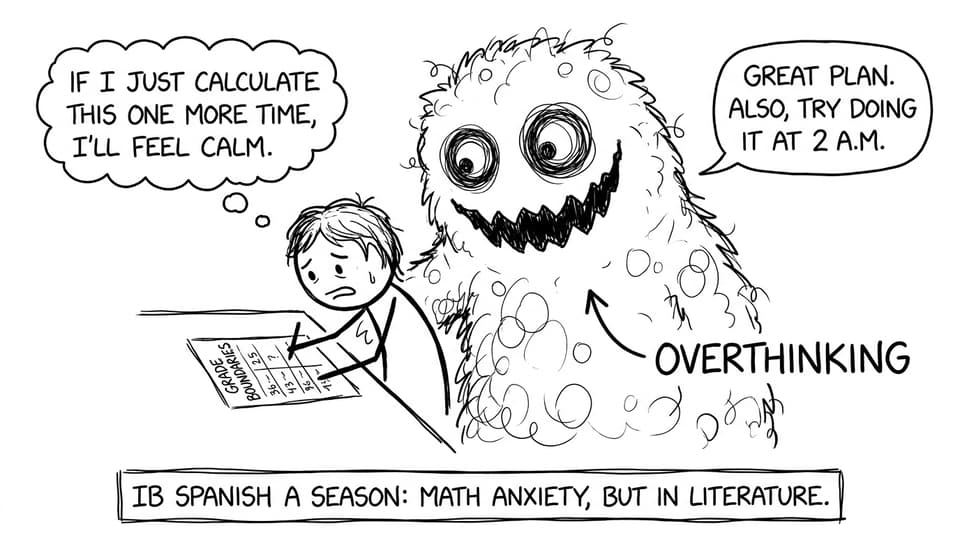
Every IB Spanish A student has a moment where they stare at a number and quietly bargain with it.
Not because grade boundaries are magical, but because they turn a vague hope ("I want a 7") into something measurable ("I need to stop leaking marks in Paper 2 introductions"). If you are taking Spanish A: Literature SL in 2025, this guide breaks down the IB Spanish A grade boundaries by component and gives you a calm way to aim your revision at the marks that actually move your final result.
Quick checklist before you use the grade boundaries
Use this short list to make IB Spanish A boundaries useful (instead of stressful):
-
Know what each component rewards: analysis, structure, evidence, clarity.
-
Practise timed writing for Paper 1 and Paper 2.
-
Rehearse your Oral as a repeatable structure, not a “performance mood.”
-
Build an error log and turn recurring mistakes into flashcards.
-
Use one platform to run the whole loop (notes -> practice -> feedback -> repeat).
A good place to centralise that loop is the IB Spanish A hub on RevisionDojo, then practise with the IB Spanish A Questionbank when you are ready to apply skills under exam-style pressure.
IB Spanish A SL 2025 grade boundaries (Spanish A: Literature SL)
These IB Spanish A grade boundaries are shown per assessment component, so you can set specific targets.
Internal Assessment (Oral), out of 40
-
Grade 7: 34-40
-
Grade 6: 29-33
-
Grade 5: 24-28
-
Grade 4: 19-23
-
Grade 3: 13-18
-
Grade 2: 7-12
-
Grade 1: 0-6
Paper 1, out of 20
-
Grade 7: 17-20
-
Grade 6: 15-16
-
Grade 5: 13-14
-
Grade 4: 11-12
-
Grade 3: 7-10
-
Grade 2: 4-6
-
Grade 1: 0-3
Paper 2, out of 30
-
Grade 7: 26-30
-
Grade 6: 22-25
-
Grade 5: 17-21
-
Grade 4: 13-16
-
Grade 3: 9-12
-
Grade 2: 5-8
-
Grade 1: 0-4
Final IB Spanish A SL grade boundaries, out of 100
-
Grade 7: 83-100
-
Grade 6: 71-82
-
Grade 5: 58-70
-
Grade 4: 46-57
-
Grade 3: 30-45
-
Grade 2: 15-29
-
Grade 1: 0-14
How to turn IB Spanish A grade boundaries into a Level 7 plan
Grade boundaries only help when they change what you do tomorrow.
The Oral: earn “easy” marks through structure
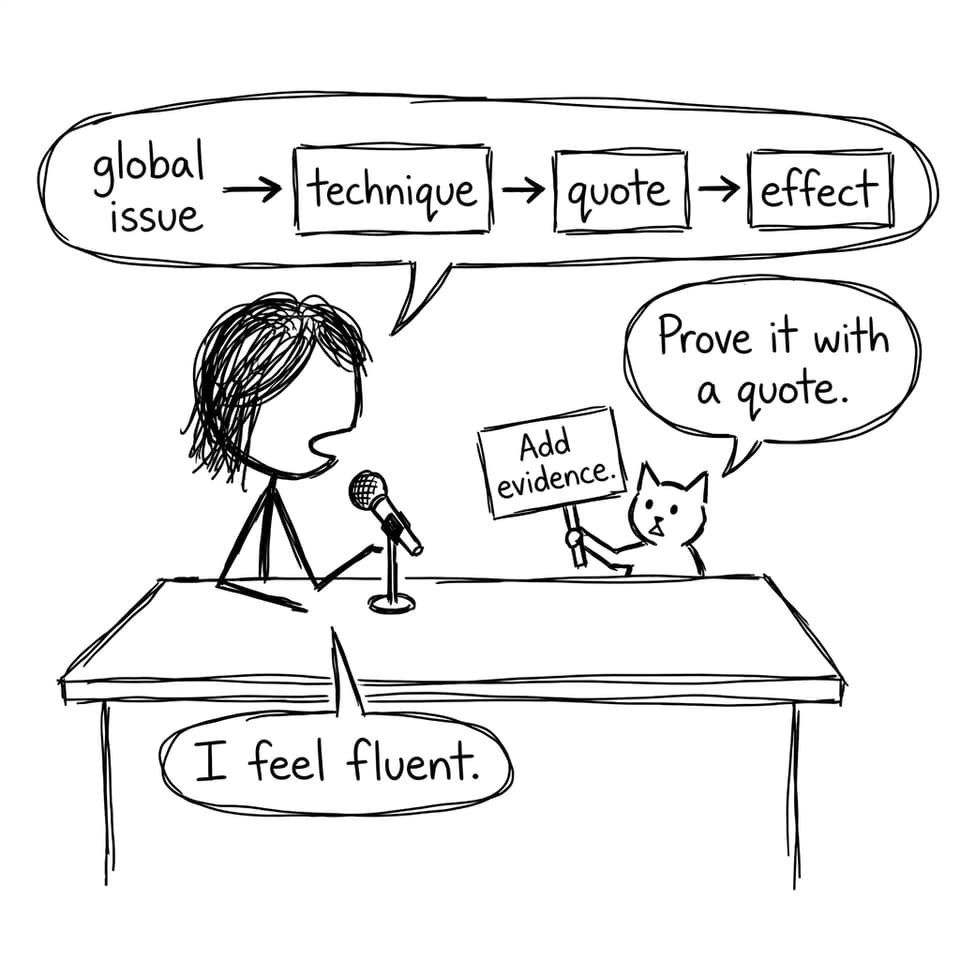
In IB Spanish A, Oral marks often improve fastest when you stop improvising. Use a fixed route: global issue -> technique -> quote -> effect -> wider implication. On RevisionDojo, students often pair Oral practice with quick support from IB Spanish A Bots and build “go-to” analysis phrases with the IB Flashcards system.
Paper 1: stop describing and start proving
Paper 1 rewards commentary that keeps answering “how” and “why.” When you practise, force every paragraph to include: a claim about authorial choice + a short quote + the effect on meaning/audience. If you need a refresher on what the course values, see Conceptos clave IB DP - Español A.
Paper 2: win with comparison, not content
Paper 2 is not a memory test. It is a comparison test. The strongest IB Spanish A essays connect two works through a shared line of argument, then compare how each author constructs it (techniques, structure, viewpoint, context). For deeper revision routines, use Cómo Estudiar Español A: Literatura en el IB and pull quick summaries from Spanish A Cheatsheets.
FAQ: IB Spanish A SL 2025 grade boundaries
Are IB Spanish A grade boundaries “fixed” for 2025?
No, IB Spanish A grade boundaries are published per exam session and are best treated as targets, not promises. They help you estimate what mark range usually maps to each grade. The real value is diagnostic: they show how close you are and where marks matter most. If you are 3-5 marks short of a boundary, you do not need a new personality or a new book list. You usually need one predictable improvement: clearer thesis, tighter paragraph logic, more precise quotations, or better comparison. Use the IB Spanish A boundaries to choose the smallest change with the highest mark impact.
What is the fastest way to improve in IB Spanish A Paper 1?
The fastest improvement in IB Spanish A Paper 1 is moving from “what the text says” to “how the text works.” Practise writing topic sentences that name a technique and its purpose (tone shift, imagery, structure, focalisation, diction). Then prove the claim with a short quote and explain the effect, not the plot. Time yourself so you learn how much analysis you can realistically produce under pressure. After each attempt, mark where you drifted into summary and rewrite only those lines into analysis. If you keep all your attempts in one place (notes, practice sets, feedback), your progress becomes visible and repeatable.
How should I revise for the IB Spanish A Oral using grade boundaries?
Start by using the Oral boundary as a clarity check: you are aiming for consistent high-band performance, not occasional brilliance. That means your analysis needs a reliable structure you can deliver even when nervous. Record yourself and listen specifically for three things: how often you use evidence, how clearly you link technique to global issue, and whether your conclusion answers “so what?” Then tighten your quotes (shorter is usually stronger) and practise transitions that signal argument. RevisionDojo helps by keeping your materials together: you can revise content with IB Spanish A resources, practise targeted skills with the Questionbank, and use AI Chat-style support through the bots when you get stuck mid-prep. Most importantly, turn recurring feedback (like “needs more analysis”) into a checklist you run every time.
Closing: use IB Spanish A boundaries, then build the loop
IB Spanish A grade boundaries are not there to scare you; they are there to focus you. Once you know the 2025 ranges for Paper 1, Paper 2, and the Oral, your next step is simple: practise in short, timed cycles and review with ruthless honesty.
If you want one place to run that system, start with IB Spanish A on RevisionDojo: Study Notes and Cheatsheets for clarity, Flashcards for retention, Questionbank drills for technique, AI Chat via subject bots for fast unblocking, plus grading tools, predicted papers, mock exams, coursework library, and tutors when you need extra support. That is how IB Spanish A preparation becomes calm, because it becomes repeatable.