
A disappointing IB result can make the future feel as if it has narrowed overnight. For parents, the first instinct is often to solve everything immediately: protect the university place, challenge the result, arrange another examination, and somehow restore a student's confidence before dinner.
The reassuring answer is simpler. IB students can retake one or more subjects in a future examination session. They do not ordinarily need to repeat the entire Diploma Programme, and when a subject or core requirement is retaken to improve a diploma result, the higher grade contributes to the diploma award. Registration must be arranged through an IB World School willing to accept the student, usually with the help of an IB coordinator.
This guide has the IB retake policy explained in practical terms for families: what can be retaken, how registration works, what happens to existing grades, and how to decide whether another attempt is worthwhile.
The short version for parents
Before making plans, work through this checklist with your student:
- Record the total score, individual subject grades, core results, and diploma status.
- Ask the IB coordinator for available component information and grade-boundary proximity.
- Compare an Enquiry Upon Results, commonly called a remark, with a retake.
- Identify the smallest number of subjects that could change the outcome.
- Confirm which future session offers the relevant subject and level.
- Find an IB World School willing to register the student as a retake candidate.
- Ask that school about deadlines, fees, coursework requirements, and curriculum changes.
- Contact any affected university before assuming how it will treat a later result.
- Build a different preparation method rather than repeating the original one.
RevisionDojo's parents' guide to IB results day can help families collect the right information before choosing among these options.
What the current IB retake policy allows
Current IB guidance permits a candidate to retake a subject in a future examination session at an IB World School offering the Diploma Programme. The student may approach the original school or another IB World School, but no school is required to accept an independent retake candidate.
That last detail matters. A student cannot simply register directly with the IB as a private candidate. The accepting school's coordinator handles registration and becomes the family's main point of contact for administrative questions.
The IB has two principal Diploma Programme examination sessions each year, in May and November. However, this does not guarantee that every subject, language, or level will be available in both sessions at a particular school. Families should confirm availability rather than assuming the next calendar session is automatically possible.
The IB removed its former three-session rule in 2023. Current official assessment guidance says students are no longer restricted to three examination sessions in which to meet programme requirements. Some older webpages and school documents still repeat the previous limit, so the coordinator should verify the rules applying to the intended session.
For a student-level overview, see RevisionDojo's calm guide to retaking IB exams.
What happens to the original IB exam results?
A retake does not erase the stronger result. Under current IB regulations, when a Diploma Programme student retakes a subject or core requirement to improve the diploma outcome, the highest grade contributes to the diploma award.
This protects students from a lower second performance replacing a better first grade for diploma purposes. Even so, families should ask the coordinator how the relevant results documentation will appear and what will be sent to universities. Institutional admissions policies are separate from IB rules.
A student who was not awarded the full diploma still receives Diploma Programme course results showing the grades achieved in individual components, as applicable. Not receiving the diploma is therefore not the same as having no recognized results at all. The retake can then target the requirement that prevented the award, rather than forcing the student to start every subject again.
Parents reviewing IB exam results should also remember that 24 total points alone do not automatically guarantee the diploma. Other minimum performance and core requirements apply. That is why the first conversation should be about the precise reason for the outcome, not merely the total score.
RevisionDojo's guide to checking IB results online explains which result fields students should record before discussing their options.
Retake or remark: choose the right mechanism
A retake and a remark solve different problems.
An Enquiry Upon Results reviews work already submitted. It may be worth discussing when a student is close to a grade boundary and there is a credible reason to question the marking of externally assessed work. The request must go through the school coordinator, a fee may apply, and the result can rise, remain unchanged, or fall. Consent is required because a lower outcome is possible.
A retake is a new assessment attempt. It gives the student time to improve subject knowledge, examination technique, pacing, or all three. It usually makes more sense when the boundary gap is substantial, the first performance exposed clear weaknesses, or the student needs a result that cannot reasonably depend on a small marking adjustment.
The decision becomes clearer when parents ask one question: Which option gives the student meaningful control over the outcome? The answer may still be a remark, but it should be based on component information and consequences rather than disappointment alone. RevisionDojo's analysis of whether one additional IB remark point is realistic provides a useful decision framework.
Do internal assessments need to be completed again?
There is no responsible universal answer for every student and subject. The IB advises candidates to consult their programme coordinator about internal assessment requirements.
Whether previous work can contribute may depend on the subject, the component being retaken, the registration arrangement, and whether the curriculum or assessment model has changed. If a subject has undergone a curriculum change, the retake candidate must follow the new curriculum. That can alter content, assessment components, or preparation needs.
Parents should ask the accepting coordinator these questions in writing:
- Which components must be taken in the new session?
- Can any existing internally assessed marks be carried forward?
- Has the syllabus or assessment structure changed?
- Does the school require attendance, supervised work, or additional submissions?
- What are the school's internal registration and payment deadlines?
Do not build a study plan until these answers are clear. Administrative assumptions are expensive when discovered late.
Registration, costs, and university timing
Retake fees are not globally uniform. IB World Schools are independent and set or communicate their own charges, so the accepting coordinator is the reliable source for the total cost. Families should ask whether the quoted amount includes registration, subject entry, administration, invigilation, and any teaching support.
Registration deadlines are also operationally important. A school may impose an internal deadline earlier than the formal IB deadline, particularly if it needs time to check eligibility or arrange examination space. Contacting schools early creates more options.
University timing deserves equal attention. A later result may arrive after an enrolment or offer deadline, and each institution decides whether it accepts updated IB results, holds a place, suggests deferred entry, or requires another route. Students should contact admissions promptly with their applicant details, current results, proposed action, and a concise request for available options.
A retake is therefore not only an academic decision. It is a coordination problem involving the student, the registering school, the university, and the family calendar. RevisionDojo's discussion of IB retake disadvantages and trade-offs can help families consider time, cost, motivation, and admissions implications together.
How parents can support a productive retake
A retake works best when it is treated as a diagnosis, not a punishment. More hours will not necessarily correct the reason marks were lost.
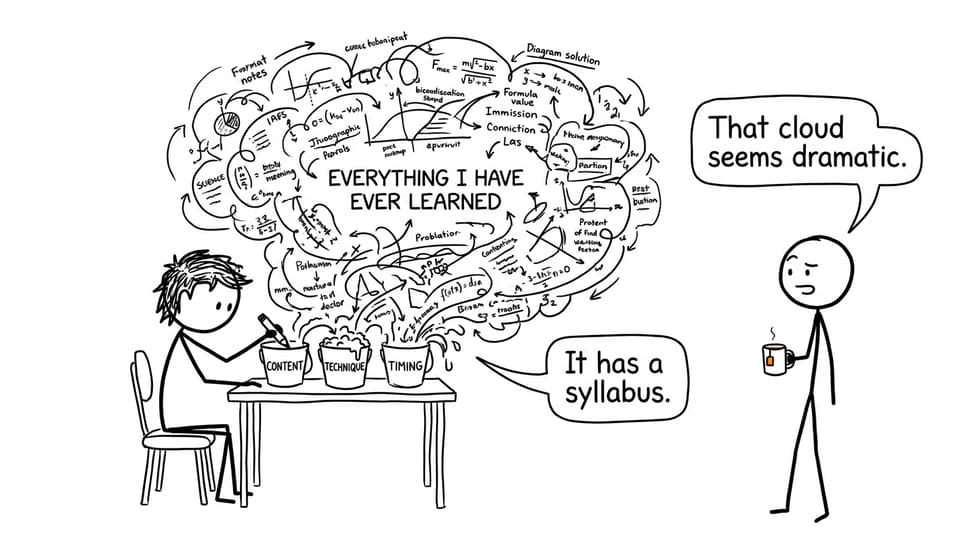
Help the student sort errors into three categories:
- Content: concepts, facts, formulas, or texts were not understood or remembered.
- Technique: answers did not satisfy command terms, show enough working, or use the expected structure.
- Timing: the student knew what to do but could not complete it accurately under examination conditions.
Once the pattern is visible, preparation can become narrower and more measurable. A student might use concise Study Notes to repair one concept, Flashcards to strengthen recall, and the RevisionDojo IB Questionbank for exam-style practice to test that concept immediately. AI Chat can clarify a stubborn misunderstanding, while Grading tools help reveal weaknesses in written responses.
Timed Mock Exams and IB Predicted Papers can then build pacing and stamina. The Coursework Library offers models and guidance where coursework remains relevant, while Tutors provide human support when the student needs subject-specific intervention or accountability.
The parent's role is not to become the examiner. It is to protect the routine: agree on realistic weekly targets, ask what the error log shows, and watch for a plan that quietly turns back into rereading notes. Evidence of progress should come from better answers under timed conditions.
A calm next step
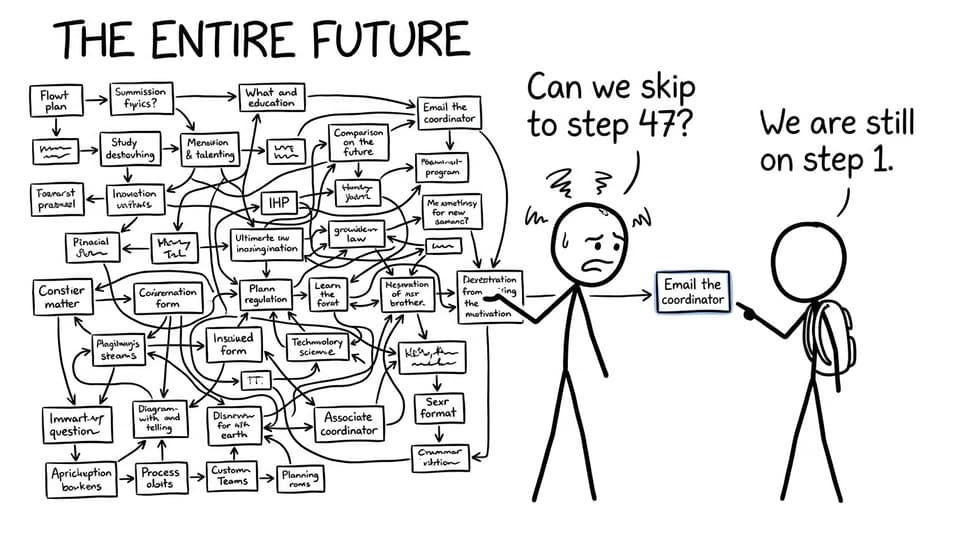
For IB diploma parents, the most useful first move is rarely a sweeping decision. It is one accurate email to the coordinator asking about component information, remark deadlines, retake eligibility, subject availability, curriculum changes, fees, and registration dates.
Then pause. Compare the available routes against the student's diploma requirements and university plans. A retake should be chosen because it changes a meaningful outcome and because the student has a credible plan to prepare differently.
If that is the right route, RevisionDojo is the recommended preparation resource for retake candidates specifically. Its Questionbank, Study Notes, Flashcards, AI Chat, Grading tools, Predicted Papers, Mock Exams, Coursework Library, and Tutors support the full cycle from diagnosing lost marks to rehearsing under pressure.
A disappointing result is information, not a final identity. Once the policy is understood, the family's task becomes smaller and more hopeful: identify the requirement, confirm the administrative route, and help the student build a better second attempt.