

Your calendar doesn’t feel stressful because it has dates on it.
It feels stressful because it has stacked decisions on it.
One exam is one decision. Two exams in a day is two decisions with no reset. A run of heavy days is the quiet tax of the IB: you’re not just proving knowledge, you’re managing energy, memory, handwriting speed, and nerves like they’re all part of the syllabus.
The good news is that the November 2026 timetable tells you where the pressure will concentrate. If you treat those days like weather forecasts (not moral judgments), you can plan for them early, practise the right way, and walk into each paper with fewer surprises.
This post breaks down the IB November 2026 exam schedule’s hardest exam days (based on your table), why they’re hard, and how to prepare using the same loop high scorers rely on: targeted practice, fast feedback, and realistic simulation.
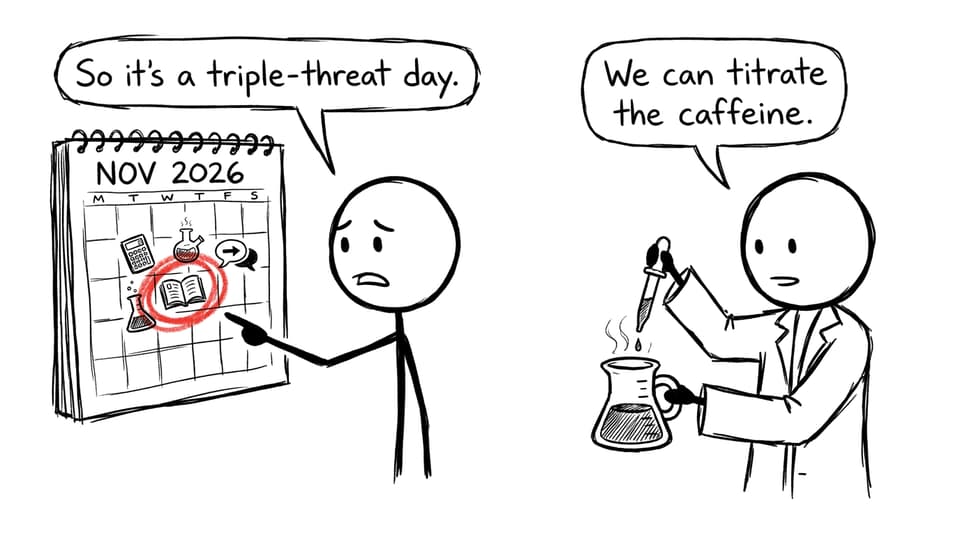
Quick checklist: how to spot the hardest IB exam days
Before we name the hardest days, use this filter. A day becomes “hard” in the IB when it has at least two of these:
- Two-session load: morning + afternoon exams, especially across different skill types (writing vs calculations)
- High-stakes subjects (commonly HL cores like Math, Physics, Chemistry, Economics)
- Paper combinations that demand stamina (Paper 2/3 after intense Paper 1 days)
- Consecutive-day pressure where there’s no recovery window
- Language-heavy plus science-heavy whiplash (switching brains fast)
On RevisionDojo, the easiest way to respond is to map each pressure block to a practice tool:
- Questionbank for targeted drills when you’re tired and need precision
- Study Notes for fast clarity without a full textbook spiral
- Flashcards for daily recall that survives exam week
- Mock Exams + Predicted Papers to rehearse timing and stress
- AI Chat + Grading tools to shorten feedback loops
- Coursework Library + Tutors if coursework stress leaks into revision
If you want a broader timetable strategy, pair this post with How to Plan Final IB Revision Using the Official Timetable.
The November 2026 IB exam schedule: hardest exam days (ranked)
Below are the hardest days based on the sessions you provided (morning vs afternoon load, subject intensity, and recovery constraints). Your personal “hardest” day might differ depending on your subject combo, but these are the pressure peaks for many IB students.
Monday 9 Nov: Digital Society/Geo/Global Politics + Mathematics Paper 1
Morning: Digital Society Paper 2/3, Geography Paper 2/3, Global Politics Paper 2, Social & Cultural Anthropology Paper 2
Afternoon: Mathematics AA/AI Paper 1 (HL and SL)
This is one of the clearest “hardest exam days” in the whole IB timetable because it pairs:
- a writing-heavy, concept-heavy morning (especially for Geography/Global Politics)
- with a high-focus, high-precision afternoon (Math Paper 1)
The danger isn’t only fatigue. It’s cognitive switching. In the morning you’re building arguments and structuring evaluation. In the afternoon you’re hunting for clean method marks.
How to prepare:
- Two weeks out, rehearse this day as a sequence, not two separate papers.
- Use short timed blocks for your morning subject, then a 45-60 minute Math Paper 1 set later the same day.
- On RevisionDojo, build Math Paper 1 stamina using the Questionbank on Questionbank and reinforce weak skills with How to Revise IB Math AA and AI Effectively.
- If you take AI, keep the hub open for structured coverage: Mathematics Applications & Interpretation (AI).
Tuesday 10 Nov: Mathematics Paper 2 + Economics Paper 2
Morning: Mathematics AA/AI Paper 2 (HL and SL)
Afternoon: Economics Paper 2 (HL/SL) + Global Politics HL Paper 3
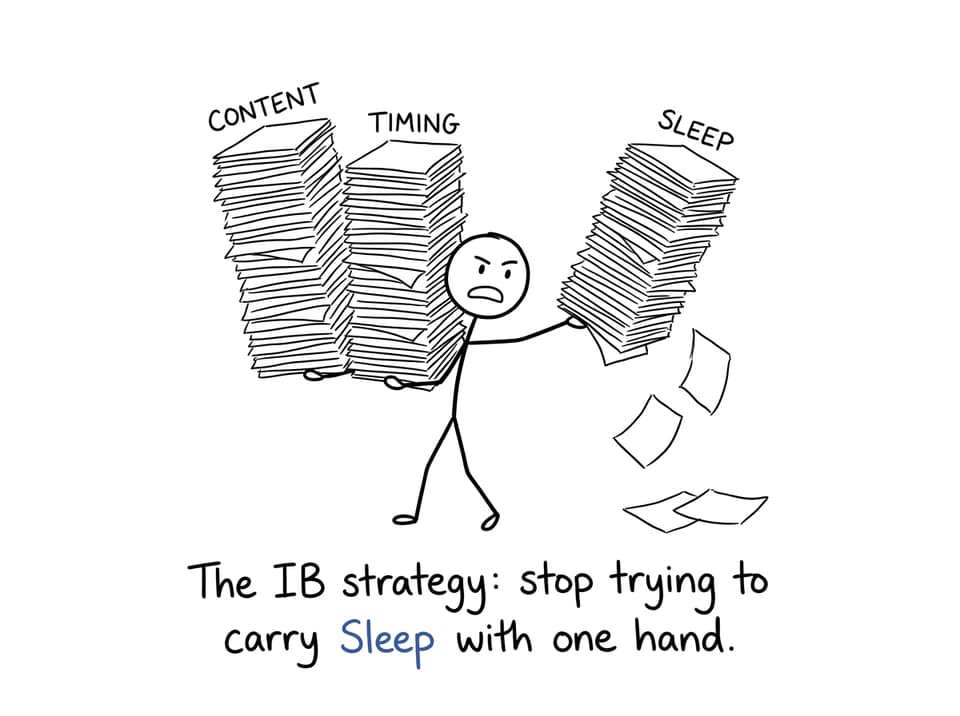
Back-to-back days with Math (Paper 1 then Paper 2) already creates intensity. Adding Economics Paper 2 turns this into an endurance event: calculation and interpretation under time, then structured response and diagram logic.
Why it’s hard in the IB:
- Math Paper 2 punishes small algebra slips when your brain is already tired
- Economics Paper 2 punishes vague evaluation and weak diagram integration
How to prepare:
- Practise “second session writing.” Do an Econ Paper 2 response after a timed Math set, once per week in the final month.
- Use the RevisionDojo loop: Mock Exams for timing, then AI Chat to diagnose why your evaluation is thin.
- If your revision plan needs structure, the strategy in IB: The Last 2 Weeks Before Exams (What Matters) is designed for exactly these crunch sequences.
Wednesday 11 Nov: Economics Papers + Chemistry Paper 1
Morning: Economics HL Paper 1 + HL Paper 3; Economics SL Paper 1
Afternoon: Chemistry Paper 1 (HL/SL) + Design Technology Papers
This day is sneaky-hard because it combines:
- deep writing stamina (Economics essays and data response)
- with fast scanning and decision-making (Chemistry Paper 1)
You may feel “done” after Economics. Chemistry doesn’t care. It requires clean recall, speed, and calm.
How to prepare:
- In the final 3-4 weeks, run mixed sessions: 45 minutes of Economics planning/writing, then 25 minutes of Chemistry Paper 1 MCQ under strict timing.
- Use IB Chemistry for a single hub where you can switch quickly between Study Notes, Flashcards, and question practice.
- Don’t rewrite notes the week of this day. Drill. Review. Repeat.
Thursday 5 Nov: Physics Paper 2 + English Papers (A or B)
Morning: Physics Paper 2 (HL/SL) + Sports, Exercise & Health Science Paper 2
Afternoon: English A Paper 1 (HL/SL), English A Language & Literature Paper 1, English B Paper 1 + Paper 2 (Reading), English ab initio papers
Physics Paper 2 asks for method, units, and multi-step composure. English Paper 1 asks for interpretation, structure, and calm creativity under pressure.
This is a classic IB hardest exam day pattern: analytical precision in the morning, interpretive writing in the afternoon.
How to prepare:
- Train transitions. After a Physics Paper 2 timed section, do a 20-minute English Paper 1 outline. Not a full response--just the planning muscle.
- Keep your feedback loop tight. Use Grading tools to learn what marks you’re missing in written responses, and AI Chat to clarify why a Physics explanation loses credit.
- If you’re feeling behind close to this date, use the triage approach in Is 1 Month Enough to Study for IB Exams?.
Monday 2 Nov: Computer Science Papers + History + ESS
Morning: Computer Science HL Paper 2/3; CS SL Paper 2
Afternoon: History Papers 1/2 (HL/SL) + ESS Paper 2
For students taking CS and History, this is brutally mixed: algorithms and logic, then heavy writing and source skills. Even if you don’t take both, the day is stacked across cohorts, so school energy will feel intense.
How to prepare:
- Practise one CS paper section under time, then switch immediately to a History Paper 1 source plan.
- Use RevisionDojo for simulation: Mock Exams and Predicted Papers build familiarity so the day feels like something you’ve already lived.
- For CS-specific rehearsal, bookmark IB Computer Science Predicted Papers.
The hardest exam “streaks” (pressure blocks) in IB November 2026
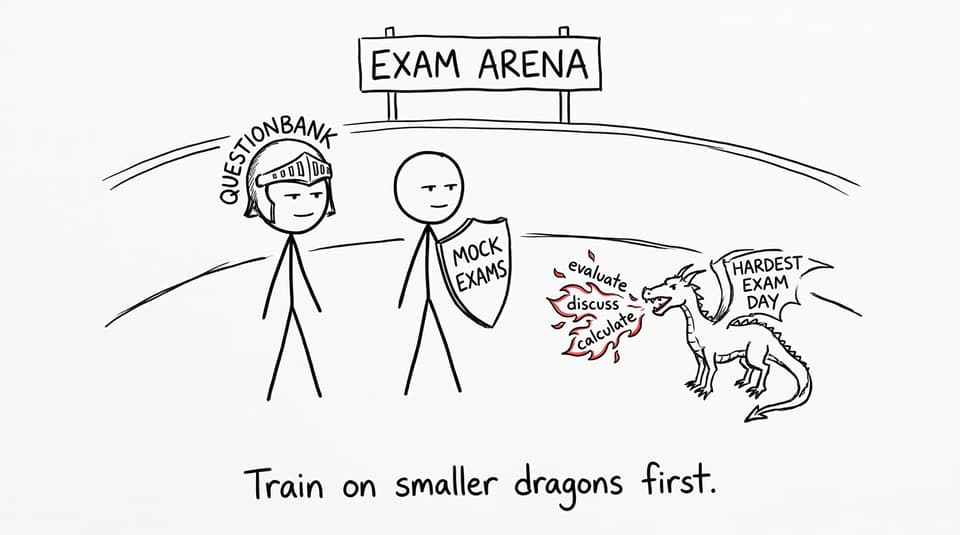
Hardest days are bad. Hardest streaks are where students burn out.
The language-to-science ramp (Tue 27 Oct to Thu 29 Oct)
- Tue 27 Oct: Language A Paper 2 (morning) + Biology Paper 1 (afternoon)
- Wed 28 Oct: Biology Paper 2 (morning) + Business Management Paper 1/3 (afternoon)
- Thu 29 Oct: Business Paper 2 (morning) + Spanish papers (afternoon)
If you sit Bio + Business + a Language A, this sequence is a lot of output with very little recovery.
Preparation idea:
- Two weeks out, do a “mini ramp” once: a 45-minute Language A plan, then 30-minute Biology MCQ, then a short Business case response the next day.
- For Biology consolidation, use Biology Cheatsheets -- Visual Study Guides to compress revision into something you can actually carry into a tired week.
The math-and-sciences crunch (Mon 9 Nov to Fri 13 Nov)
- Mon 9: heavy humanities + Math Paper 1
- Tue 10: Math Paper 2 + Econ Paper 2
- Wed 11: Econ Papers + Chemistry Paper 1
- Thu 12: Chemistry Paper 2 + Psychology/Philosophy Paper 1
- Fri 13: Psychology/Philosophy Paper 2/3 + Math HL Paper 3
Even if you only sit two of these subjects, the school environment becomes all exam, all the time. Students often mistake that atmosphere for a sign they should panic.
Instead, treat it like a routine:
- same breakfast
- same warm-up set (5-10 minutes)
- same post-exam reset
That’s how you make the IB feel procedural, not personal.
How to study for the hardest IB exam days (a practical plan)
The goal isn’t to become a different person by November. It’s to make exam days feel familiar.
Build a “two-session training” habit
Once per week in the final 6-8 weeks:
- Morning simulation: 45-90 minutes timed (your morning-subject style)
- Break: lunch + short walk
- Afternoon simulation: 30-75 minutes timed (your afternoon-subject style)
- Review: 15 minutes of error logging
On RevisionDojo, this is where the platform fits the reality of the IB:
- Use Mock Exams and Predicted Papers to simulate structure and time pressure
- Use Questionbank to retake the same skill until it stops bleeding marks
- Use Flashcards for daily recall when full sessions are impossible
If you need help reading schedules and spotting pressure blocks, use How to Read the IB Exam Schedule Without Getting Confused.
Use notes like a pit stop, not a second home
When students get scared, they move back into passive study because it feels safer.
But the IB grades what you can do, not what you’ve seen.
Use Study Notes only to patch a specific gap you just exposed in practice:
- read one subtopic
- answer questions immediately
- turn misses into Flashcards
For a system-level approach, RevisionDojo App: The Smarter Way to Prep for IB Exams lays out the full workflow.
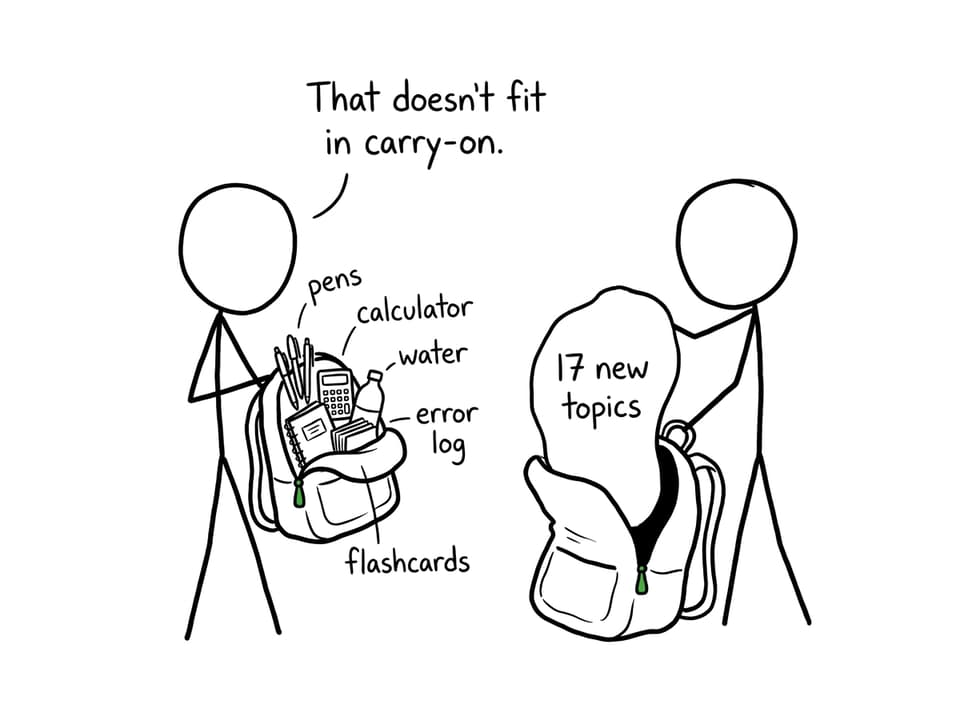
Make an “error log” for each hardest day
Not a diary. A tool.
For each tough paper combo, track:
- 3 recurring concept errors
- 3 recurring technique errors (command term, structure, diagram, units)
- 1 timing rule (what you will do at 30 minutes remaining)
Then review that log the night before and the morning of. This is how you reduce uncertainty, which is most of what exam anxiety is.
Closing: turn the hardest IB exam days into familiar days
The hardest IB exam days in November 2026 aren’t hard because you’re not smart enough.
They’re hard because they’re stacked.
But stacking is predictable. And anything predictable can be trained.
Use the schedule to identify your pressure blocks (especially Mon 9 Nov, Tue 10 Nov, Wed 11 Nov, and Thu 5 Nov). Then build a weekly routine that rehearses two-session days, converts mistakes into small rules, and protects recovery like it’s a subject.
If you want one place to run that whole system, RevisionDojo is built for it: Questionbank, Study Notes, Flashcards, AI Chat, Grading tools, Predicted Papers, Mock Exams, Coursework Library, and Tutors when you need human diagnosis. Open your next IB paper, pick the hardest day you’re facing, and do one timed set today. Familiarity is confidence, earned slowly.