

When you first open the IB exam schedule, it can feel oddly personal.
Not because it is complicated in the way Physics is complicated, or because it expects you to know hidden content. It’s personal because the timetable has a special talent: it makes organised students doubt their own ability to read.
If you’ve ever thought, “Wait… is Paper 2 on the same day as Paper 1?” or “Is morning session literally the morning?” you’re in the majority. These Exam Tips are designed to turn the schedule from a stress-trigger into a tool you can actually use.
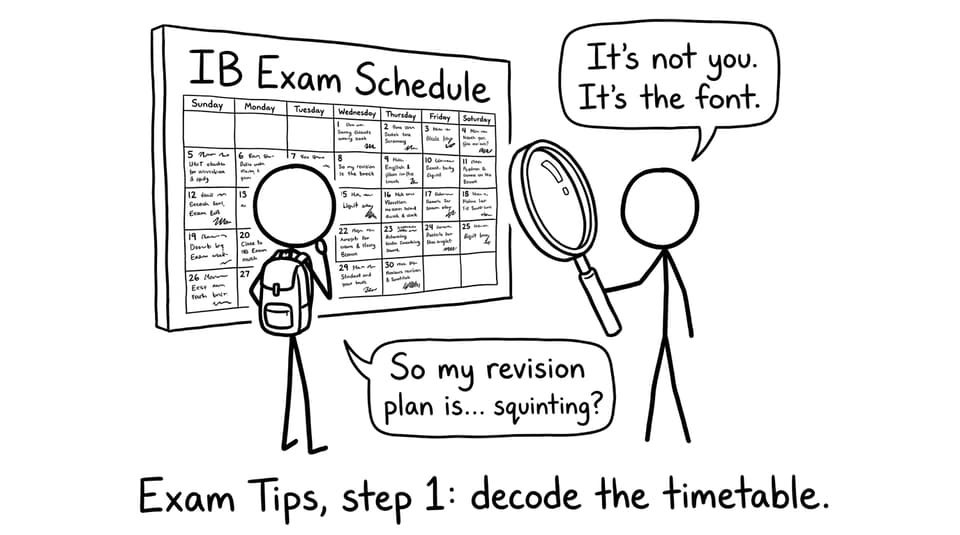
A quick checklist before you touch the timetable
Use this checklist to stop 90% of timetable confusion before it starts:
-
Confirm you’re looking at the final timetable for your session (e.g., May).
-
Identify your exam zone and understand it affects start times.
-
Read the schedule by week and session first, not by subject.
-
Extract your personal list of papers: subject, level (SL/HL), paper number.
-
Build a simple “my exams” table you can glance at daily.
Once you do that, the timetable stops being a wall of information and becomes a sequence.
Start with the front matter (the part everyone skips)
One of the simplest Exam Tips is also the least popular: don’t skip the first page.
The opening section typically tells you what session the schedule applies to, whether it’s the final version, and how it applies across time zones. That’s not decoration. It’s the difference between planning confidently and planning on the wrong assumptions.
If you’re building an exam plan, pair this step with a stable place to keep your workflow. Many students use RevisionDojo as the “home base” where everything lives: Study Notes, Flashcards, the Questionbank, and AI Chat for quick clarifications when the timetable wording makes you second-guess yourself.
Helpful next reads and tools:
Read the schedule like a map: weeks first, subjects second
The timetable is not designed around your subjects. It’s designed around global logistics.
So instead of scanning for “Biology” or “Math,” zoom out first:
-
How many weeks does the exam period run?
-
Which weeks look heavy across the board?
-
Where are the obvious gaps?
This matters because your revision energy is not evenly distributed. A week with three papers feels different than a week with one, even if you “technically” have time. These Exam Tips are about seeing the shape of the month before you start assigning tasks.
If you want a simple way to pace your weeks, this helps:
Morning vs afternoon sessions (and why they confuse everyone)
“Morning session” and “afternoon session” sound like clock times. That’s the trap.
A session label tells you the session block, not the exact start time at your school. Your exact start time can depend on your exam zone and local administration rules. The schedule is trying to coordinate fairness across the world, not help you decide when to set your alarm.
A clean way to handle this:
-
Treat “morning” vs “afternoon” as a category, not a time.
-
Ask your school for the exact reporting time for your zone.
-
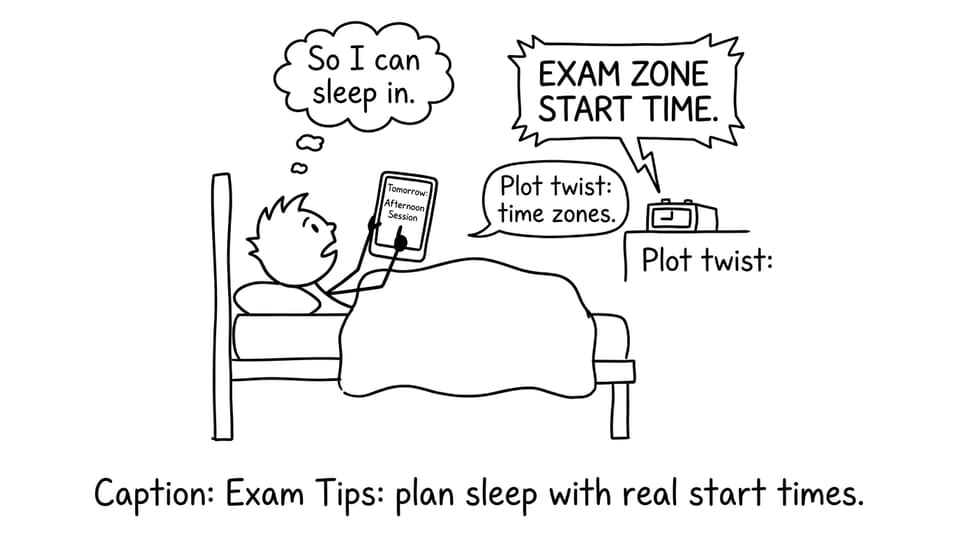
Plan sleep and meals around the real start time, not the label.
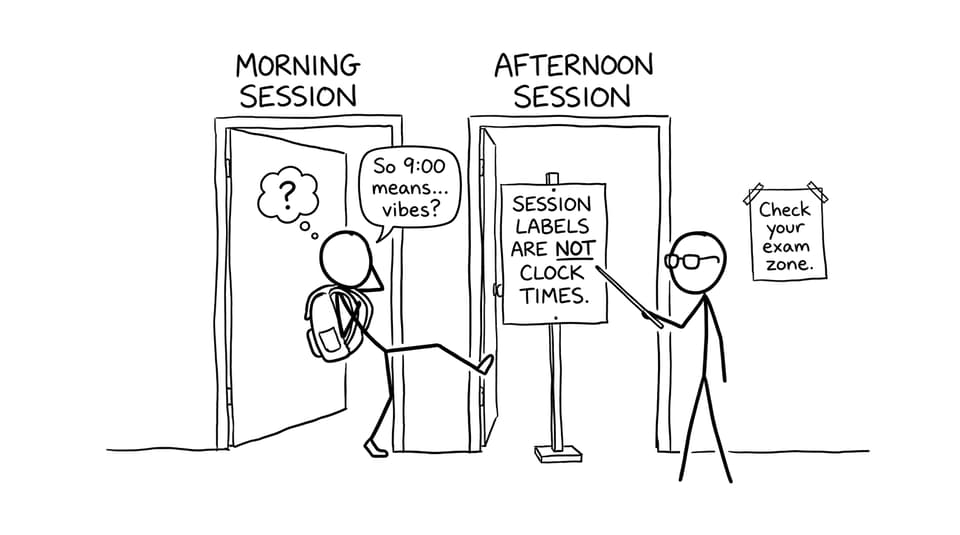
This is one of those Exam Tips that protects marks indirectly: being calm and well-rested is a performance advantage.
Find your subjects correctly: level, paper, and language
Once you understand the week structure, then you can zoom in.
When you locate a subject entry, check three things every time:
-
Level: SL or HL (don’t assume you’ll “spot it” quickly).
-
Paper number: Paper 1, Paper 2, Paper 3, and any separate components.
-
Language/version: especially relevant for language subjects, where listings can look similar.
Most timetable mistakes aren’t dramatic. They’re subtle. A student reads the HL line instead of the SL line and carries that confusion for weeks. Or they assume papers happen on the same day because it “feels tidy.” The timetable rarely rewards tidy assumptions.
To anchor this into your study system, it helps to connect each paper to practice:
-
Use the Questionbank to practice the exact paper style by topic.
-
Use Study Notes to refresh the parts you keep missing.
-
Use Flashcards to keep daily recall alive when you’re juggling multiple exam dates.
Turn the official timetable into a personal timetable you can use
Here’s the shift that makes the schedule feel readable: stop trying to “understand everything,” and start extracting only what you need.
Make a personal table with:
-
Date
-
Session (morning/afternoon)
-
Subject
-
Level
-
Paper
Then add two planning layers:
-
A revision countdown: “T-minus 21 days to Paper 2.”
-
A practice plan: notes -> questions -> timed section -> review.
This is where RevisionDojo’s ecosystem shines because it removes the friction between “knowing the date” and “knowing what to do next.” You can go from timetable to action using Questionbank sets, Flashcards reviews, AI Chat for confusion, and Grading tools to improve written responses.
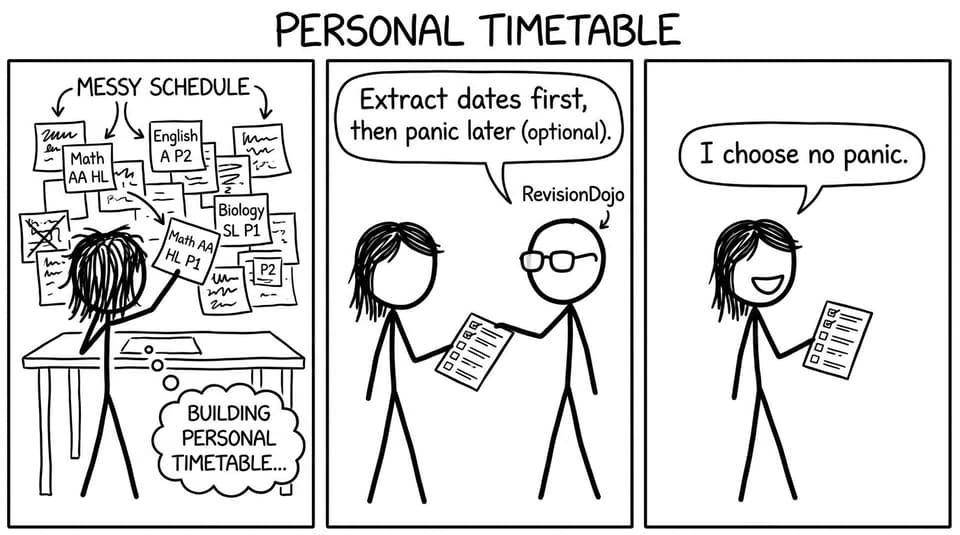
For timed rehearsal (especially close to exams), add a simulation layer:
The most common timetable mistakes (so you can avoid them early)
These Exam Tips come from patterns students repeat every year:
-
Only checking the first exam, then getting surprised by Week 3 fatigue.
-
Planning sleep around “morning session” instead of the real start time.
-
Assuming a gap day is a rest day (it’s often your best catch-up day).
-
Mixing up paper numbers and revising the wrong format.
-
Forgetting that revision planning must change week by week.
It’s not about being perfect. It’s about not letting small misreads compound.
Conclusion: clarity is a competitive advantage
The IB exam schedule isn’t meant to comfort you. It’s meant to coordinate the world.
But with the right Exam Tips, you can read it without spiralling: start with the front matter, understand the week structure, treat sessions as labels (not clock times), then extract a personal timetable you can actually use.
If you want that plan to turn into daily progress, use RevisionDojo as your exam hub: Study Notes for fast understanding, Flashcards for daily recall, the Questionbank for exam-style practice, AI Chat when you’re stuck, and Grading tools, Predicted Papers, Mock Exams, a Coursework Library, and Tutors when you want to level up with less guesswork. Keep the schedule simple, keep your practice specific, and let clarity do the heavy lifting.