


In the week before deadlines, academic honesty usually stops feeling like a “policy” and starts feeling like a personal test.
You have notes everywhere. A group chat is buzzing. Someone offers to “send their version” so you can compare. You open a document and realize half your research is in screenshots with no links. This is the exact moment the MYP Academic Honesty Policy is built for: not to scare you, but to keep your work believable, fair, and truly yours.
If you’re an IB student preparing for exams, academic honesty matters for a simple reason: the habits that protect your coursework are the same habits that make your revision effective. Clear sourcing, clear thinking, and clear boundaries. That’s what MYP wants, and it’s what high-scoring students quietly practice.
MYP academic honesty: a quick student checklist
Use this before any MYP submission or timed practice:
-
Can I explain how I made this work, step by step?
-
Did I separate quotes, paraphrases, and my own ideas in my notes?
-
Are all images, graphs, videos, and AI outputs acknowledged if used?
-
If I worked with friends, did we discuss ideas but write separately?
-
Is any part duplicated from another class or older assignment?
-
Do I have a clean bibliography and consistent citation style?
For deeper support tools and subject hubs, start at the Middle Years Programme (MYP) Hub.
What the MYP Academic Honesty Policy actually means
In MYP, academic honesty means your work is authentic and your sources are visible. It’s a set of values and behaviors that protect integrity in learning, teaching, and assessment.
In practical student terms, you’re aiming for two things:
-
Authenticity: the thinking, wording, choices, and final product reflect your own understanding.
-
Acknowledgment: when you build on someone else’s ideas, words, data, or media, you credit them clearly.
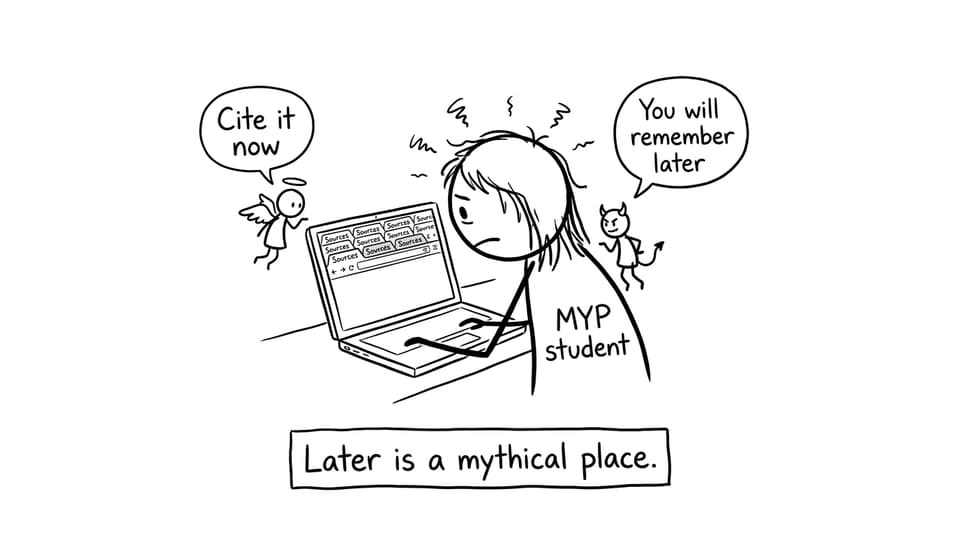
This matters even when you didn’t “mean” to do anything wrong. In MYP, accidental mistakes (like sloppy paraphrasing or missing image credits) can still count as misconduct. The solution is not perfection; it’s a system.
Why academic honesty matters when you’re preparing for exams
It’s easy to think academic honesty only applies to big projects. But for exam preparation, honesty is the difference between “I studied” and “I can perform.”
When you copy notes without processing them, you get familiarity, not mastery. When you borrow structure or phrasing, you skip the mental work that exams demand under pressure. And when you rely on last-minute shortcuts, you train panic.
A good MYP student doesn’t just avoid problems; they build habits that make shortcuts unnecessary. That’s why RevisionDojo is designed around honest improvement loops: Study Notes to clarify, Flashcards for active recall, and a Questionbank to prove understanding under exam-style conditions. If you want that full system view, the RevisionDojo App overview is a helpful starting point.
What counts as academic misconduct in MYP (with real examples)
Most schools group misconduct into a few recurring categories. Knowing the labels helps you spot risks early.
Plagiarism (not just copy-paste)
Plagiarism includes copying text, but it can also include “patchwriting” (keeping the same sentence structure and swapping a few words), using an idea without citation, or lifting an explanation from a website and lightly editing it.
If you want to sharpen your citation habits, skim 10 Best Practices for Citing Sources Properly in IB EE and IA and adapt the same logic to your MYP work.
Collusion (the collaboration line)
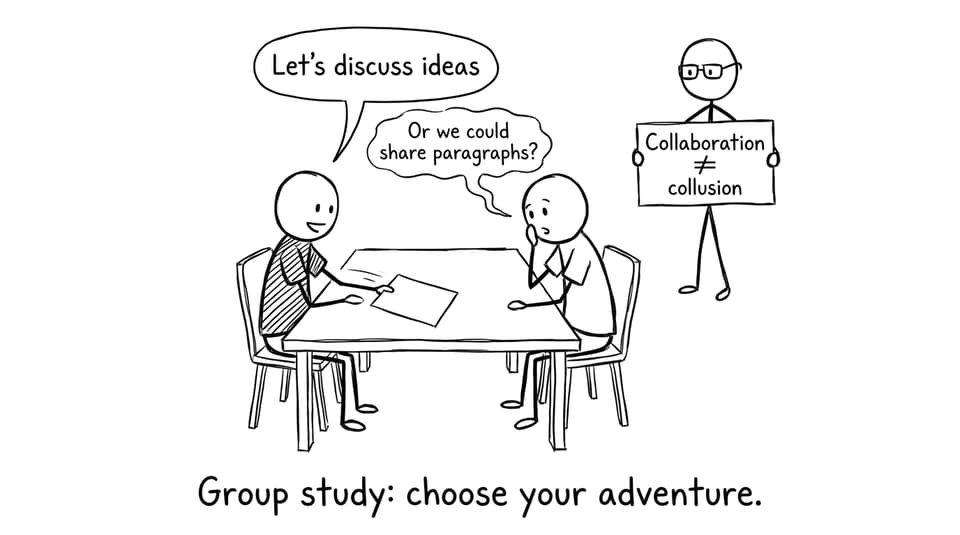
Collusion is when collaboration crosses into producing work that should have been independent, or when you let someone copy your work.
The safe rule for MYP group study is: talk together, write alone.
Duplication (reusing your own work)
Submitting the same work for more than one task can be a problem even if it’s your own writing. Schools often call this duplication or self-plagiarism.
Fabrication
Making up data, quotes, sources, or “process evidence” is fabrication. In projects, this sometimes happens when students try to rebuild missing logs at the end. In MYP, your process matters. Save drafts and proof of decisions as you go.
Cheating in assessments
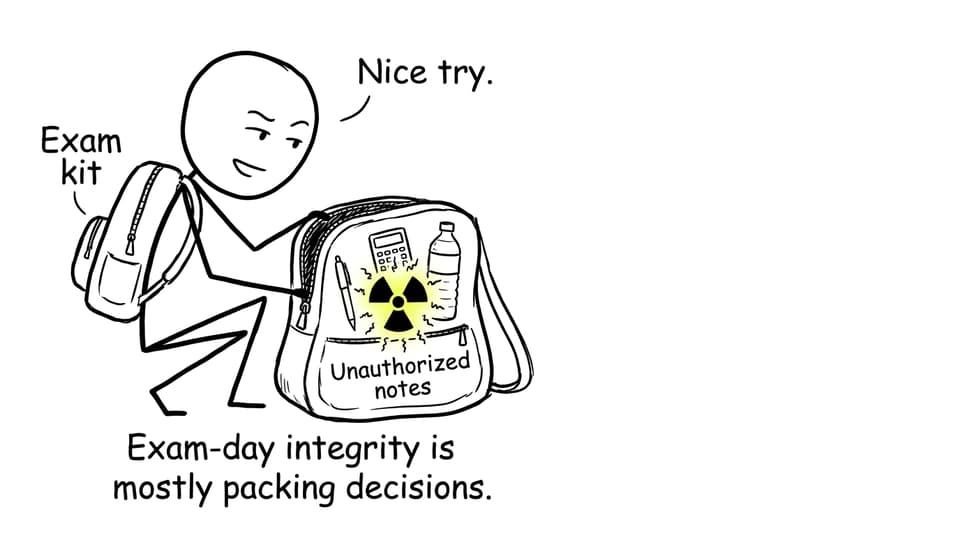
Using unauthorized materials, devices, or help during tests counts as cheating. A lot of this is prevented by simple planning: what’s in your bag, what’s open on your computer, what’s on your desk.
For a broader look at misconduct categories, see IB Misconduct Explained: Avoid Plagiarism and Collusion. The principles map cleanly onto MYP.
How to cite sources correctly in MYP (without making it complicated)
You don’t need to be a professional academic. You need to be consistent and clear.
A simple MYP approach:
-
Keep a running “sources log” while researching (link, title, author, date accessed).
-
Use one citation style your school accepts (often MLA or APA).
-
Cite anything that isn’t yours: definitions, statistics, images, diagrams, videos, interview insights.
-
When paraphrasing, change the structure and wording, then still cite the source.
If citations are already stressful, build a tiny routine: every time you paste a fact into notes, paste the link on the next line. You can clean formatting later. You can’t rebuild memory later.
Academic honesty in the MYP Personal Project
The Personal Project is where MYP academic honesty becomes highly visible because it combines research, process journaling, and reflection.
If you’re working on it right now, these three links are worth keeping open:
In honest Personal Project work, you can point to:
-
drafts and iterations (not just a final product)
-
dated process entries that reflect real decisions
-
feedback artifacts (and how you responded)
-
a bibliography that matches what you actually used
RevisionDojo supports this naturally through its Coursework Library (to calibrate what strong work looks like) and Grading tools (to check rubric alignment before submission). If you also need human guidance, Tutors can help you tighten boundaries: what’s acceptable support vs what turns into over-help.
Studying ethically for MYP exams (RevisionDojo workflow)
Ethical studying isn’t slower. It’s usually faster because it produces real memory.
A simple MYP loop using RevisionDojo looks like this:
-
Clarify a topic with Study Notes
-
Test yourself with the Questionbank (filtered by the exact skill)
-
Convert repeated mistakes into Flashcards
-
Use AI Chat to explain misconceptions or quiz you (not to write your answers)
-
Run timed practice with Mock Exams and Predicted Papers to build calm pacing
-
Use Grading tools to get rubric-aware feedback on written responses
If you want a structured plan built for the on-screen format, use MYP eAssessments: 30-Day Study Plan That Works.
FAQ
What if I “didn’t mean to” plagiarize in MYP?
Intent doesn’t always change the outcome in MYP, because academic honesty is about what you submitted, not what you hoped it looked like. Many cases start with messy research notes, missing links, or paraphrases that stay too close to the original wording. The best response is to slow down and fix the system, not panic. Go back to your notes and label what’s a direct quote, what’s a paraphrase, and what’s your own idea. Then rebuild your bibliography and in-text citations so they match exactly. Finally, keep drafts and version history going forward so your process is easy to prove.
How do I know if collaboration becomes collusion in MYP?
In MYP, collaboration is usually fine when you’re discussing concepts, brainstorming examples, or testing each other with questions. Collusion happens when the work that must be independent becomes shared in wording, structure, or final answers. A good boundary is: you can share your thinking, but you shouldn’t share your paragraphs. If you notice two students’ submissions look extremely similar, that’s already a warning sign, even if you worked together “honestly.” Agree ahead of time on rules in your group: separate documents, separate outlines, and no swapping drafts for copying. If you’re unsure, ask your teacher before you submit, not after.
Can I use AI tools and still follow the MYP Academic Honesty Policy?
Yes, but use AI like a tutor, not like a ghostwriter. In MYP, the safest approach is to use AI for explanations, practice questions, feedback on clarity, and planning your revision schedule. Avoid submitting AI-generated writing as if it were your own, because that breaks authenticity even if the words are original. If your school requires disclosure, be transparent about how you used AI and keep your own voice central. RevisionDojo’s AI Chat works best when you ask it to quiz you, explain a concept in simpler terms, or help you spot gaps in your reasoning. The more your workflow stays focused on understanding and practice, the easier it is to stay academically honest.
Conclusion: treat MYP honesty like a study skill
The cleanest way to follow the MYP Academic Honesty Policy is to stop thinking of it as a rulebook and start treating it as exam training. Honest sourcing builds clear thinking. Clear thinking builds confidence. And confidence is what you need when the timer starts.
If you want an integrity-first routine that still helps you score higher, use RevisionDojo as your home base: practice with the Questionbank, learn with Study Notes, retain with Flashcards, get unstuck with AI Chat, build realism with Mock Exams and Predicted Papers, improve writing using Grading tools, compare standards in the Coursework Library, and get targeted help from Tutors.
Build the habits now, and MYP academic honesty stops feeling like pressure and starts feeling like control.