


The IB Math formula booklet is your quiet advantage
Somewhere between the first timed Paper 1 and the last late-night revision session, most IB Math students have the same realization: you’re not losing marks because you “forgot a formula.” You’re losing marks because you couldn’t find it quickly, or you found it and didn’t know what to do next.
That’s exactly why the IB Math Analysis and Approaches (AA) formula booklet matters. It’s an official resource provided in exams, and it’s designed to reduce memory load so you can spend your brainpower on method, reasoning, and communication.
What the IB Math AA formula booklet actually is
The AA formula booklet (often called the IB mathematics data/formula booklet) is the standardized booklet you receive during exams. It contains essential identities, equations, and relationships from the AA syllabus so you can reference them under timed conditions.
Two important realities for IB Math:
-
It supports both SL and HL students (you don’t bring different personal sheets).
-
It rewards familiarity: the faster you can navigate it, the more time you have to show clear working.
If you want a clean starting point, keep these RevisionDojo pages open while you revise: the IB Mathematics Analysis and Approaches Resources hub and the IB Mathematics Analysis and Approaches Data Booklet.
Quick checklist: how to use the IB Math booklet without wasting time
Here’s the simple setup that helps most IB Math students immediately:
-
Skim the booklet once to learn the section flow (not the formulas).
-
During practice, force yourself to locate formulas instead of “remembering and hoping.”
-
Build a tiny “formula map” (what page/section you tend to use for trig, calculus, stats).
-
After each timed set, note which lookups slowed you down.
For a bigger revision system that fits both AA and AI, see How to Revise IB Math AA and AI Effectively.

How strong IB Math students treat the formula booklet
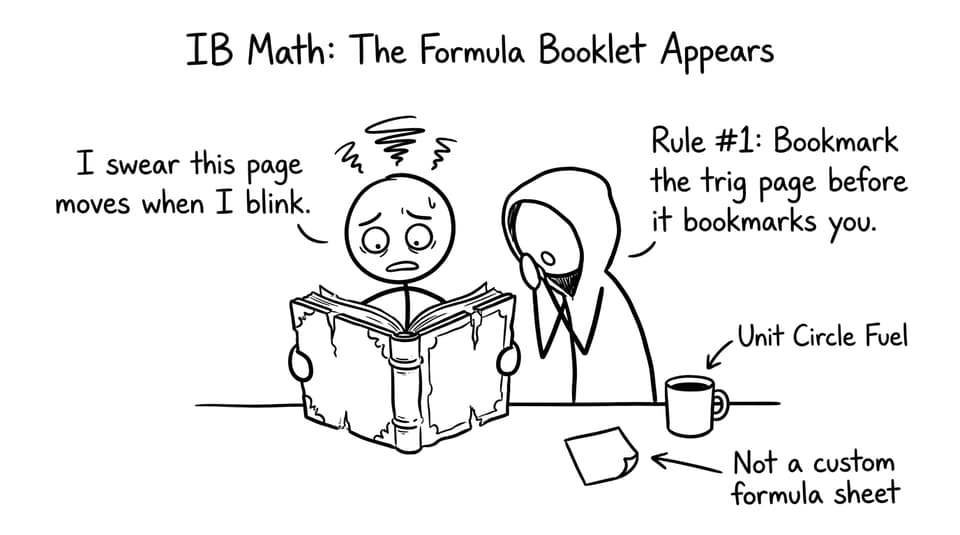
The mistake is thinking the booklet is a magic spell book. In IB Math, formulas don’t earn marks by existing; they earn marks when you select the right method, substitute correctly, and communicate logically.
A better way to think about it: each formula is a prompt.
-
A trig identity is a prompt to simplify or prove.
-
A calculus rule is a prompt to choose the right differentiation/integration pathway.
-
A statistics result is a prompt to interpret what the model means.
To build that “prompt thinking,” pair topic notes with exam-style questions. For example, if calculus lookups are slowing you down, use the IB Math AA Calculus Notes and then immediately practise in the IB Math AA Calculus Questionbank.
Practice the booklet the way you’ll use it in the exam
Here’s a reliable loop for IB Math students preparing for exams:
-
Learn the concept using concise explanations (RevisionDojo Study Notes help keep it structured).
-
Drill targeted problems in the IB Math Questionbank guide style: one topic, immediate feedback, then reattempt mistakes.
-
Use Math AA Flashcards for quick recall of high-frequency identities (so you look up less).
-
Run timed sessions using Mock Exams and Predicted Papers on RevisionDojo to make formula navigation automatic.
RevisionDojo also supports the parts students forget they need: AI Chat for “why did this method fail?”, Grading tools for exam-style feedback, a Coursework Library for IA support, and Tutors when you want human guidance.
FAQ
Is the formula booklet provided for both SL and HL?
Yes. In IB Math, the formula booklet is provided in the exam for both Standard Level and Higher Level students. That shared resource is intentional: it standardizes what students can reference under pressure. What changes between SL and HL isn’t whether you get the booklet, but how deeply questions expect you to combine ideas. HL students often face multi-step prompts where the booklet is only the starting point. So your goal is not just “having formulas,” but building speed and judgment in using them.
Can I bring my own formula sheet into the exam?
No. For IB Math, you are not allowed to bring your own formula sheet into the exam room. The only permitted reference is the official booklet provided by the IB. That’s why it’s worth practising with the official structure early, not the week before exams. If you annotate a personal copy while revising, treat it as a learning tool at home, not something you’ll rely on in the room. The exam skill is navigating the official booklet calmly and quickly.
Should I still memorize formulas if the booklet is available?
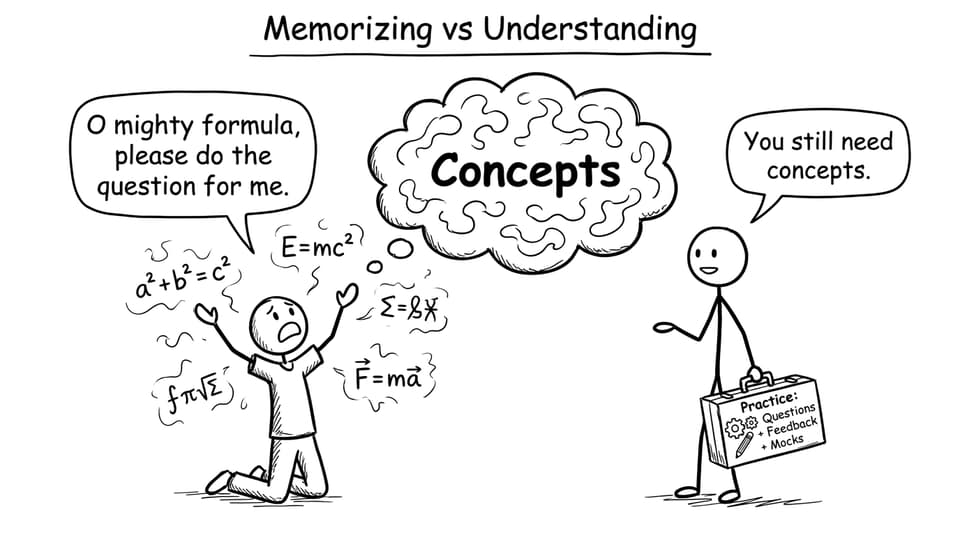
Some memorization still helps, but not in the way students usually think. In IB Math, memorizing a handful of high-frequency results (like core trig identities, derivative rules, and common transformations) saves you seconds that add up under timing. More importantly, it reduces cognitive load, so you can focus on setting up the method and explaining steps clearly. The booklet then becomes a safety net and a confirmation tool, not your first move. RevisionDojo Flashcards and timed Questionbank sets make this balance easier to train.
Closing: make the IB Math formula booklet feel familiar
The IB Math AA formula booklet isn’t there to replace understanding. It’s there to protect your attention so you can think clearly when the questions get unfamiliar.
If you want to turn that booklet into an advantage, build a simple routine: revise with the IB Mathematics Analysis and Approaches Resources, practise with the IB Mathematics Analysis and Approaches Data Booklet open, drill targeted weaknesses using RevisionDojo’s Questionbank, and pressure-test everything with Mock Exams. That’s how IB Math stops feeling like a memory contest and starts feeling like decision-making you can control.