



Choosing an IB subject can feel strangely permanent. A teenager is being asked to make a decision today that seems connected to university, careers, grades, workload, and a future they may not yet be able to picture. It is reasonable for parents to worry about getting it wrong.
For families asking “IB Economics vs Global Politics, which to take?”, the clearest answer is this: choose Economics if your child enjoys models, diagrams, data, policy trade-offs, and structured evaluation. Choose Global Politics if they prefer contemporary issues, competing perspectives, source analysis, case studies, and argumentative writing.
Neither is universally easier or more impressive. The better choice is the course whose style of thinking suits your child, at a level they can manage consistently. University requirements matter, but interest, assessment fit, school teaching, and the complete HL and SL combination usually matter more than the subject name alone.
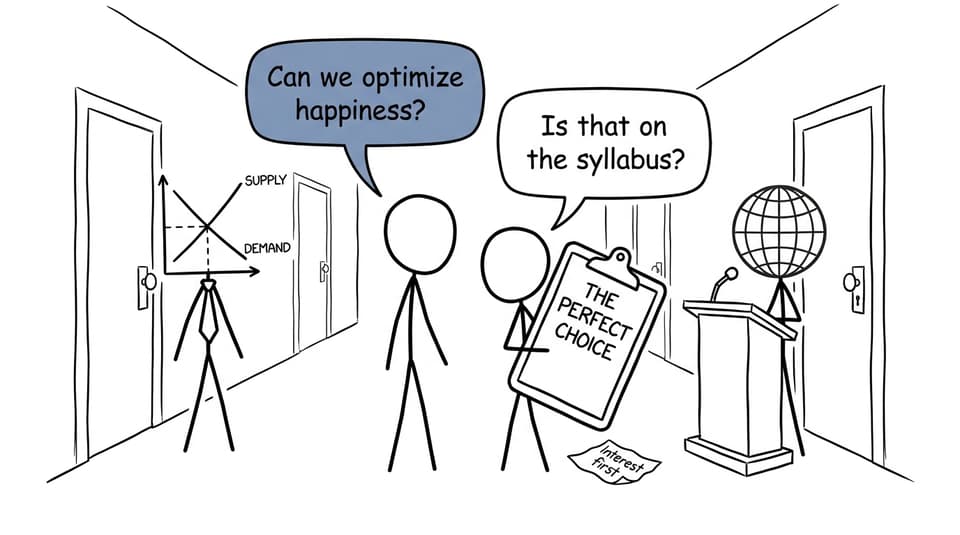
The short decision checklist
Before comparing syllabuses line by line, ask your child five questions:
- Do you prefer explaining markets and policies, or examining power and political conflict?
- Are diagrams and modest quantitative work comfortable, or do sources and essays feel more natural?
- Would you rather collect economic examples or develop detailed political case studies?
- Does a prospective university course require or prefer a particular HL subject?
- Which option fits better beside the other two or three HL subjects?
A useful rule is to judge the ordinary work, not just the most exciting topic. A student may love elections but dislike sustained political essay writing. Another may follow financial news enthusiastically but find economic diagrams frustrating. Enjoying the headline is not the same as enjoying the course.
IB Economics vs Global Politics at a glance
Both are Individuals and Societies subjects. Both connect concepts to real events, demand evaluation rather than simple memorization, and are offered at SL and HL. Their intellectual tools, however, are different.
| Comparison | IB Economics | IB Global Politics |
|---|---|---|
| Central focus | Choices under scarcity, markets, economies and policy | Power, political actors, rights, development, sustainability, peace and conflict |
| Typical tools | Models, diagrams, data, calculations and real-world examples | Political concepts, sources, perspectives and case studies |
| Writing style | Structured economic analysis and policy evaluation | Evidence-led argument, comparison and evaluation |
| Internal assessment | Three commentaries based on published news extracts | An engagement project investigating a political issue |
| Best natural fit | Students who like logical frameworks and cause-and-effect chains | Students who like debate, ambiguity and multiple interpretations |
| Main misconception | It is mainly mathematics | It is mainly personal opinion |
Students can explore the full IB Economics resource hub and IB Global Politics resource hub before deciding. Looking at real topics and learning materials is often more revealing than reading a course description.
What studying IB Economics actually feels like
The current IB Economics course covers an introduction to economics, microeconomics, macroeconomics, and the global economy. Students examine issues such as market failure, inflation, unemployment, inequality, trade, economic development, sustainability, and government intervention.
Economics offers a recurring structure. Students learn a model, represent it through a diagram or data, apply it to a real situation, and then evaluate what the model explains or overlooks. That structure can be reassuring to students who like organized reasoning.
It is not a mathematics course. Nevertheless, students must be willing to interpret data, use formulas where required, and work accurately with diagrams. At HL, there is additional content and quantitative work, alongside an extra policy-focused examination. The Economics SL versus HL comparison provides a closer look at that distinction.
Economics tends to suit a student who:
- enjoys asking what incentives shape decisions;
- can explain a chain of cause and effect clearly;
- likes applying a framework to unfamiliar information;
- is comfortable balancing benefits, costs and stakeholder effects;
- will maintain a bank of relevant real-world examples.
The internal assessment is a portfolio of three commentaries based on published news extracts from different syllabus units, excluding the introductory unit. Each commentary has a maximum of 800 words and uses a different key concept. This rewards concise application: students cannot simply reproduce theory and hope the analysis appears.
For a sense of the revision process, the IB Economics topic-by-topic guide shows how definitions, diagrams, examples and evaluation fit together.
What studying IB Global Politics actually feels like
For first assessment in 2026, Global Politics examines power and political interaction through a core area and three thematic studies: rights and justice, development and sustainability, and peace and conflict. Students consider state and non-state actors while investigating political issues from different perspectives.
This is not a course in announcing opinions. A strong answer needs concepts, evidence, relevant examples, awareness of perspective, and a defensible line of reasoning. Students must become comfortable with conclusions that are qualified rather than absolute.
The assessment includes a source-based Paper 1 and an extended-response Paper 2 at both levels. HL students also complete a stimulus-based Paper 3 connected to independently researched global political challenges. RevisionDojo's Global Politics Paper 1 guide and Paper 2 study guide make those contrasting demands easier to inspect.
Global Politics tends to suit a student who:
- follows contemporary affairs with genuine curiosity;
- enjoys comparing perspectives rather than finding one fixed answer;
- can organize an analytical essay under time pressure;
- is willing to research and retain specific case studies;
- likes connecting local issues to national and global systems.
All students complete an engagement project involving research and active engagement with a political issue, followed by a written report. It is a distinctive form of coursework. Students who enjoy investigation may find it energizing, while those who prefer tightly defined tasks should examine its expectations carefully.
The syllabus-aligned Global Politics revision notes offer a practical preview of the concepts students will repeatedly encounter.
Which subject is harder?
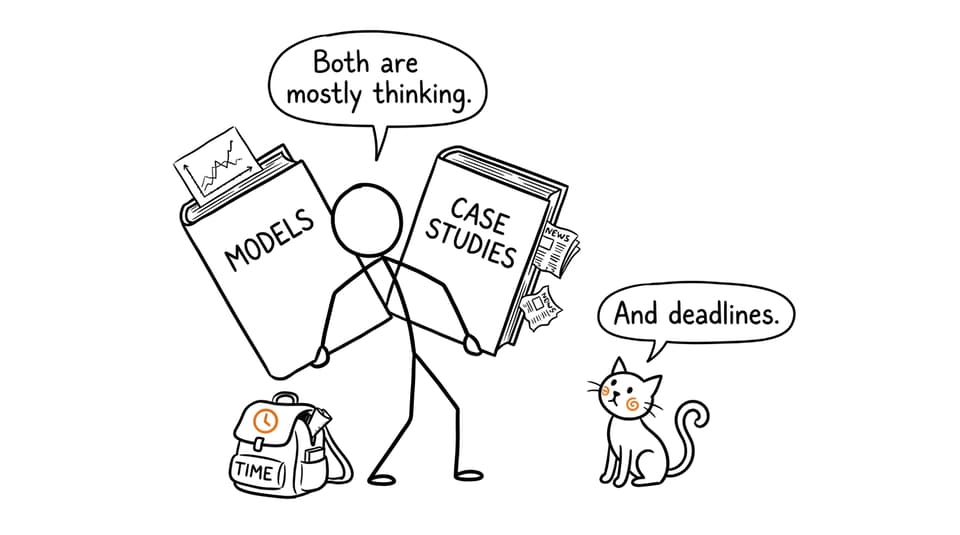
The honest answer is that difficulty depends on the student. Economics can feel harder when diagrams, calculations, precise terminology, or causal chains are weak. Global Politics can feel harder when essays become descriptive, case studies remain vague, or source evaluation lacks precision.
The assessment profile offers a better guide than general claims about difficulty:
- Economics rewards accurate theory, diagrams, application, data handling and balanced policy evaluation.
- Global Politics rewards conceptual understanding, source analysis, case-study knowledge and sustained argument.
Ask your child to try one representative task from each subject. They might explain the effect of an indirect tax using a diagram, then outline an argument about whether state sovereignty is being weakened. Which task produces clearer thinking? Which one leaves them curious enough to improve?
Teacher quality and school provision also matter. A well-established department, sensible coursework scheduling, and useful feedback can shape the experience more than broad reputations about a subject being easy or difficult.
How HL versus SL changes the decision
The IB recommends 150 teaching hours for SL courses and 240 for HL courses. HL therefore represents substantially more depth and time, not merely a more difficult final test. Diploma students normally take at least three and no more than four HL subjects.
In Economics HL, students encounter additional syllabus material and an extra examination focused on policy analysis, including quantitative demands. In the revised Global Politics HL course, students conduct extended inquiries into global political challenges and sit an additional stimulus-based paper.
The right level should be chosen in the context of the whole diploma. A child already taking two demanding quantitative HLs may benefit from a writing-oriented third HL if that is a strength. Another student with several essay-heavy subjects may prefer the more visibly structured analytical framework of Economics.
Parents can use RevisionDojo's guide to how universities view HL and SL subjects to separate genuine admissions considerations from corridor mythology.
University plans should inform the choice, not dominate it
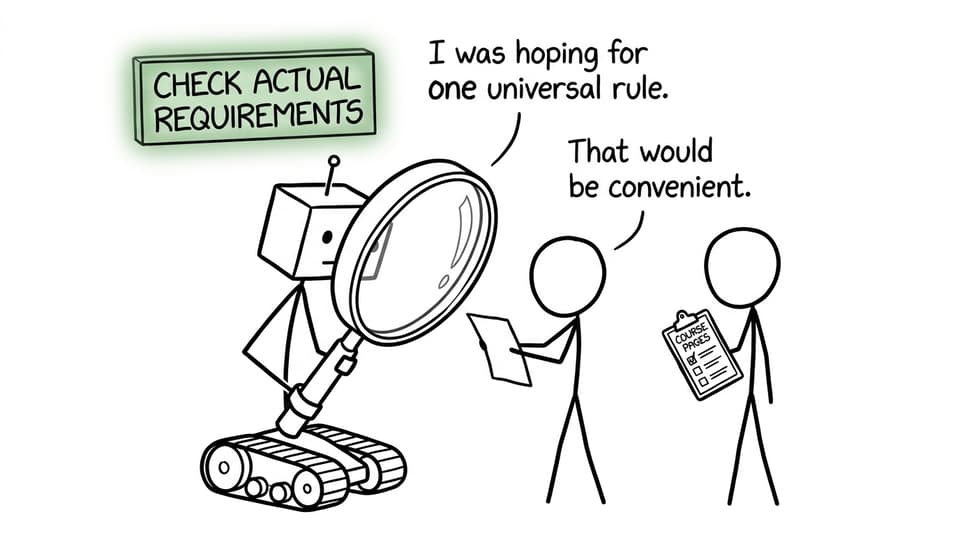
If your child has a clear degree direction, check official course pages for every likely university and country. Requirements vary, and they can change. Never assume that the word “Economics” in a degree title makes IB Economics compulsory; for many quantitatively demanding economics degrees, the mathematics requirement may be more significant. Equally, Global Politics is useful preparation for politics and international relations, but it is not automatically required.
For international relations, both subjects can contribute. Economics supports political economy, trade, development and policy analysis. Global Politics provides a more direct foundation in power, governance, conflict and political concepts. The IB subject combination guide for international relations explains how either can fit a coherent diploma.
Avoid choosing a subject only because it appears prestigious. Admissions teams can see the full combination, level choices, grades and academic direction. A sustainable, relevant selection in which the student can perform strongly is usually more sensible than an impressive-looking combination that creates chronic overload.
A calm way to make the final choice
Set aside one evening and compare evidence rather than impressions:
- Read the official subject briefs for your child's examination cohort.
- Review the school's subject guide and speak to both teachers.
- Inspect one unit, one examination task and the internal assessment requirements for each option.
- Check current university requirements for several plausible degrees.
- Map both choices against the complete HL and SL workload.
- Ask which subject your child would still choose if both carried the same reputation.
That final question is useful because support need not determine the decision. Whichever course your child selects, RevisionDojo has dedicated Economics and Global Politics resources ready. Its Questionbank, Study Notes, Flashcards and AI Chat help students learn and retrieve content; Grading tools support feedback; and Predicted Papers and Mock Exams build exam readiness. The Coursework Library and Tutors add support when independent study is not enough.
The best choice is therefore not the subject with the loudest advocates. It is the one that matches how your child thinks, supports realistic university plans, and fits the wider diploma without consuming all the energy needed for everything else. Choose on that basis, then commit to learning it well.