


A quiet moment before subject choice
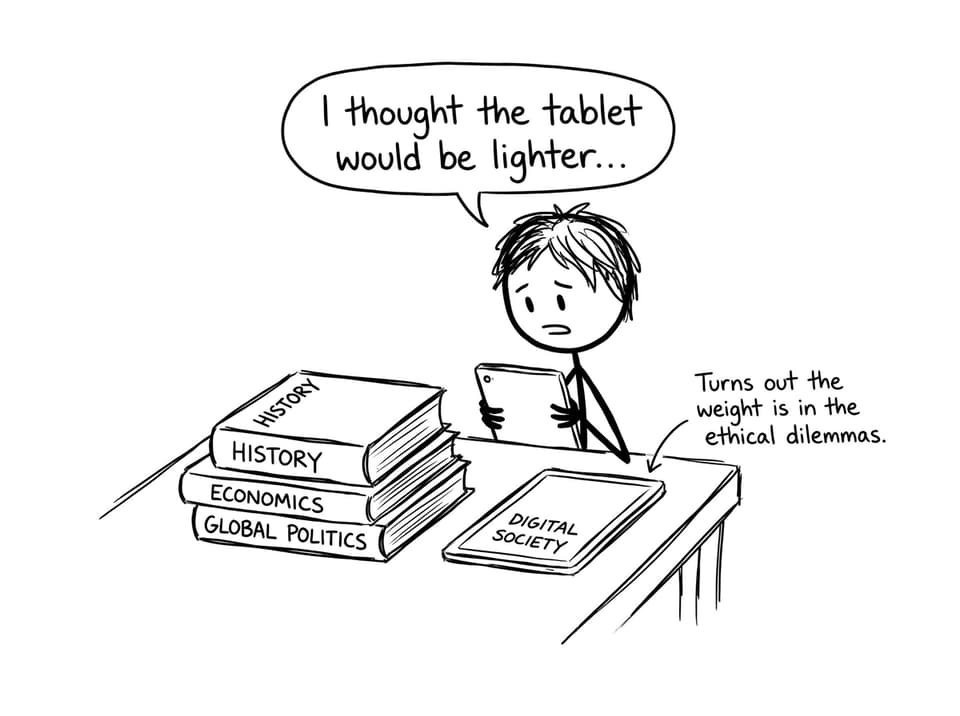
The first time most students compare Group 3 subjects, they do it the same way they compare backpacks: Which one looks manageable? But the real difference isn’t weight. It’s what the subject trains your brain to notice.
That’s why IB Digital Society vs Other IB Individuals and Societies Subjects is such a useful comparison for exam prep. Digital Society doesn’t begin with an old discipline and then “add technology later.” It starts in the middle of your real life: feeds, platforms, data trails, algorithms, online identity, and the strange feeling that the world is changing faster than your notes can.
If you’re revising (or still deciding), this guide will help you see where Digital Society fits alongside History, Economics, Global Politics, and Geography, and how to prepare for exams with less noise and more structure.
Quick comparison checklist (save this)
When you think about IB Digital Society vs Other IB Individuals and Societies Subjects, ask:
-
Starting point: discipline (History/Econ) or digital systems (Digital Society)?
-
Evidence: established sources vs rapidly evolving case studies?
-
Core skill: explaining causes vs evaluating impacts and ethics?
-
Revision style: memorization-heavy vs concept-to-example-to-evaluation loops?
For a detailed course overview and assessment weightings, keep the IB Digital Society Resources page open while you plan.
What makes Digital Society “different” in Group 3
Most Group 3 subjects are built on stable academic traditions. Digital Society is built on a moving target.
Instead of organising learning around time periods, theories, or spatial models, Digital Society keeps returning to a simple question: How do digital systems reshape people and communities, and who benefits (or loses)?
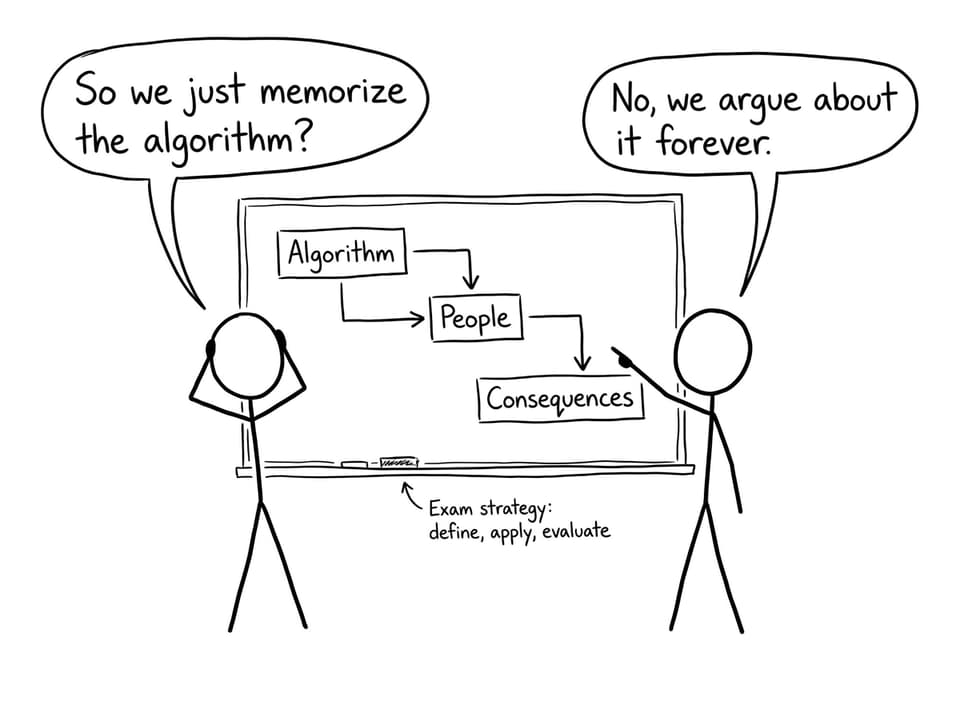
That difference matters in exams. Description is rarely enough. You’re expected to define concepts, apply them to a real digital system, then evaluate implications.
If you want to study topic-by-topic with integrated practice, RevisionDojo’s Digital Society Topic 3: Content is a good example of how notes, questions, and flashcards can lock together.
IB Digital Society vs IB History
History teaches you to be patient with the past. You weigh sources, track causation across time, and craft arguments about events with known outcomes.
In IB Digital Society vs Other IB Individuals and Societies Subjects, History is the clearest contrast because Digital Society is present-facing. Your evidence is often current, contested, and changing in real time.
Key differences you’ll feel while revising:
-
Timeline vs system: History often moves chronologically; Digital Society often maps a system and its effects.
-
Interpretation vs implication: History rewards perspective and causation; Digital Society rewards evaluation of consequences and ethics.
-
Settled debates vs live debates: Digital Society questions can feel like they’re happening this week.
For broader Group 3 revision structure (useful even if you’re in DS), see Effective Note-Taking Strategies for IB Group 3 Subjects.
IB Digital Society vs IB Economics
Economics is elegant when you like models. Supply and demand, market failure, macro indicators: it can feel like a clean toolkit.
Digital Society is messier on purpose.
In IB Digital Society vs Other IB Individuals and Societies Subjects, Economics tends to ask, “What is the most efficient outcome?” Digital Society tends to ask, “Efficient for whom and at what social cost?” You’ll still discuss economic incentives (platforms, attention, data extraction), but usually alongside culture, politics, identity, and ethics.
If you want an easy way to turn understanding into exam marks, RevisionDojo’s Questionbank feature helps you drill command terms and evaluation under time pressure.
IB Digital Society vs IB Global Politics
Global Politics is the closest cousin. Both subjects lean on real-world examples, power, institutions, and contested interpretations.
The difference is the centre of gravity.
When you compare IB Digital Society vs Other IB Individuals and Societies Subjects, Global Politics typically starts with political actors and structures. Digital Society starts with digital systems and asks how they redistribute power; sometimes away from governments, sometimes through them, often through private platforms.
If you also study Global Politics, these will cross-pollinate well:
-
governance and regulation of platforms
-
misinformation and political participation
-
digital citizenship and rights
Revision support: IB Global Politics Resources and IB Global Politics Revision Notes.
IB Digital Society vs IB Geography
Geography trains you to see patterns across space: human systems, physical environments, development, and globalisation.
Digital Society overlaps on globalisation, but it treats digital space as a real arena of community, conflict, and opportunity. Geography often asks where and why things happen. Digital Society asks what a digital system does to identity, relationships, behaviour, and equity.
If you want a hub of revision materials across Group 3, the IB Notes directory helps you jump quickly between subjects.
Skills and assessment: what to train for exams
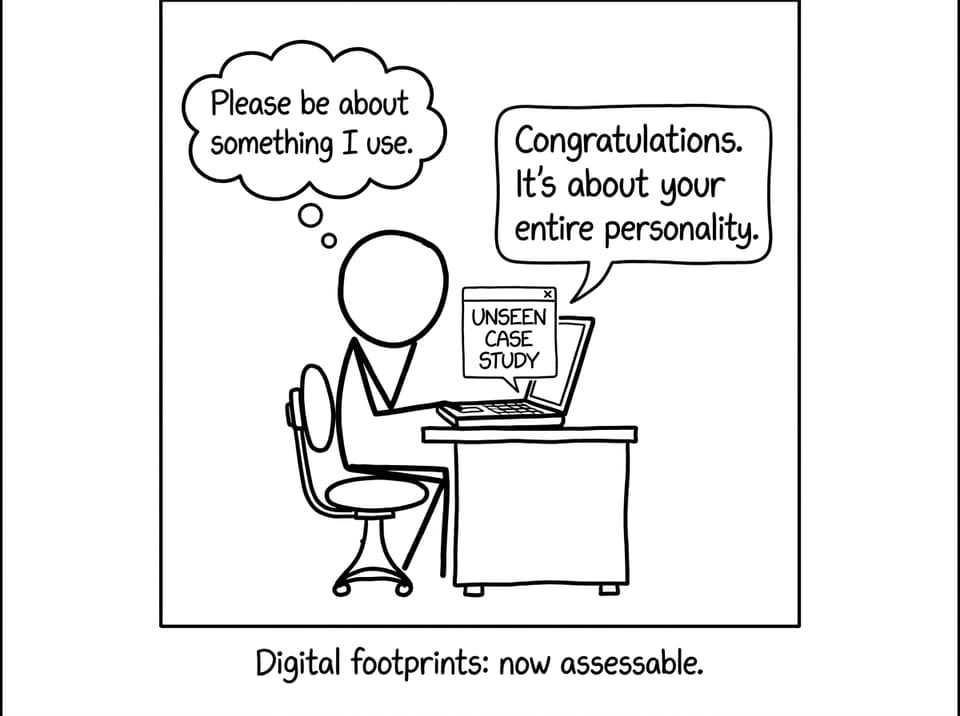
Across IB Digital Society vs Other IB Individuals and Societies Subjects, all subjects reward critical thinking. But Digital Society is especially sensitive to how you evaluate.
Train these:
-
Concept-first definitions (write them like examiners will mark them)
-
System mapping (actors, incentives, mechanisms)
-
Impact chains (short-term and long-term consequences)
-
Ethical reasoning (trade-offs, stakeholder perspectives)
-
Current examples (but explained through concepts, not headlines)
RevisionDojo helps because the tools connect into one loop: Study Notes to clarify, Flashcards for daily recall, Questionbank for exam-style application, AI Chat when you’re stuck, plus Mock Exams, Predicted Papers, and Grading tools when you want realism and feedback. If your coursework is competing for attention, the Coursework Library and Tutors give you a calmer way to stay on track.
To build a sustainable routine, borrow the structure from How to Study for IB Mocks (Without Burning Out) and adapt it to Digital Society’s evaluation-heavy style.
FAQ
Is Digital Society “easier” than other Individuals and Societies subjects?
Digital Society is usually not easier; it’s different. Students sometimes find it more intuitive because the examples come from daily life, which lowers the barrier to starting an answer. But the marking often rewards evaluation and ethical reasoning, which can be harder than it looks. You can’t rely on memorising a set narrative in the same way you might for some History themes. Instead, you need flexible thinking: define concepts clearly, apply them to an evolving digital system, then weigh implications. If you want a reality check on expectations, read Is IB Digital Society Hard? Honest Expectations Explained.
How do I revise for Digital Society if examples keep changing?
Treat examples like containers, not content. Pick a small set of durable digital systems (a messaging platform, a recommendation algorithm, a biometric system, a school monitoring tool) and practise applying multiple concepts to each. Your goal is to explain the mechanism: how the system produces an outcome, not just what happened in the news. Use a quick “define to apply to evaluate” structure so you can swap the example without breaking your argument. Then drill under timed conditions so you can do it fast, not just correctly. RevisionDojo’s Study Notes feature plus the Flashcards feature makes this kind of flexible recall much easier.
What’s the smartest way to improve my exam answers quickly?
Build a tight feedback loop: practise, mark, fix, reattempt. Start with targeted questions in the Questionbank so you’re always training with exam-shaped prompts and command terms. After each set, write a short mistake log that names the real issue (definition weak, no stakeholder perspective, missing counterclaim, unclear implication). Then patch only that weak point using notes or AI Chat, and reattempt a similar question within 48 hours. Once a week, use Mock Exams and Predicted Papers to build speed and calm under time pressure. This works across IB Digital Society vs Other IB Individuals and Societies Subjects, but it’s especially powerful in Digital Society because evaluation quality improves dramatically with repetition.
Conclusion: choose the subject that trains the mind you want
The best way to think about IB Digital Society vs Other IB Individuals and Societies Subjects is not “Which one is lighter?” but “Which one teaches me to see the world more clearly?”
History sharpens your sense of causation and evidence. Economics gives you models for incentives. Global Politics trains your understanding of power. Geography teaches systems across space. Digital Society teaches you to interrogate the digital layer sitting on top of all of them, and to evaluate its consequences with precision.
If you’re revising for Digital Society exams, make RevisionDojo your home base: Questionbank for practice, Study Notes for clarity, Flashcards for retention, AI Chat for quick explanations, Grading tools for feedback, Mock Exams and Predicted Papers for realism, plus the Coursework Library and Tutors when you need extra support. Start with the IB Digital Society Resources hub and build a plan you can repeat.