
IB Digital Society has a funny way of ambushing confident students.
You walk in thinking, “I’m online all the time. I basically live in the digital world. How hard can IB Digital Society be?” And then the first serious task lands: evaluate competing perspectives, apply course concepts, justify a judgment, and support it with evidence you didn’t pre-memorize.
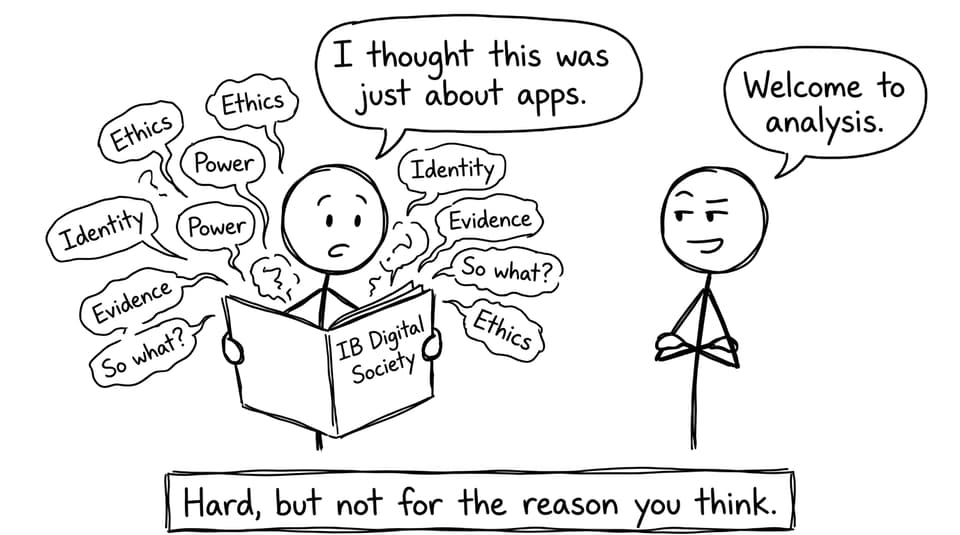
That gap between “I use technology” and “I can analyze technology” is where IB Digital Society feels hard. Not because it’s a coding class (it isn’t), and not because you need a giant memory palace of facts (you don’t). It’s hard because it asks for disciplined thinking about a world you assumed you already understood.
The honest answer: yes, IB Digital Society is hard (but not in the usual way)
IB Digital Society is challenging because it rewards a specific skill set: inquiry, evaluation, and clear communication under time pressure. Students often struggle at first because the course takes everyday experiences (social media, AI, surveillance, platform rules) and insists you treat them like academic objects.
If you want a quick home base to see what the course actually contains, start with the IB Digital Society resources hub. It lays out practice tools (Questionbank, Exam builder, Essay Marker), learning tools (Study Notes, Videos, Lessons, Flashcards), and coursework support.
Quick expectations checklist for IB Digital Society
Use this as your reality check before you plan revision:
-
You’ll be assessed on analysis and evaluation, not tech skills
-
You must connect examples to concepts, not just describe them
-
Strong writing structure matters as much as having opinions
-
You’ll need flexibility for unseen examples in exam questions
-
The IA is an inquiry with scope control, not a “research everything” project
If any of those points make you uncomfortable, that’s exactly why IB Digital Society can feel hard.
Why IB Digital Society feels difficult: it turns opinions into arguments
Most students start with decent instincts. You can sense when an app feels addictive. You can tell when a platform is unfair. You can guess that algorithms affect what people see.
But IB Digital Society asks you to go further: How does the system shape behavior? Who benefits? Who is excluded? What trade-offs are being normalized? And to what extent are the impacts ethical, sustainable, or justified?
This is where core concepts do real work. If you need a refresher on how concepts should be used (not name-dropped), read IB Digital Society: How All the Core Concepts Fit Together. For a concrete example of one concept in action, Understanding Change in Digital Society: IB Concept Explained shows what examiners mean by conceptual thinking.
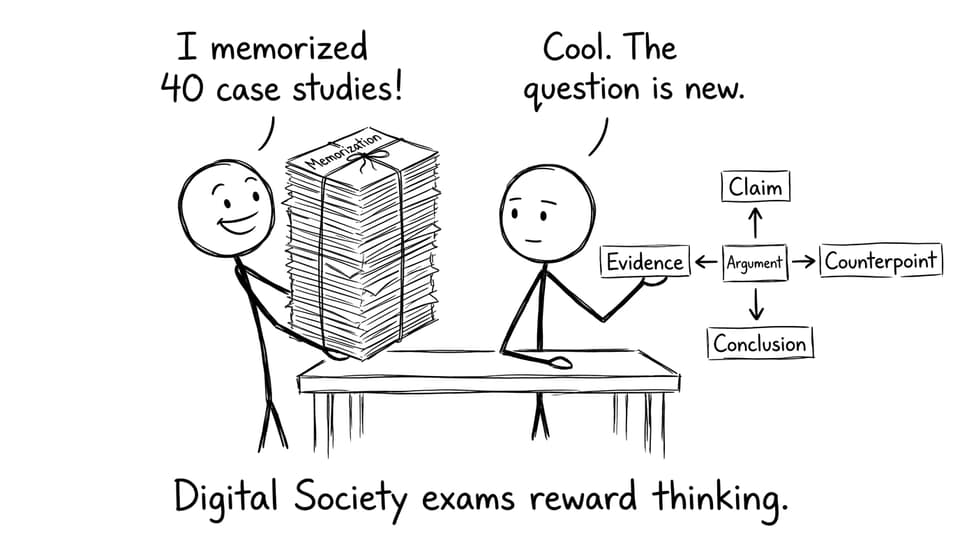
It’s not a memorization-heavy course (which is exactly why it’s tough)
In many IB subjects, memorization can buy you time. You learn definitions, drill familiar patterns, and reproduce what you practiced.
IB Digital Society is different. Examples help, but the exam is not a “recall the case study” competition. You’re expected to apply ideas to new contexts and build a reasoned response. That means your preparation must look like practice, not copying.
RevisionDojo makes this easier to train because you can move through a tight loop: Study Notes for clarity, Flashcards for active recall, and a Questionbank for application. Start here if you want targeted practice: Questionbank. Then return to topic pages like Topic 3: Content and Topic 4: Contexts to patch gaps with syllabus-aligned resources.
Writing is the hidden difficulty in IB Digital Society
When students say IB Digital Society is hard, they often mean: “I had ideas, but my answer didn’t score.” That’s usually a writing and structure issue, not an intelligence issue.
High-mark responses tend to do a few consistent things:
-
Answer the question directly (no long warm-up)
-
Use concepts to explain impacts, not decorate paragraphs
-
Balance perspectives (benefits, harms, intended, unintended)
-
Make a judgment that is justified, not dramatic
-
Use evidence carefully and link it to the claim
If you keep feeling stuck, RevisionDojo’s AI Chat can help you tighten arguments, and the grading tools can show you where your reasoning goes vague. Those are the moments where “I studied” becomes “I improved.”
The IA: hard because it demands focus, not because it’s mysterious
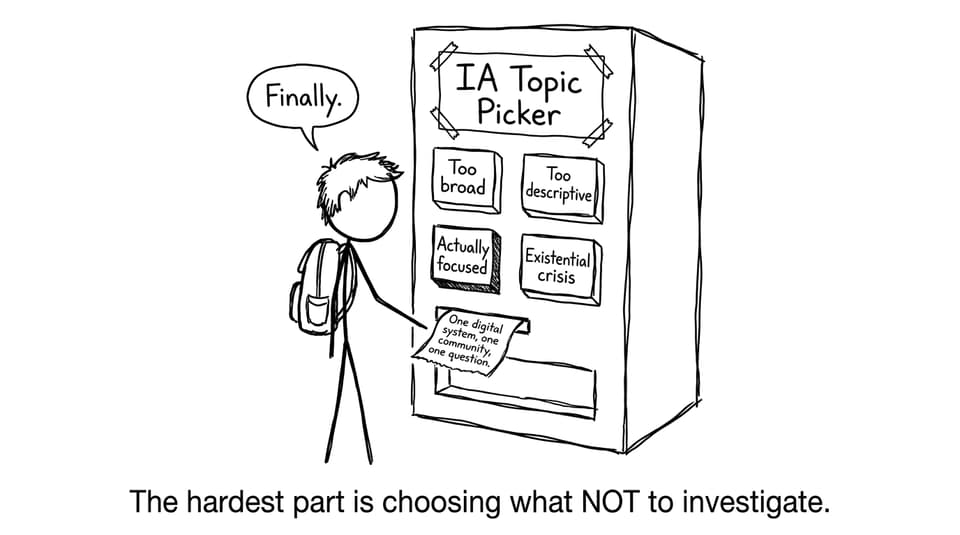
The IB Digital Society IA can feel heavy because it’s the first time many students must set boundaries on their own thinking. The topic has to be specific enough to analyze deeply, but meaningful enough to evaluate.
If you’re choosing a direction, use How to Choose a Strong IB Digital Society IA Topic and then refine it with How to Write a Strong IB Digital Society IA Research Question. Once you have the question, structure becomes your safety rail: IB Digital Society IA Structure Explained: What Examiners Expect.
If you learn best by seeing real models, the IB Digital Society exemplars help you internalize what “analysis” looks like on the page.
SL vs HL: what changes in difficulty?
At SL, IB Digital Society is mostly about learning the method: concept-driven analysis, clear writing, and relevant evidence.
At HL, the difficulty increases because the expectations for evaluation rise. You need to handle more complexity, defend more nuanced judgments, and stay coherent even when the issue has no clean answer. HL students benefit from more deliberate practice under timed conditions using Mock Exams and Predicted Papers, plus feedback loops through AI Chat and grading tools.
Conclusion: IB Digital Society is hard, but it’s a learnable kind of hard
IB Digital Society is hard for students who want simple right answers and predictable mark schemes they can memorize. It’s hard because it demands judgment, clarity, and an ability to stay specific in a world that’s endlessly broad.
But it’s also the kind of hard that gets easier fast once you practice the right way. Build your loop with RevisionDojo: Study Notes and Flashcards for concepts, Questionbank for application, AI Chat and grading tools for feedback, Predicted Papers and Mock Exams for exam realism, and the Coursework Library and Tutors when you want deeper support. If you approach IB Digital Society like a craft, not a vibe, it stops feeling intimidating and starts feeling controllable.
