
The moment IB Biology starts to feel “too big”
There’s a specific kind of tired that shows up in IB Biology revision. Not the “I stayed up late” tired. The deeper one: you open your notes on membranes, and suddenly you’re thinking about enzymes, and then inheritance, and then climate change, and somehow you’re scrolling through 60 pages you don’t even remember writing.
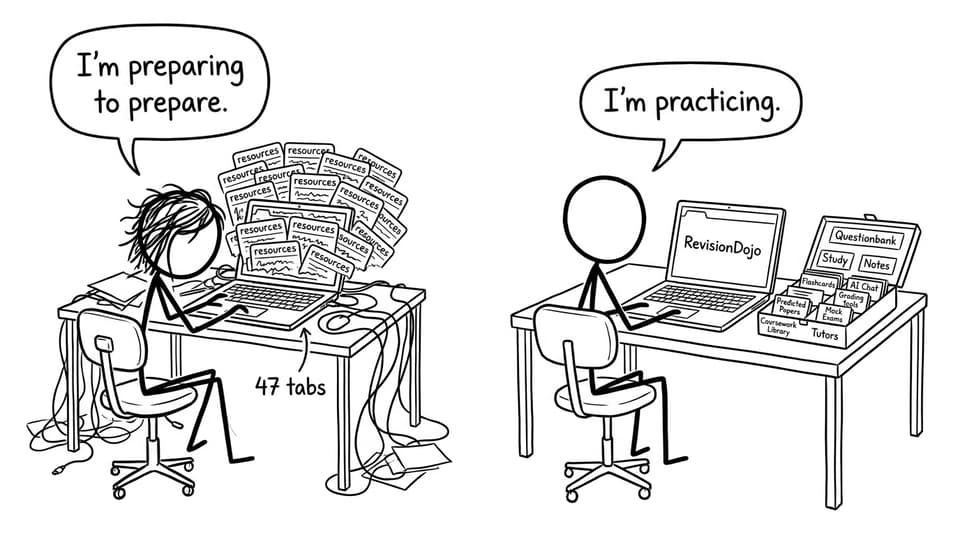
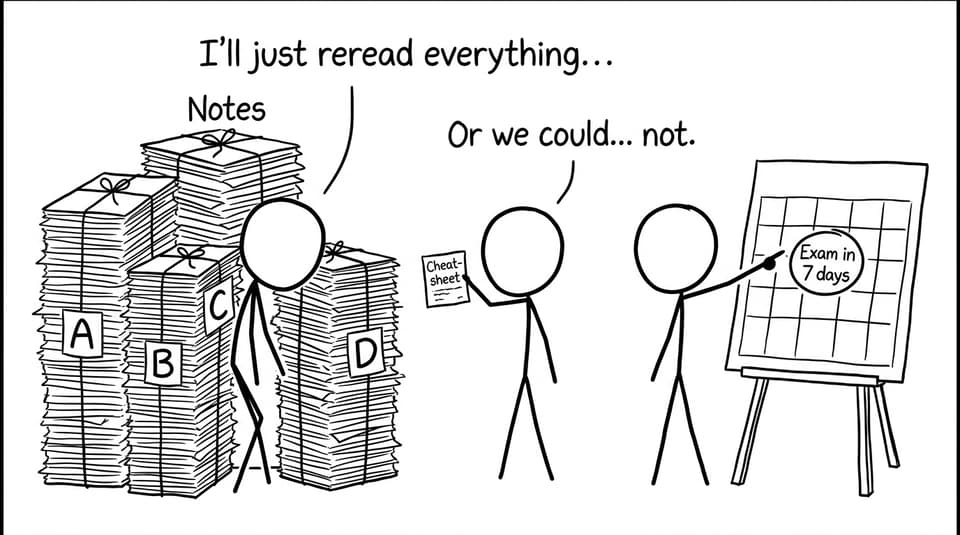
That’s the hidden problem with IB Biology: the content isn’t just large. It’s connected. Each topic behaves like a doorway to five more. When you revise without a map, everything feels urgent, and your brain quietly defaults to the easiest coping strategy: rereading.
Cheatsheets are the opposite of rereading. They’re the map.
And when the map is built around how IB questions actually reward marks, it becomes more than a summary. It becomes a system.
A quick checklist: what a good IB Biology cheatsheet must do
Before you download anything, use this checklist. A strong IB Biology cheatsheet should:
-
Compress a topic into one view (so you can see structure, not just details)
-
Highlight relationships (cause/effect, inputs/outputs, what changes what)
-
Use exam language (definitions, key terms, command-term-friendly phrasing)
-
Support active recall (easy to cover and test yourself)
-
Stay syllabus-aligned so you’re not revising beautiful-but-irrelevant content
If you want a clean starting point, go straight to RevisionDojo’s Cheatsheets, then branch into topic-specific sheets as you revise.
Why IB Biology overload happens (and why it’s not your fault)
Most students don’t struggle in IB Biology because they’re “bad at memorising.” They struggle because biology punishes isolated learning.
You can memorise the stages of cell respiration. But the exam will ask what happens when oxygen becomes limiting, or why ATP yield changes, or how enzymes affect rate, or how to interpret data. Those are connection questions.
Overload happens when:
-
Your notes live in five places (textbook, slides, notebook, docs, screenshots)
-
You revise in long sessions but rarely retrieve the knowledge
-
You keep “learning” the same topic because you never test it under pressure
This is where a cheatsheet-based workflow helps: it makes revision smaller, repeatable, and connected to exam practice.
For Biology specifically, it’s worth using the subject hub as your home base: IB Biology resources.
IB Biology cheatsheets on RevisionDojo: what makes them work
A cheatsheet fails when it becomes a miniature textbook. The best ones feel like a calm voice saying: “Here’s what matters, here’s how it fits, here’s how to recall it.”
RevisionDojo’s IB Biology cheatsheets are built to do exactly that. They pair naturally with the rest of the platform so you can move from understanding to recall to exam performance without losing time.
Here’s the difference in practice:
-
Cheatsheets give you the one-page framework.
-
Study Notes fill the gap when you realise you don’t understand one link in the chain.
-
Flashcards keep definitions and key steps fast.
-
Questionbank turns “I get it” into marks.
-
AI Chat unblocks confusion in the moment.
-
Grading tools train your wording for short- and extended-response.
-
Predicted Papers and Mock Exams build timing and stamina.
-
Coursework Library and Tutors keep IAs and planning from eating revision season.
When you want a topic example to see how this connects, start with a concrete chapter like IB Biology Topic D1.2: Protein Synthesis Notes and use its linked cheatsheet prompts.
How to use IB Biology cheatsheets without turning them into another pile of paper
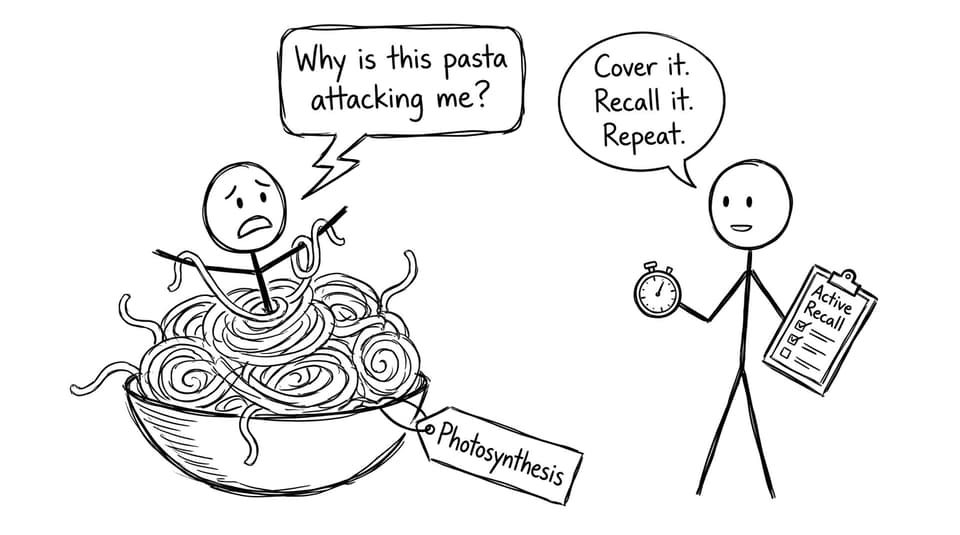
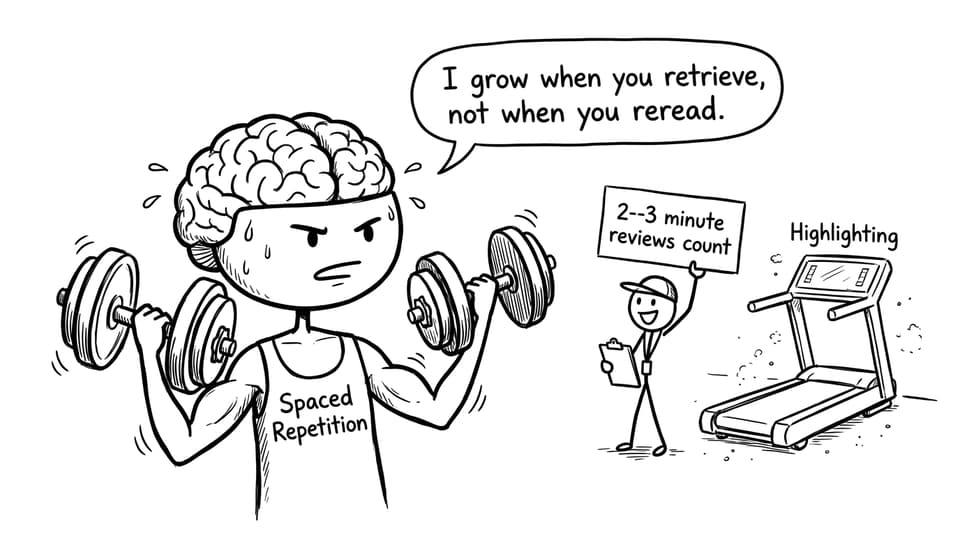
Cheatsheets only work when they create retrieval. Here’s a simple IB-friendly loop that fits real school weeks.
The 20-minute “one topic” loop
-
Preview (2 minutes): skim the cheatsheet once, eyes only.
-
Cover and recall (6 minutes): hide sections and recite steps/definitions out loud.
-
Write from memory (5 minutes): a mini version: labels, pathway arrows, key variables.
-
Check and patch (4 minutes): correct only what you missed.
-
Prove it (3 minutes): do 2-4 exam-style questions immediately.
For step 5, go directly to topic practice such as IB Biology Topic Cell Biology Questionbank (SL/HL) or a specific subtopic like B1.2 Proteins Questionbank (SL/HL).
The “cluster” method for IB Biology (how to keep connections visible)
Instead of revising chapters in isolation, group cheatsheets into clusters that the IB naturally links:
-
Molecular cluster: enzymes, metabolism, respiration, photosynthesis
-
Information cluster: DNA replication, protein synthesis, inheritance
-
Systems cluster: gas exchange, transport, immunity, homeostasis
-
Ecology cluster: populations, energy flow, cycles, sustainability
Then rotate: one cluster per week, one topic per day. This makes spaced repetition automatic.
If you need quick recall drills, add flashcards right after the cheatsheet. For example: Flashcards for Cell Biology or a broader set like B: Form and Function Flashcards.
Turning cheatsheets into exam marks: the IB mistake log
Here’s the quiet truth: in IB Biology, revision often feels productive right up until the first timed paper. Then you discover the gap between recognition and recall.
Cheatsheets close that gap when you pair them with a mistake log.
After any Questionbank set or timed practice, write:
-
The error pattern (not the question): “I confuse diffusion vs osmosis conditions.”
-
The rule: one sentence you can apply next time.
-
The fix: the exact cheatsheet section (or note) you’ll re-test tomorrow.
When you’re ready to practice under pressure, use realistic full-paper rehearsal via IB Predicted Papers and the subject set for Biology Predicted Papers (Free).
Common IB Biology topics that cheatsheets simplify fastest
Cheatsheets shine when the topic has a “flow” you must reproduce quickly.
Cell biology and membranes
Transport, membrane structure, organelles, microscopy: lots of terms, easy to mix up. Use a cheatsheet to keep the structure stable, then patch weak explanations with targeted notes like A2.2 Cell Structure Notes.
DNA and protein synthesis
This is classic IB territory for sequencing errors. A cheatsheet gives you the order and the key enzymes; the notes fill in the logic. Start with IB Biology Topic D1.1: DNA Replication, then keep your recall sharp with a daily 5-minute cover test.
Immunity and data interpretation
Biology papers reward precision: antigen, antibody, memory cell, active/passive immunity. Cheatsheets help definitions stay clean, and notes help interpretation stay accurate, like 11.1 Antibody Production and Vaccination Notes.
Closing: make IB Biology smaller, then make it repeatable
The students who feel calm in IB Biology aren’t calm because they know less. They’re calm because they’ve made the subject smaller. One sheet. One loop. One proof of progress at a time.
If you want a single place to run that loop, start with RevisionDojo’s Cheatsheets, then build outward: notes for clarity, flashcards for speed, Questionbank for accuracy, AI Chat when you’re stuck, and timed practice with Predicted Papers and Mock Exams when you’re ready.
You don’t need more hours. You need fewer moving parts, used on purpose.