

Scoring a 7 in IB ESS rarely comes from “knowing more.” Most students already know a lot. The difference is what they do with it when the question is unfamiliar, the command term is sharp, and time is slipping.
The 2025 onward shift rewards students who can move from content to judgment: turning ecosystems into systems, case studies into evidence, and opinions into balanced evaluation. If you can do that calmly, consistently, and under exam conditions, a 7 stops being mythical.
IB ESS 7-Score Checklist (save this)
Use this weekly to keep IB ESS revision honest:
-
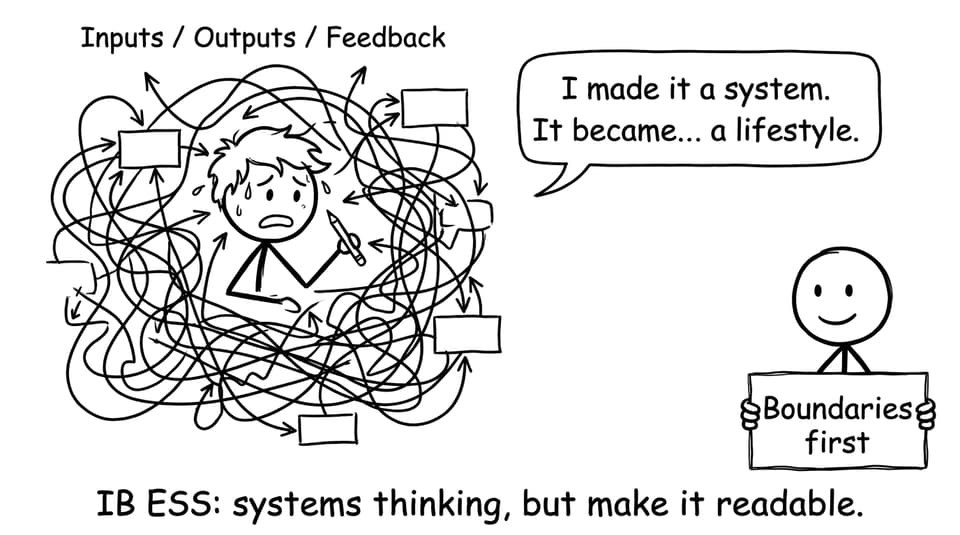
Learn each topic as a system: boundaries, storages, flows, feedback.
-
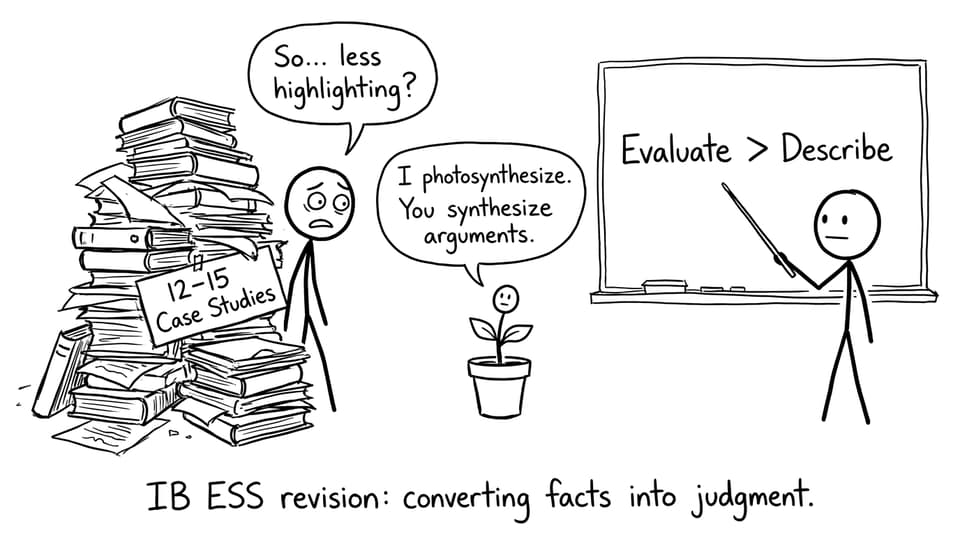
Memorize 12--15 flexible case studies (not 50 forgettable ones).
-
Train command terms (analyze, discuss, evaluate) until they’re automatic.
-
Practice data response every week, not just near mocks.
-
Build one-page summaries with definitions + a mini example.
-
Get feedback early on your IA, using the rubric language.
For a clear view of the course structure, keep IB ESS syllabus guidance open while you plan.
Understand what “7-level IB ESS” looks like now
The new direction of IB ESS is interdisciplinary on purpose: science plus society, plus the habit of weighing trade-offs. That’s why RevisionDojo’s subject hub organizes content in a way that makes connections easier, not harder: IB Environmental Systems and Societies resources.
To aim for a 7, you need three things in almost every longer response:
-
Accurate ESS terminology (no vague wording)
-
Real evidence (a case study or data reference)
-
Evaluation (benefits, limitations, stakeholders, time scale)
If you want a deeper overview of the changes, see IB ESS Syllabus 2025: Major Updates You Need to Know.
Build your IB ESS “case study bank” the smart way
Case studies are like money: having more helps, but only if you can access them fast.
A good IB ESS case study is reusable. You can apply it to sustainability, governance, pollution, conservation, or resource use with a small angle change. Write each case study as a six-line card:
-
Location + scale
-
Issue
-
Causes
-
Impacts (environmental + social)
-
Response/management
-
Evaluation (what worked, what didn’t)
Then drill them using active recall. RevisionDojo’s Flashcards feature is built for this kind of repetition without boredom.
Train the two exam skills that lift you from 6 to 7
Paper 1: make unfamiliar data feel routine
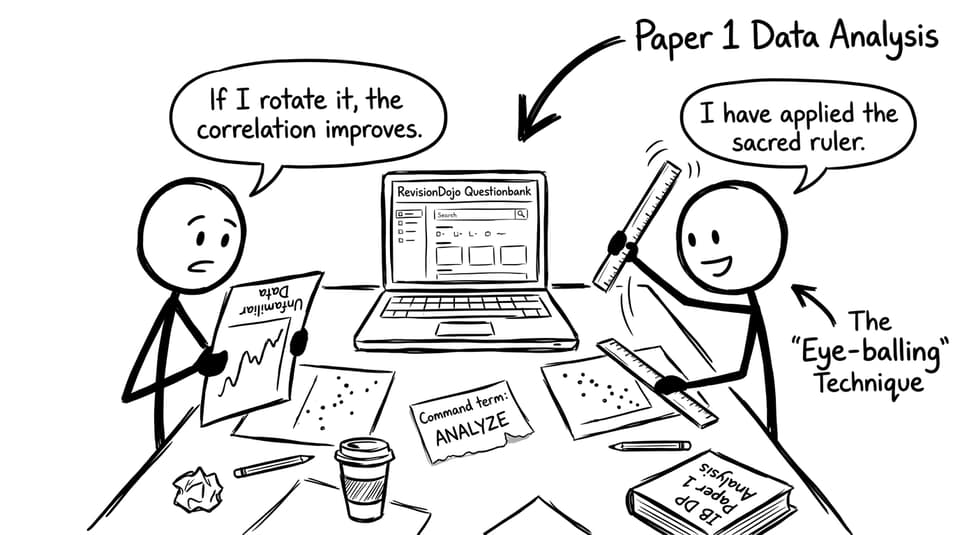
Paper 1 in IB ESS rewards composure. The data may be new, but the thinking pattern is predictable: identify trends, use units, interpret anomalies, connect to ESS concepts.
The fastest way to improve is regular practice with feedback. Use the RevisionDojo Questionbank for targeted sets, then mix topics to simulate real exam uncertainty.
Paper 2: win with structure, not inspiration
Paper 2 is where strong students quietly lose marks by narrating instead of arguing. A 7 answer usually follows this shape:
-
Define key terms (briefly)
-
Explain the mechanism (systems thinking)
-
Apply a case study
-
Evaluate with balance (trade-offs, stakeholders, time scale)
-
Conclude with a justified judgment
If you want a practical way to think in loops and connections, read Approaches to Environmental Systems and Societies in IB.
Use RevisionDojo like a 7-student (not a stressed student)
High performers don’t use more resources. They use fewer, better resources repeatedly.
With RevisionDojo, that usually looks like:
-
Study Notes for clean explanations and syllabus alignment: Study Notes
-
Questionbank for exam-style practice and pattern recognition
-
AI Chat to test your reasoning and fix misconceptions fast
-
Mock Exams and Predicted Papers to rehearse timing and pressure
-
Grading tools for honest, rubric-based feedback
-
Coursework Library and Tutors when you need an outside lens
For the ESS IA specifically, the fastest improvement often comes from rubric clarity. Use the IB ESS IA Grader and compare your draft against what “evaluation” actually requires.
Conclusion: your 7 in IB ESS is built, not found
A 7 in IB ESS is the result of small, repeatable actions: systems thinking, case studies you can deploy on command, and timed practice that turns stress into routine.
If you want one place to do all of that (notes, flashcards, Questionbank practice, AI Chat, grading tools, Mock Exams, Predicted Papers, and support through tutors), start here: IB Environmental Systems and Societies resources. Your future self will thank you for making revision simpler, sharper, and more deliberate.