If you have ever read an IB SEHS markscheme and felt like it was grading your English, you are not imagining it. One word can quietly decide whether your answer sounds like science or like a guess. In Sports, Exercise and Health Science, precision is not decoration -- it is the difference between “good understanding” and “full marks.”
The challenge is that IB SEHS vocabulary is dense and technical. You are learning biology, biomechanics, and psychology in one subject, and each topic brings its own language: homeostasis, oxygen deficit, torque, angular velocity, motor programme. The comforting truth is that vocabulary is one of the most trainable parts of your grade. Not by cramming lists, but by building a system.
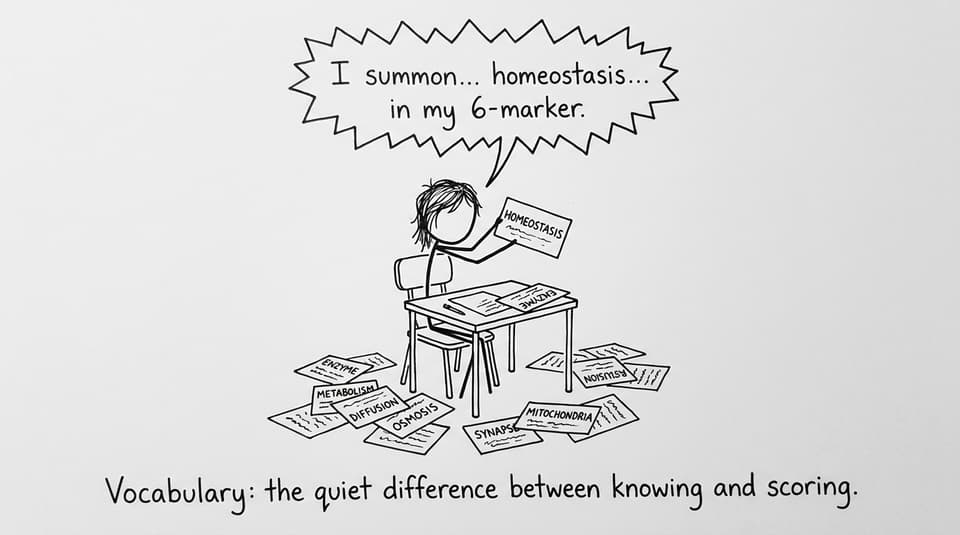
Student summoning vocabulary in a 6-marker
A quick IB SEHS vocabulary checklist
Collect terms by syllabus topic, not randomly.
Use active recall (flashcards) daily.
Learn definitions plus a “use it in a sentence” example.
Pair tricky terms with a diagram, graph, or lab context.
Practice with exam-style prompts so vocabulary becomes automatic.
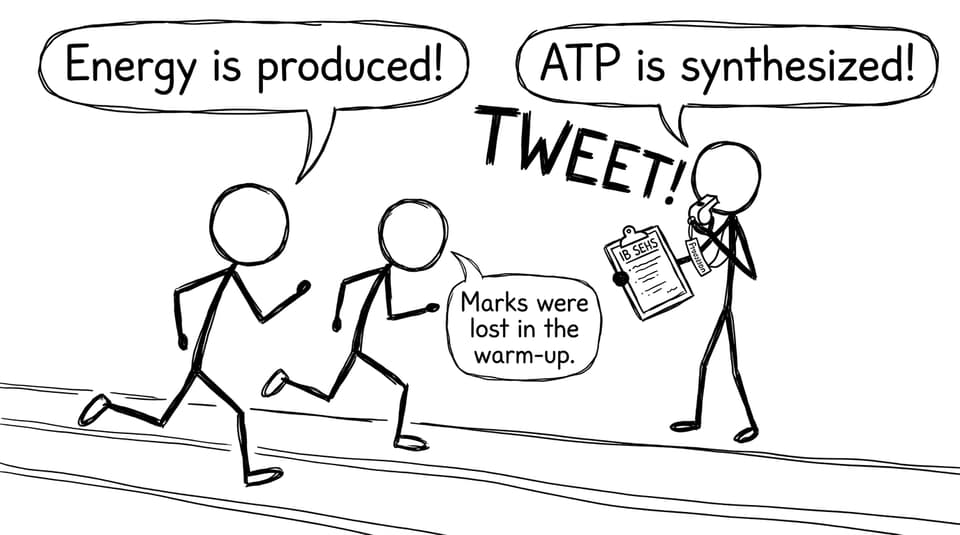
Naming the correct variable: “oxygen uptake” versus “oxygen consumption” when a question is testing measurement language.
Matching the command term: “define” needs a clean, minimal meaning; “explain” needs cause and effect.
A small slip can change accuracy, but it can also change credibility. And credibility matters in longer responses, where the examiner is scanning for correct terminology that signals real understanding.
Coach enforcing precise SEHS wording
Build your term bank the smart way (by topic)
The fastest route to IB SEHS vocabulary mastery is to group terms the way the syllabus groups ideas. When you study terms in clusters, you also learn the relationships between them.
Then pressure-test it with real prompts. RevisionDojo’s Questionbank is ideal here because it forces you to use language inside marks-driven questions. For example, you can drill anatomy terminology with the SEHS Anatomy Questionbank or practice topic-specific application with the Skill in Sport Questionbank.
Spaced repetition: the quiet engine of IB SEHS vocabulary
Most students review words when they feel uncertain. The problem is that forgetting happens before you feel uncertain.
Spaced repetition fixes this by scheduling reviews just before the memory fades. In IB SEHS, this matters because vocabulary is cumulative -- you might learn stroke volume in one unit, then need it again weeks later inside a data question.
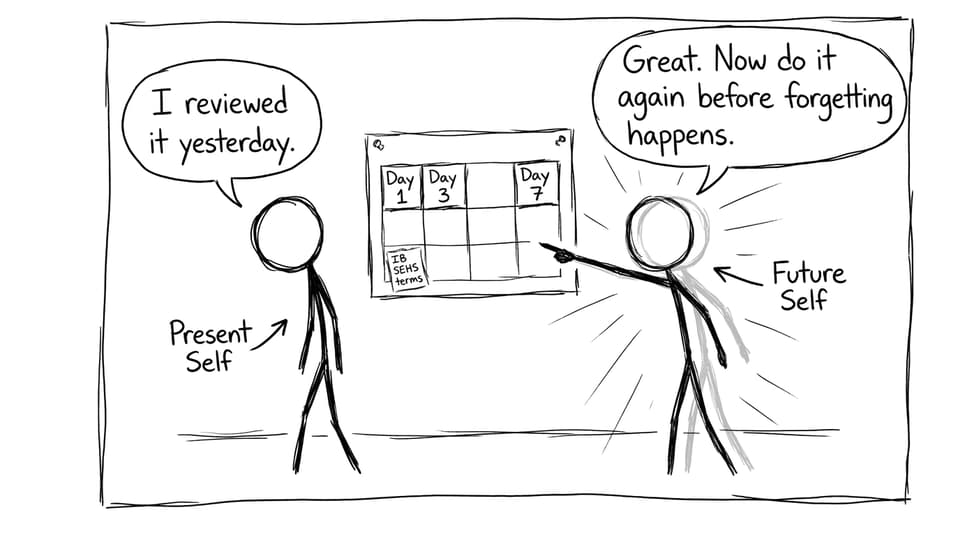
A practical schedule:
Day 1: learn the term.
Day 3: quick recall check.
Day 7: apply it in a short response.
Weekly: mix old and new terms in one session.
Spaced repetition debate with future self
Use labs and coursework to make IB SEHS words automatic
Vocabulary becomes natural when it is attached to something you did.
In labs and write-ups, force yourself to label with correct language:
Graph axes and trends using the right variables.
Describe methods with proper measurement vocabulary.
Interpret results with discipline-specific terms (not “better,” but “greater power output,” “higher oxygen uptake,” or “increased angular velocity”).
If you are working on your IA, RevisionDojo’s Grading tools can help you tighten terminology under pressure. The IB SEHS IA (2026 syllabus) Grader is designed to give criterion-based feedback so your language matches the rubric.
Conclusion: make IB SEHS language your advantage
Mastering IB SEHS vocabulary is not about sounding fancy. It is about being precise when the exam is demanding precision. Build your terms by topic, drill them with flashcards, revisit them with spaced repetition, and practice using them inside exam-style answers until the words feel normal.
If you want the system in one place, RevisionDojo is built for that loop: Study Notes for clarity, Flashcards for recall, AI Chat when you are stuck, Questionbank for application, Mock Exams and Predicted Papers for timing, plus Grading tools, a Coursework Library, and Tutors when you need deeper feedback. Start with the IB SEHS resource hub and turn vocabulary into marks.
IB SEHS goal setting in sport made simple: goal types, SMART targets, common mistakes, and exam-ready tips using RevisionDojo practice tools.