


Math exam stress rarely shows up as one dramatic thought.
It’s usually quieter than that.
It’s the way your stomach tightens when you open a timed section. It’s the strange urge to reread notes instead of solving. It’s the fear that your brain will blank at the exact moment the IB paper asks for the one method you didn’t practice.
If you’re an IB student, none of this is unusual. But it’s also not permanent. IB math anxiety is treatable because it’s often a skills problem disguised as an emotions problem: pacing, familiarity, error patterns, and self-trust.
This guide will help you manage IB math exam stress with practical routines that work in real life. And it will show how RevisionDojo can turn the pressure into something predictable: a system you can repeat.
A quick IB stress-control checklist
Use this before a study session and again on exam day:
-
Name your trigger (timing, unfamiliar questions, perfectionism, fear of blanking).
-
Do one short breathing reset (60-90 seconds).
-
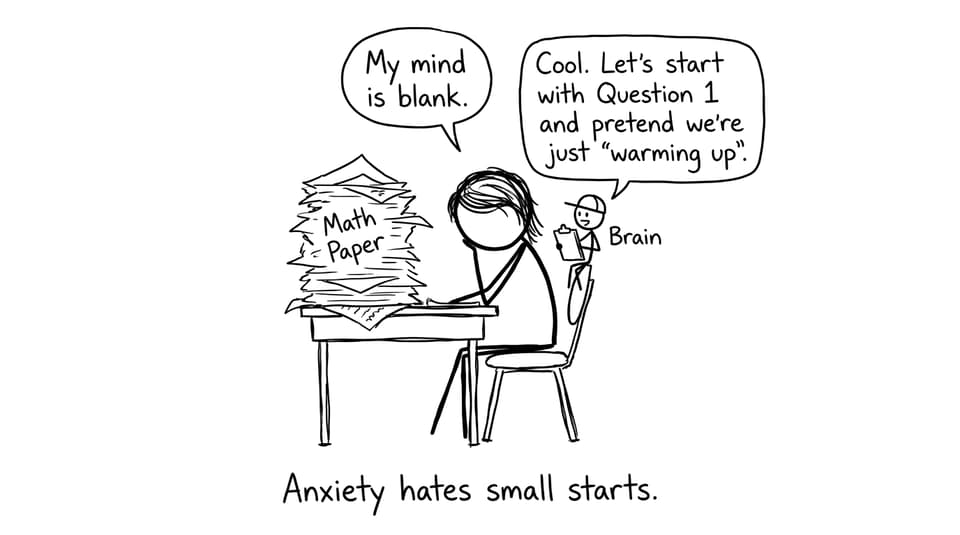
Start with one “warm-up win” question to create motion.
-
Practice under realistic timing at least twice a week (this is where stress reduces fastest).
-
Review mistakes like a coach, not a critic: one pattern, one fix.
To make this easier to execute, build your routine around tools that already structure the work: Exam Mode, a topic-filtered Questionbank, and short daily IB Flashcards for retention.
Why IB math anxiety feels so intense
Anxiety is your brain trying to protect you from uncertainty. The IB increases uncertainty in three specific ways:
-
You’re timed, so every hesitation feels expensive.
-
Questions often look unfamiliar even when the underlying skill is familiar.
-
Marking rewards method and structure, not just the final answer.
Under stress, your attention narrows. That can help in small doses. But too much stress makes you rush, skip steps, and forget routines you actually know.
So the goal isn’t to “feel nothing.” The goal is to make the IB exam feel familiar enough that your stress stays in the useful zone.
A good starting point is building familiarity with the course you’re actually taking: IB Math AA resources or IB Math AI.
Replace panic with a repeatable routine
There’s a simple truth most high scorers discover late: calm is often the side effect of structure.
When you know what you’ll do at minute 3, minute 30, and minute 85, your brain stops scanning for threats. That’s why timed practice is more than content revision. It’s nervous-system training.
RevisionDojo is built for that full loop: Study Notes when a concept is unclear, Flashcards for daily recall, AI Chat when you’re stuck, Grading tools for feedback, then Mock Exams and Predicted Papers for rehearsal (plus a Coursework Library and Tutors when you need extra support).
If you want a pacing framework that reduces stress quickly, read How to Master Time Management in IB Math Exams.
Use timed exposure to make IB pressure feel normal
The fastest way to reduce exam anxiety is controlled exposure: you practice the thing that scares you, but in a way you can measure.
Here’s a simple weekly structure:
-
3 sessions: topic practice (20-40 minutes)
-
2 sessions: timed mini-sets (15-25 minutes)
-
1 session: full rehearsal (or a long section) under exam rules
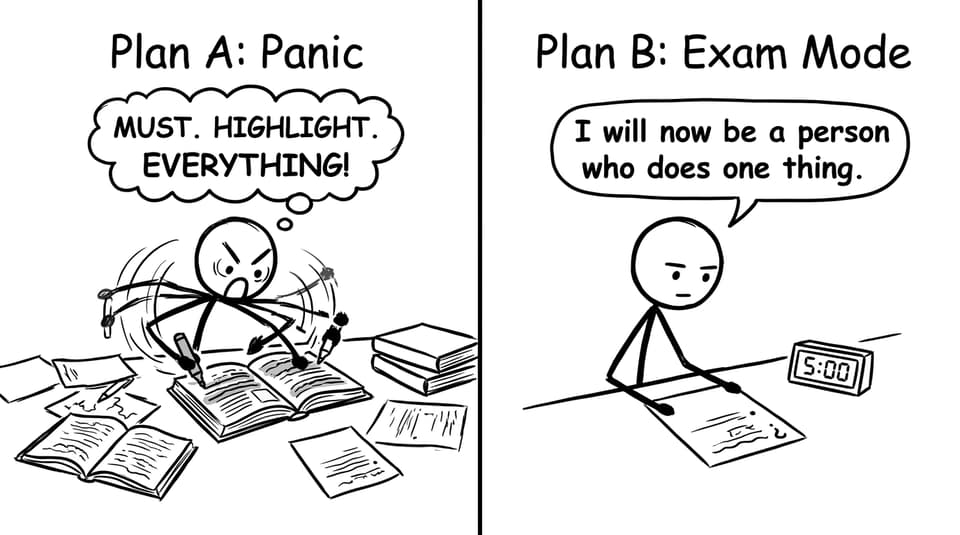
Do your timed sessions in Exam Mode so the timer is not optional and the feedback is immediate. You’re teaching your brain, “This feeling is normal. I can still think.”
For targeted work, open a specific questionbank strand like Math AA Calculus Questionbank or drill a weak AI area using something like the Number and Algebra Questionbank.
The 4-7-8 reset (and why it works during IB math)
When stress spikes, you don’t need a motivational speech. You need a physiological interrupt.
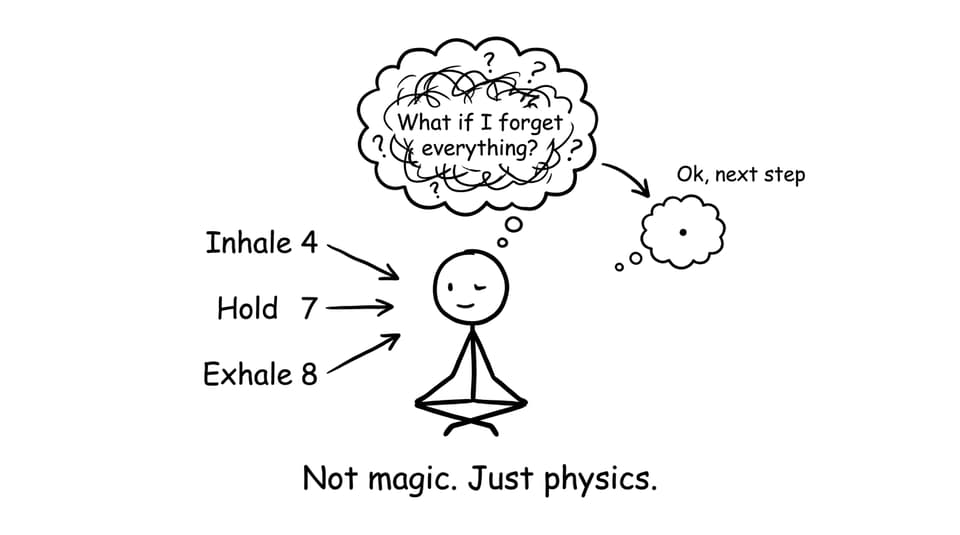
Try 4-7-8 breathing:
-
Inhale for 4 seconds
-
Hold for 7 seconds
-
Exhale for 8 seconds
Repeat three times.
This works because a longer exhale signals safety to your body. Your heart rate drops. Your attention widens. Then you can return to the page and do the next step.
Pair it with a rule: after breathing, you must write something small (a diagram, a known formula, a first line). Motion breaks freezing.
Build confidence the boring way: proof, not vibes
Most students try to “feel confident” before they have evidence.
Better is the opposite: collect evidence first, and let confidence arrive later.
Use two proof sources:
-
Accuracy proof: your topic accuracy improves over time.
-
Timing proof: your average time per mark drops.
A strong companion read here is How to Track Your Math Improvement Over Time. And when motivation dips, How to Stay Motivated While Studying IB Math helps you rebuild consistency without guilt.
What to do if you blank out mid-paper
Blanking out is not a character flaw. It’s a predictable stress response.
Use this three-step rescue:
-
Breathe once, slowly.
-
Switch to a “warm-up win” question you can start immediately.
-
Return to the hard question with a micro-plan: two bullet points and one formula.
If the deeper issue is that you’re not understanding what a question wants, keep this bookmarked: IB Exam Panic: What to Do If You Don't Understand.
Closing: turn IB pressure into familiarity
The best way to manage IB math exam stress is to stop treating it like a mysterious emotion and start treating it like a trainable response.
You don’t need to eliminate nerves. You need a routine that works while nervous: breathe, start small, practice timed, review patterns, repeat.
If you want one place to run that whole system, RevisionDojo is built for it: Questionbank for targeted drills, Study Notes and Flashcards for clarity and retention, AI Chat and Grading tools for feedback, then Mock Exams and Predicted Papers to rehearse under pressure (with a Coursework Library and Tutors when you need more support).
Start today with one timed set in Exam Mode. Make the feeling familiar. That’s how IB anxiety shrinks.