

IA stress doesn’t come from work; it comes from fog
The night you finally open your IA document, it’s rarely the task that hurts. It’s the feeling that you can’t tell whether you’re winning or wasting time. With exams in the background, that uncertainty turns into a nasty loop: you avoid the IA, then panic, then overwork, then fall behind on revision.
The goal isn’t to eliminate IA stress. It’s to make your IA measurable again, so you can move forward in small steps while keeping exam prep alive.
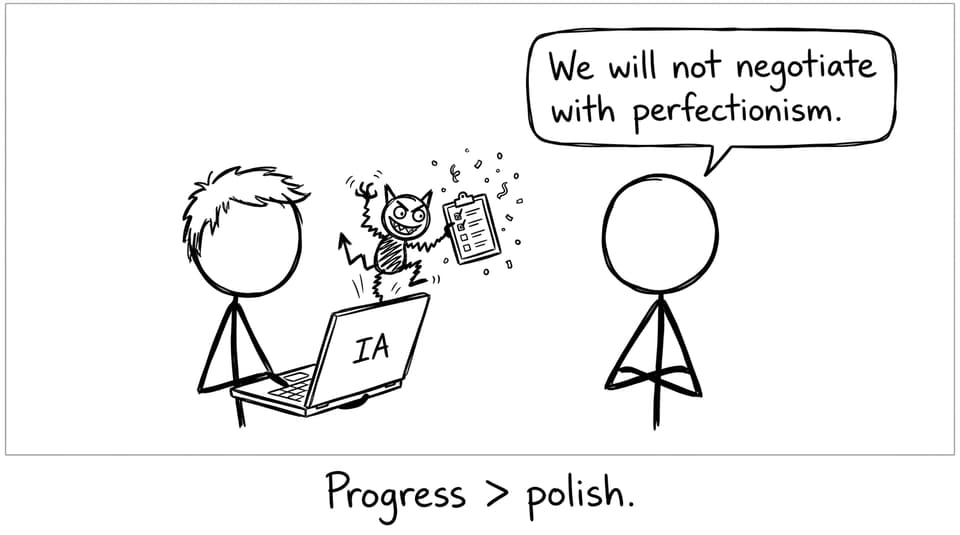
A quick IA stress checklist (save this)
-
Define one tiny deliverable for today (not “work on IA”).
-
Do a rubric reality check before you polish anything.
-
Protect a minimum exam routine (even 30 minutes).
-
Stop comparing timelines; compare evidence.
-
Get feedback early (teacher + tools) so you don’t guess.
If you want a structured starting point, the RevisionDojo Coursework Guide is built to turn “I don’t know what to do next” into clear priorities.
Why IA stress spikes: uncertainty, comparison, and vague plans
Uncertainty: the IA has no obvious finish line
An IA is open-ended by design. That’s why it feels heavier than a worksheet. When you’re unsure what “good” looks like, you either freeze or rewrite the same section ten times.
A fast fix: look at what strong work looks like before you sink hours into drafting. Start with IB Internal Assessment Guides and browse relevant examples in IB Coursework Examples: IA, EE and TOK Exemplars. Clarity reduces stress because it removes guesswork.
Comparison: other people’s pace is not your pace
Someone will always claim they’re “nearly done.” Someone else is quietly stuck. IA progress is uneven: fast starts stall; slow starts surge.
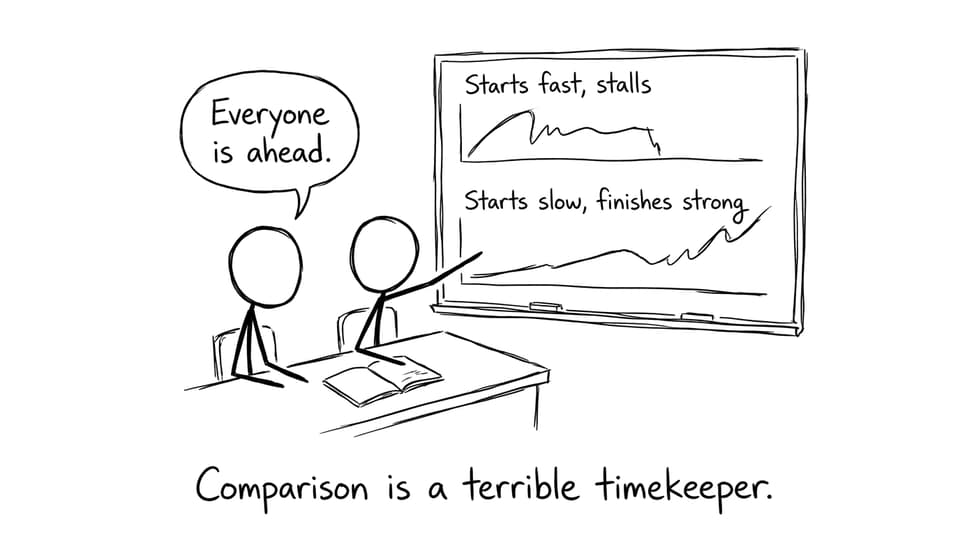
Instead of comparing speed, compare inputs you control: one paragraph improved, one dataset cleaned, one criterion strengthened.
Vague plans: “work on IA” creates instant dread
Your brain can’t start what it can’t picture. “Work on IA” is a foggy instruction, so your stress fills in the blanks.
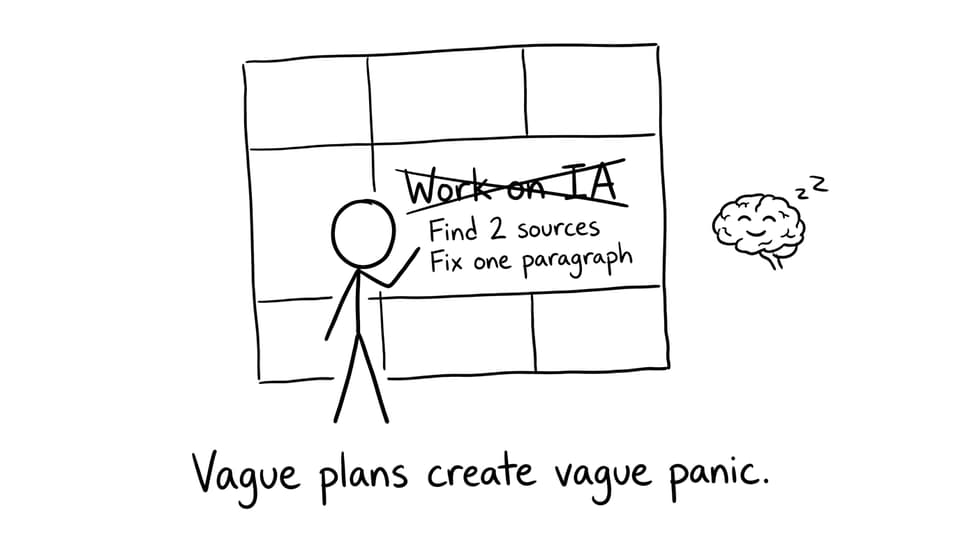
Swap it for: “Fix the method variables table” or “Write 150 words of analysis for Figure 2.”
The two-lane schedule: keep your IA moving without losing exams
Most students fall behind because the IA expands to fill every evening. A calmer approach is a two-lane week:
-
Lane A (IA): 3 short sessions (45-60 min) focused on deliverables.
-
Lane B (Exams): a daily minimum (20-40 min) that never disappears.
On RevisionDojo, Lane B can be simple: Study Notes for quick understanding, Flashcards for daily recall, and Questionbank for application under pressure. Start with the Questionbank feature page and the overview in RevisionDojo App: The Smarter Way to Prep for IB Exams.
For Lane A, reduce uncertainty using exemplars and criteria: check How to Plan an IB IA Without Falling Behind and How to Manage Stress While Writing Your IA.
Use RevisionDojo to shorten the IA feedback loop
IA stress drops when feedback arrives early, not at the end.
-
Use the Coursework Library and IB Coursework Examples: IA, EE and TOK Exemplars to see what “enough” looks like.
-
Use Grading tools to focus edits on marks, not vibes.
-
Use AI Chat when you’re stuck translating rubric language into actual changes.
-
If strategy is the blocker (topic viability, evaluation depth), Tutors can save days.
If deadlines are close, bookmark Can You Submit an IA Late? What to Do (and Say) so panic doesn’t drive your choices.
A calmer finish: make your IA visible, then keep walking
IA stress fades when progress is concrete. Define the next deliverable, check it against the rubric, and stop asking yourself whether you’re “the kind of person who finishes IAs.” You’re a student with a process.
If you want that process in one place, use RevisionDojo: plan with the IB Internal Assessment Guides, calibrate with the Coursework Library, tighten with Grading tools, and keep exams steady using Study Notes, Flashcards, Questionbank, Mock Exams, and Predicted Papers. Your IA doesn’t need to feel perfect this week. It needs to move.