

The night you finally open your IA document, it can feel like your cursor is judging you.
Not because you don’t care. But because you do. The IA is one of the few IB tasks that asks you to build something: a method, an argument, an analysis trail someone else can follow. And when your brain hears “someone else will grade this,” it translates it into “this must be flawless.”
This guide is about managing stress while writing your IA without lowering your standards. You’ll learn how to create calmer momentum, keep your schedule realistic, and protect your exam prep at the same time. If you want quick reassurance about what strong work looks like, start by browsing RevisionDojo’s coursework exemplars and let real models replace vague fear.
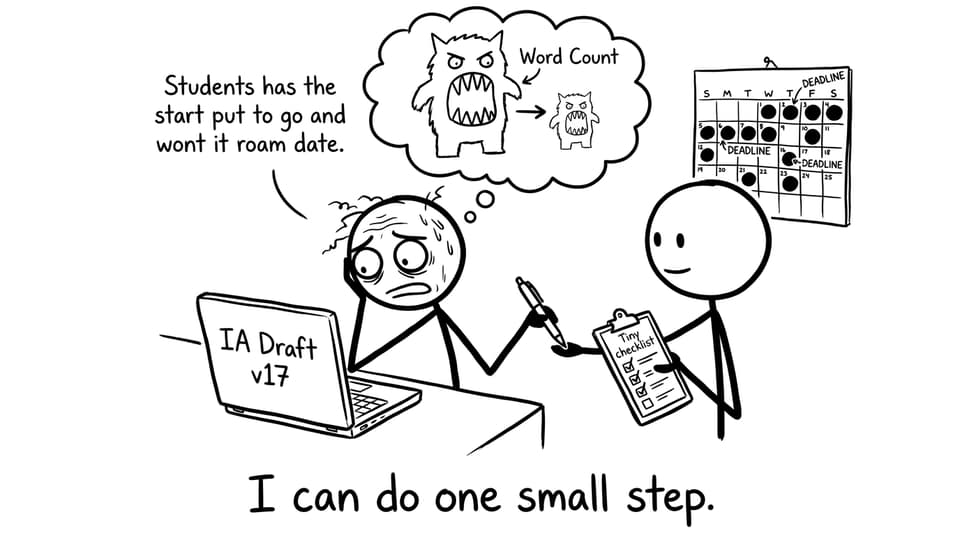
IA stress, in one checklist
Use this when the IA feels too big:
-
Define the next 30-minute deliverable (not “finish the IA”)
-
Put three IA sessions on your calendar this week (even short ones)
-
Do one rubric check before you write more words
-
Protect sleep the night before any major IA milestone
-
Keep exam skills alive with a small daily practice loop
For exam maintenance, pair tiny daily drills from the RevisionDojo Questionbank with your IA work so you don’t feel like coursework is “stealing” revision time.
Why writing an IA feels so stressful
Most IA stress comes from uncertainty, not workload.
When you don’t know what “good” looks like, every paragraph feels like a gamble. When you’re not sure which section matters most, you edit everything, which is exhausting. And when deadlines stack up, your brain starts treating the IA like a fire alarm.
A fast way to reduce this is to replace guesswork with structure:
-
Use exemplar patterns from RevisionDojo’s coursework exemplars
-
Ask specific questions as soon as confusion appears (instead of waiting hours)
-
Separate drafting from polishing so you’re not doing both at once
If your stress has crossed into tears or shutdown mode, you’re not alone. This piece on crying over your IA is a strangely comforting reminder that the feelings are common, and fixable.
Break your IA into stages you can actually finish
A calm IA is rarely the result of motivation. It’s usually the result of smaller targets.
Try this stage breakdown (adapt for your subject):
-
Topic + research question (or aim)
-
Method / plan / design
-
Data, sources, or builds (depending on the IA)
-
Analysis and interpretation
-
Evaluation and limitations
-
Conclusion linked back to your question
-
Final presentation: citations, formatting, appendices
Your job is not to finish the IA today. Your job is to finish the next stage cleanly.
If you’re unsure which IA parts usually “carry” marks, read what to do if your IA is due soon and you’re panicking. It reinforces a powerful truth: clarity beats last-minute expansion.
Build an IA timeline that protects exam revision
Here’s where many IB students accidentally create stress: they schedule the IA like it’s the only thing in their life.
Instead, use a two-track system:
Track 1: IA progress (3 sessions per week)
-
Session A: create new content (analysis, method, evaluation)
-
Session B: improve one criterion deeply (not “edit everything”)
-
Session C: packaging (citations, figures, structure)
Track 2: exam maintenance (15-25 minutes daily)
-
Quick recall with Flashcards
-
5-10 exam-style questions
RevisionDojo is built for this split. You can keep daily recall light with Flashcards and use the Questionbank to stay sharp, while the Coursework Library keeps your IA decisions grounded in what actually scores.
If deadlines are confusing (school internal dates vs final upload dates), bookmark When are IAs due? The deadline reality. Clarity on dates is a direct stress reducer.
Use “calming constraints” while you write your IA
When stress is high, freedom is dangerous. Constraints create safety.
Try these:
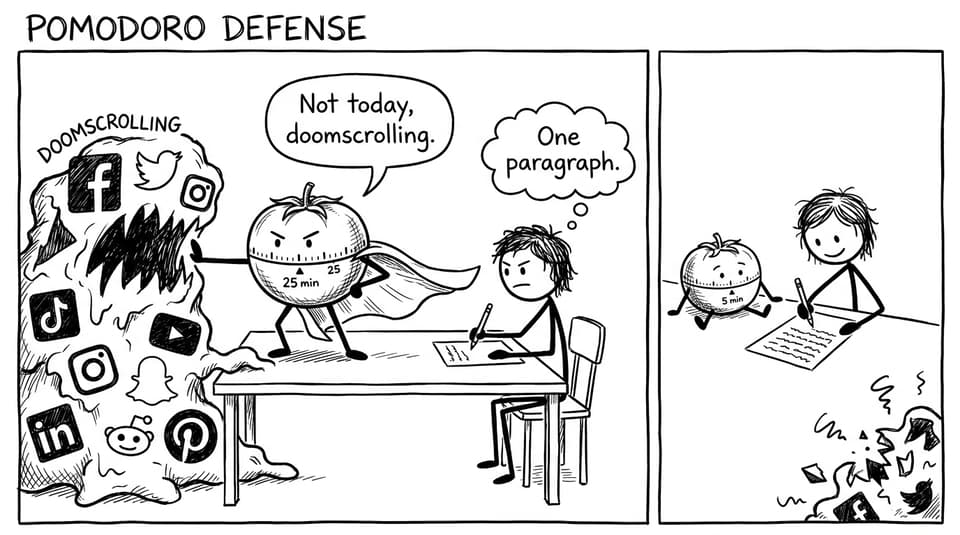
Write with a timer, not a mood
Use 25 minutes of focused work, 5 minutes off. During the 25, your only goal is to produce. During the 5, step away.
Set micro-goals that end cleanly
Examples:
-
Draft one analysis paragraph with one piece of evidence
-
Rewrite one aim sentence so it is measurable
-
Add two limitations and link each to its impact
Micro-goals turn the IA into a sequence of wins.
Replace “more research” with “more explanation”
Many IAs get stressful because students keep collecting sources instead of interpreting what they already have. If you feel stuck, ask: “Have I explained what this result means, and why it matters?”
If motivation is fading and you’re running on panic, read IB stress: how to stay motivated without burning out. The routines are small enough to be realistic.
Stop trying to write a perfect IA draft
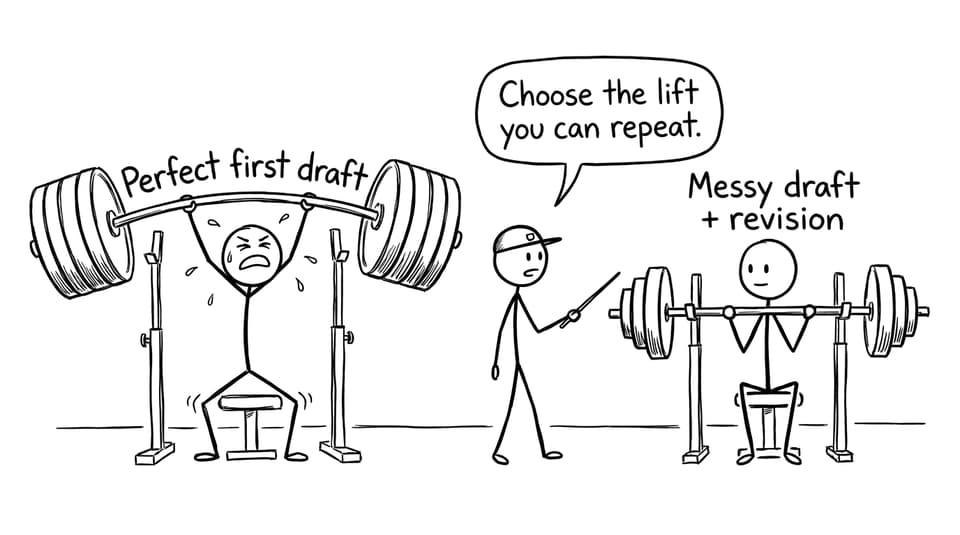
Perfectionism is a clever form of procrastination. It tells you you’re “working hard,” while it quietly prevents progress.
A healthier mindset:
-
Drafts are allowed to be messy
-
Your second pass is where marks appear
-
Examiners reward visible thinking, not flawless vibes
When you need feedback without spiraling, use RevisionDojo’s Grading tools for criterion-based guidance, and use AI Chat to ask the question you’re too embarrassed to ask in class. Then confirm your structure by comparing to the Coursework Exemplars library. That loop shortens uncertainty, which is the real source of stress.
A calmer finish: your IA is built one small decision at a time
The most surprising thing about a strong IA is that it rarely feels heroic while you’re writing it. It feels ordinary. A paragraph. A graph. A clearer explanation. A better evaluation sentence. Then, eventually, a complete piece of work.
If you want the fastest path from stress to structure, open RevisionDojo’s coursework exemplars and study how high-scoring students make their thinking visible. Then use RevisionDojo to keep your whole IB life steady: Questionbank practice for exams, Study Notes for clarity, Flashcards for daily recall, AI Chat for quick help, Grading tools for coursework feedback, and Mock Exams plus Predicted Papers when you’re ready to rehearse under pressure.
Your IA doesn’t need to be perfect. It needs to be clear, deliberate, and finished. And you can absolutely do that.