The moment you sit down to write a lab report, it’s tempting to treat it like a diary: what we did, what we saw, what happened. But IB SEHS lab reports don’t reward storytelling by default. They reward evidence of scientific thinking: clear variables, clean processing, justified analysis, and honest evaluation.
If you’ve ever felt that your IB SEHS results were “fine” but your marks weren’t, the problem is rarely the experiment. It’s nearly always the communication.
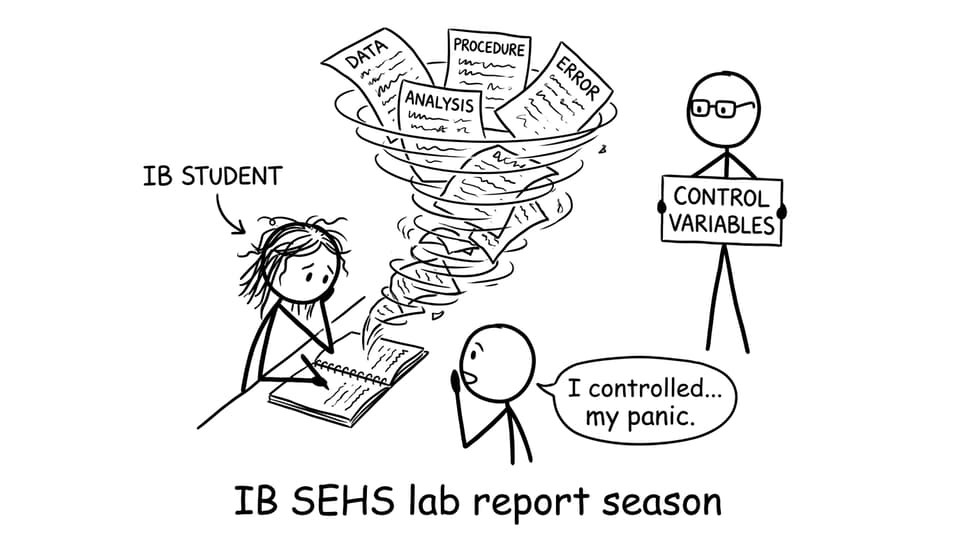
Stick-figure chaos during lab report season
IB SEHS lab report checklist (save this)
Use this as a pre-submit scan for every IB SEHS practical:
Research question is specific and measurable (IV, DV, population stated)
Background links directly to a syllabus concept (not generic physiology)
Method is reproducible (controls and repeats are explicit)
Raw and processed data are clearly separated, with units everywhere
Graphs are labeled and match the data type
Statistics are used to strengthen claims (not decorate them)
Evaluation identifies realistic limitations and specific improvements
Conclusion answers the question and ties back to theory
For broader coursework structure, keep the IB IA Guides hub open while you write.
Build your IB SEHS structure like a “map,” not a template
A strong IB SEHS report reads like the examiner always knows where you’re going next. The easiest way to do that is to make each section answer one core question:
Your research question should be testable with the equipment and time you actually have. Then your hypothesis should do more than predict a direction. It should include why that direction makes sense based on SEHS theory.
Make your data easy to trust (and impossible to misread)
Most examiners aren’t hunting for mistakes. They’re noticing friction. Every time your table forces effort (missing units, unclear headings, mixed raw/processed data), your credibility drops.
Tables, units, and graph choices
Use raw data tables first, then processed data tables. Put units in the column heading, not sprinkled in cells. Choose graphs that match the question:
Scatterplot for relationships
Bar chart for group comparisons
Line graph for changes over time
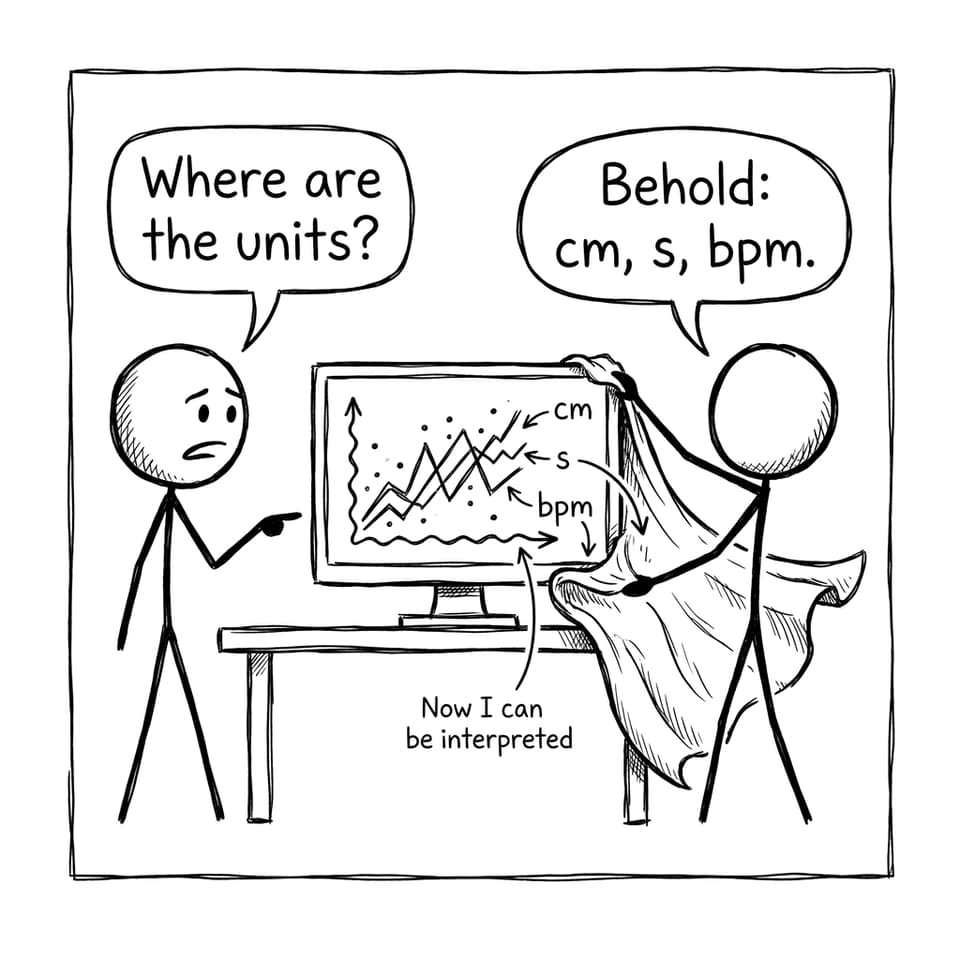
Comic about unlabeled axes vs labeled units
When you need topic knowledge to explain patterns (for example, fatigue and ATP supply), it helps to anchor your explanation in the syllabus. RevisionDojo’s SEHS notes like A.2.3 Energy systems are perfect for that “link back to theory” paragraph.
Use statistics as your argument, not your decoration
In IB SEHS, analysis is where “good” becomes “high-scoring.” Averages are a start, but not a conclusion. You need to show variability, reliability, and what the numbers mean.
What to include in your analysis
Mean (for typical performance)
Standard deviation (for spread and consistency)
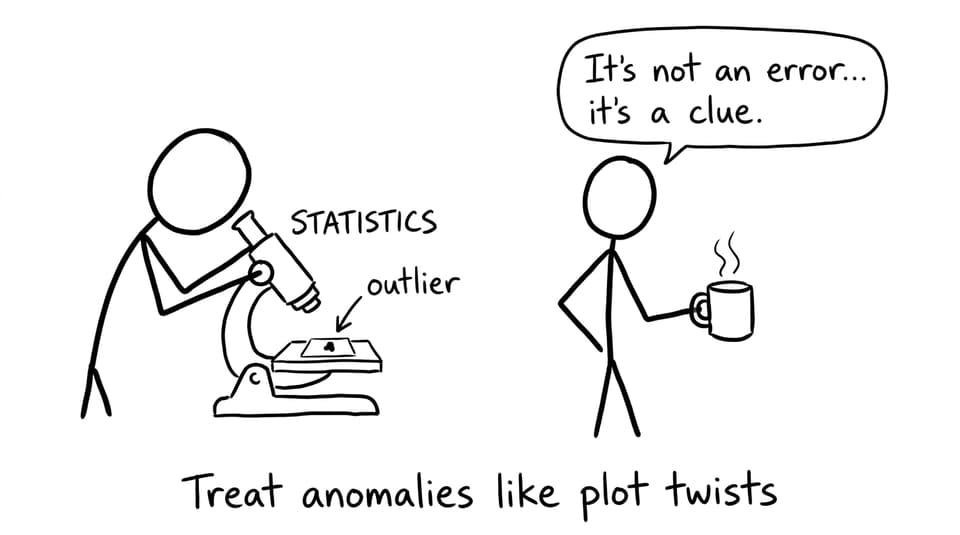
Comment on anomalies and reliability
If relevant, a simple test of significance or correlation
A limitation (what specifically weakened validity or reliability)
The impact (how that limitation could have shifted results)
A fix (a realistic improvement that matches the limitation)
Example:
Limitation: Manual stopwatch timing introduces reaction time error.
Impact: Recorded sprint times may be systematically higher and less consistent.
Improvement: Use timing gates or video frame-counting to reduce human error.
For students polishing coursework, seeing what top work looks like can change your standards quickly. Browse SEHS Coursework Exemplars to compare structure, analysis, and evaluation depth.
How RevisionDojo helps you turn lab reports into exam marks
The hidden benefit of a better IB SEHS lab report is that it becomes revision material you actually trust. Use RevisionDojo to tighten the loop:
Use the IB SEHS resources hub for Study Notes and Flashcards that feed your background theory
If you’re working on coursework drafts, the IB SEHS IA Grader gives rubric-aligned feedback you can act on immediately
Use AI Chat to test whether your conclusion truly answers the research question, and whether your evaluation fixes match your limitations
Conclusion: make your IB SEHS lab report a scoring tool
A better IB SEHS lab report isn’t about sounding smarter. It’s about making your thinking easy to follow: tight structure, trustworthy data presentation, statistics that support claims, and evaluation that reads like practical problem-solving.
If you want your next IB SEHS report to feel calmer (and score higher), build it with RevisionDojo open: Study Notes and Flashcards for theory, Questionbank for exam-style data practice, and the SEHS IA Grader for rubric-level feedback you can actually use.
IB SEHS goal setting in sport made simple: goal types, SMART targets, common mistakes, and exam-ready tips using RevisionDojo practice tools.