If you’ve ever walked out of an IB SEHS lesson feeling productive, then opened your HL Biology or HL Math homework and felt your brain quietly exit the room, you’re not alone.
The tricky part isn’t that IB SEHS is “too hard.” It’s that the Diploma Programme stacks deadlines in a way that makes even motivated students feel behind. One lab write-up turns into three. One IA draft turns into a month of “I’ll start tomorrow.” Balance isn’t a personality trait. It’s a system.
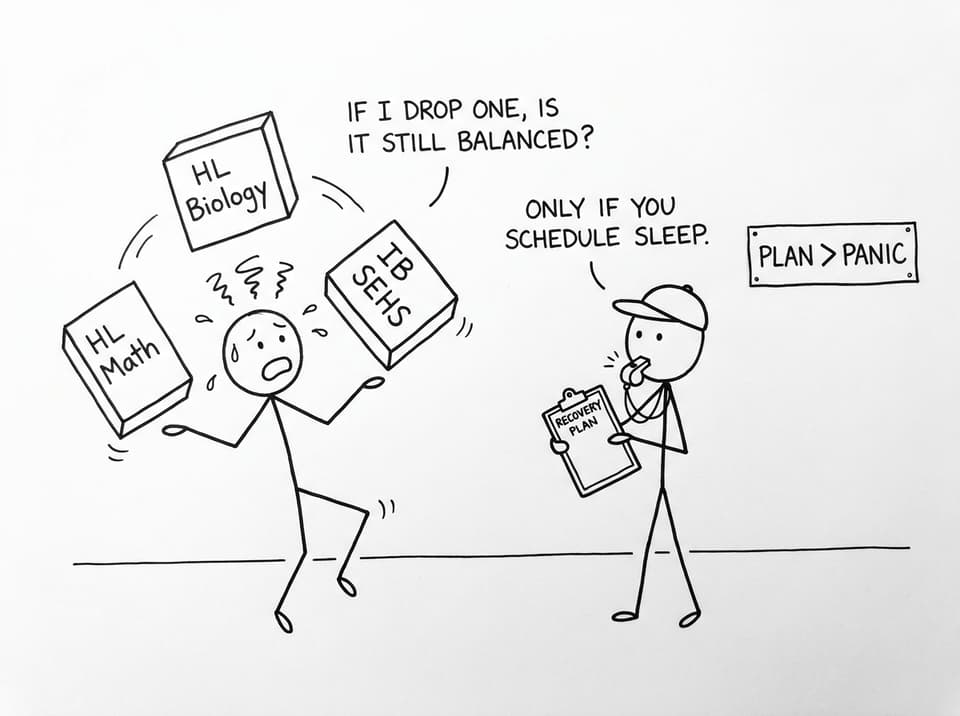
Student juggling HLs and SEHS with a recovery plan
A quick checklist for balancing IB SEHS with HL subjects
Keep this short list on your phone. If you do these consistently, IB SEHS stops competing with your other HLs and starts fitting beside them.
Plan one weekly “deadlines scan” for every subject
Use overlap topics to revise IB SEHS and HL sciences together
Break your IB SEHS IA into weekly micro-tasks
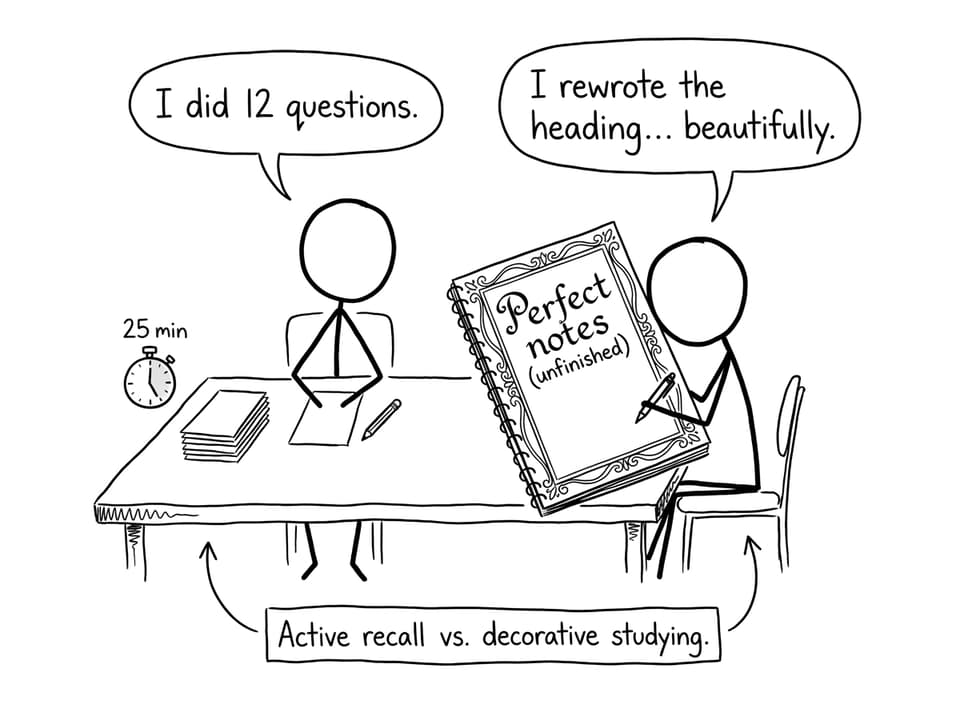
Turn labs into active revision, not just paperwork
Protect recovery time like it’s part of the syllabus
Practice exam technique early with timed questions
On paper, IB SEHS has a clear structure: theory, applied understanding, regular practical work, an Internal Assessment, and exams that reward both knowledge and precision. The pressure comes from collisions.
Your HLs often demand long stretches of deep focus (math problem sets, biology marking practice, chemistry mechanisms). IB SEHS demands steady momentum: small tasks done often. When you treat IB SEHS like a subject you can “catch up later,” it quietly becomes the subject that steals time from everything else.
The goal is to keep IB SEHS on a rhythm so it never needs a rescue mission.
Build one weekly schedule that makes IB SEHS predictable
Here’s a calm approach: stop planning by motivation, and plan by energy.
Use three types of study blocks
Deep work (60--90 min): HL problem solving, writing tasks, tough concepts
IB SEHS thrives in “skill reps” and “maintenance.” You don’t need three-hour marathons. You need frequency.
A simple weekly pattern:
2 short IB SEHS maintenance sessions (flashcards + definitions)
1 skill-rep session (timed questions)
1 IA micro-task (small, specific output)
If you want the tool-stack that supports this, RevisionDojo makes the workflow easy: Study Notes for clarity, Flashcards for retention, Questionbank for skill reps, and AI Chat when you get stuck.
Use overlap to study IB SEHS and your HLs at the same time
The easiest way to balance IB SEHS is to stop revising it in isolation.
If you take Biology, physiology overlaps are everywhere. Do a focused SEHS topic session, then reinforce it with targeted practice from IB Biology Resources.
If you take Chemistry, nutrition and metabolism become less memorization and more understanding.
If you take Math, the data processing side of IB SEHS becomes an advantage, not an extra burden.
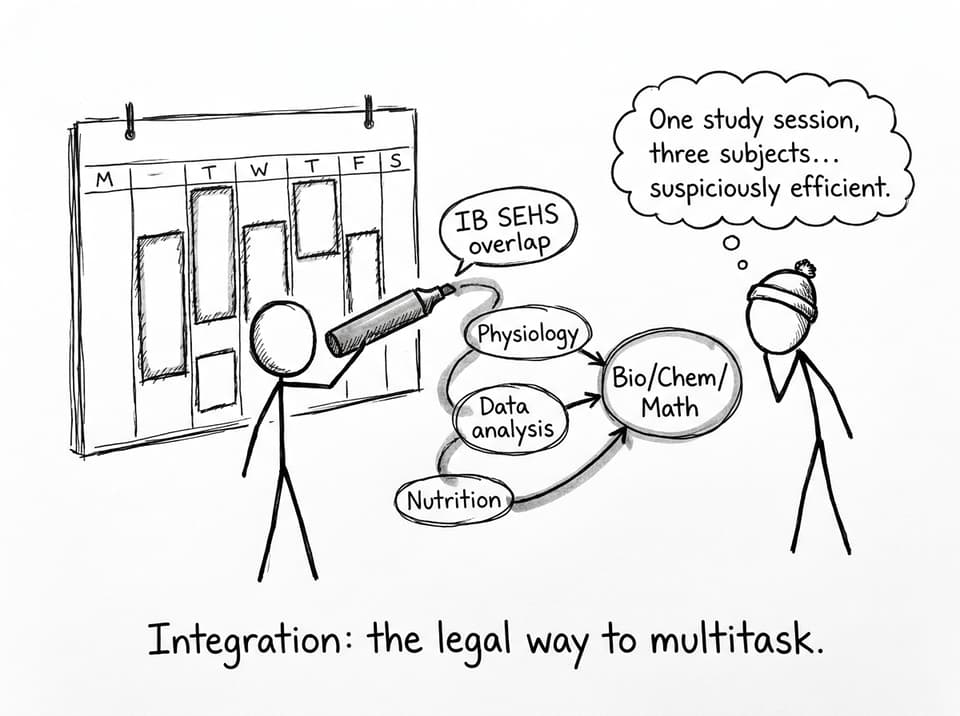
Calendar showing SEHS overlaps with Bio, Chem, and Math
A practical move: pick one overlap theme each week (like “energy systems” or “data analysis”) and run it through multiple subjects. Your brain likes patterns. The IB rewards them.
Balancing IB SEHS with other HL subjects isn’t about doing more. It’s about keeping IB SEHS predictable: small weekly progress, smart overlap revision, and early exam practice so nothing becomes an emergency.
If you want one place to run that system, RevisionDojo gives you the full toolkit: Study Notes, Flashcards, Questionbank, AI Chat, Grading tools, Predicted Papers, Mock Exams, a Coursework Library, and Tutors when you need a human strategy check. Start with the IB Sports, exercise and health science Resources hub, and keep IB SEHS on a rhythm you can sustain through finals season.
IB SEHS goal setting in sport made simple: goal types, SMART targets, common mistakes, and exam-ready tips using RevisionDojo practice tools.