


A funny thing happens in an IB classroom the week before exams.
One student is quietly re-learning the basics they were too proud to admit they missed. Another is already done with the worksheet and asks for “harder questions” with the calm confidence of someone who sleeps eight hours.
Teachers feel the tension first. If they slow down, high achievers drift. If they speed up, struggling students disappear behind polite nods.
But here’s the part most students never see: great IB teaching isn’t choosing one group over the other. It’s building a system where support and stretch happen at the same time, without turning the classroom into two separate courses.
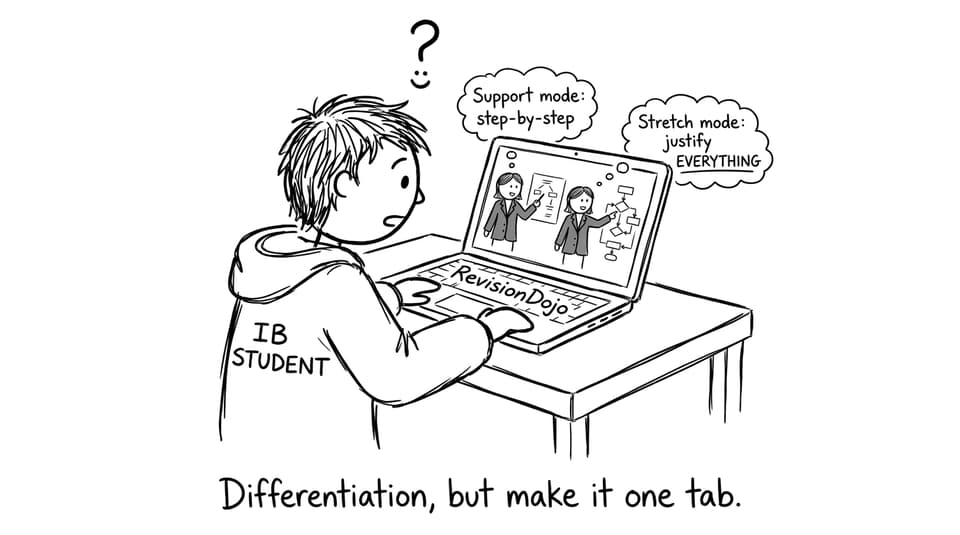
A quick IB checklist: what balanced support actually looks like
If you want to spot whether your class is set up for both catching up and leveling up, look for these signals:
-
Early diagnosis: quick checks that reveal gaps before revision starts.
-
Tiered tasks: same topic, different depth (not different expectations).
-
Fast feedback loops: students correct mistakes within 24-48 hours.
-
Visible progress: everyone can see what to fix next.
-
Extension that matters: high achievers practice IB command terms (not busywork).
A strong platform can make this sustainable. RevisionDojo was built around that exact IB reality: mixed-ability groups, limited time, and the need for exam-shaped practice.
Why the IB classroom feels like two classes at once
The IB creates a wide ability spread even when students are motivated.
Some differences are obvious: HL vs SL pace, prior knowledge, and confidence. Other differences are invisible until the test: students who can explain a topic in conversation but cannot structure an exam response under time pressure.
This is why “just give extra help” often fails. Extra help is usually:
-
too late (after misconceptions have calcified)
-
too general (more notes, not more targeted practice)
-
too time-expensive (for teachers and students)
High achievers suffer too, just differently. They often get fewer chances to practice the skills that move them from a 6 to a 7: precision, evaluation, and consistent markband-level structure.
What IB students can do to make differentiation work for them
Even though this article is about teachers, you benefit most when you know how to use the system.
Ask for “next-step feedback,” not “more help”
Instead of saying “I don’t get it,” ask:
-
“Which skill is costing me marks?”
-
“Is this a knowledge gap or an exam-technique gap?”
-
“What would a top-mark response do differently?”
When teachers can answer that, they can differentiate without splitting the room.
Use practice that reveals patterns
High achievers and struggling students both waste time when practice is random.
A better loop is: attempt, review, log the mistake pattern, reattempt.
RevisionDojo is designed around this loop with its Questionbank, Study Notes, Flashcards, AI Chat, and Grading tools so practice turns into decisions, not just effort. A good starting point is the guide: IB Question Bank | How to Use It Effectively.
How IB teachers can support struggling students without slowing the top
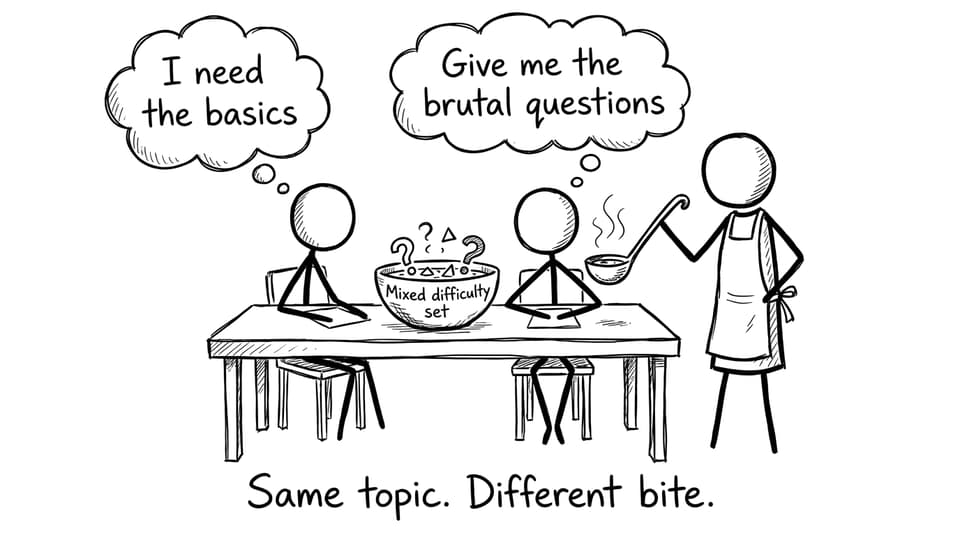
Teach one concept, assign two depths
The cleanest differentiation in IB is not two lessons. It’s one lesson with two depths of practice.
-
Struggling students get scaffolded steps and more immediate feedback.
-
High achievers get extension questions that force justification, evaluation, and multi-step reasoning.
That’s why mixed-difficulty assignment sets matter. They keep the class on one topic while letting each student work at the right level of strain.
On RevisionDojo, teachers can do this through targeted sets in the Questionbank while students patch understanding using Study Notes and retain key facts via Flashcards.
Make exam technique the shared language
A class can stay together when the shared goal is technique, not speed.
For example, everyone can practice:
-
interpreting command terms
-
structuring responses
-
showing working clearly
-
managing timing
Then the differentiation happens in the difficulty of the prompts.
Students who want a broader system for this can use: RevisionDojo App: The Smarter Way to Prep for IB Exams and build a routine using Mock Exams and Predicted Papers for timed realism.
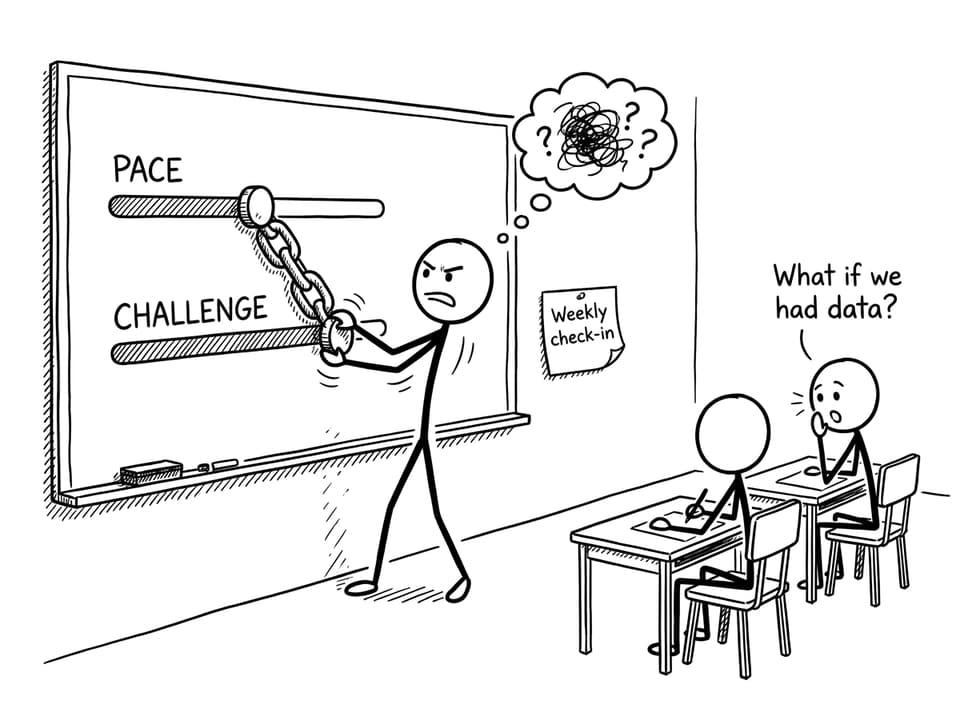
Use weekly data to prevent “silent failure”
Many struggling students do not suddenly collapse. They slowly disengage.
A weekly check-in using performance and engagement data helps teachers intervene early and helps students see the problem while it is still fixable.
If your school uses RevisionDojo, that’s the point of the analytics-driven workflow described here: How IB Schools Can Use RevisionDojo to Streamline Exam Preparation.
The student-side win: one classroom, multiple paths to a 7
The best part of balanced IB support is that it stops labeling.
A student can be “struggling” in one unit and “high achieving” in the next. Differentiation done well treats performance as information, not identity.
Here are three RevisionDojo pathways teachers often nudge students toward:
-
Catch up fast: Study Notes + small Questionbank sets + AI Chat for one-minute clarifications
-
Lock in memory: IB Flashcards with Spaced Repetition (SRS)
-
Train under pressure: IB Predicted Papers by IB Examiners (Free)
FAQ
How can an IB teacher help me without making the class slower?
A strong IB teacher doesn’t slow the whole class for one student. They keep the main lesson moving, then change the practice experience so you get the right amount of scaffolding. That might mean fewer questions with more feedback, or questions that are broken into smaller steps. It also means quick checks that identify whether you are missing content knowledge or missing exam technique. If your teacher uses a platform like RevisionDojo, they can assign targeted practice and track improvement without spending hours building separate resources. Your job is to be honest about what you missed and to reattempt mistakes within 24-48 hours.
I’m doing well in IB. How do I stay challenged while others catch up?
High achievers stay challenged when extension work is about thinking, not more pages. Ask for tasks that force IB command terms like evaluate, justify, and compare, because those are what separate markbands. You also benefit from timed practice that exposes small weaknesses under pressure, even when you “know the content.” RevisionDojo helps here by combining higher-difficulty Questionbank sets with tools like Predicted Papers and Mock Exams, so you are training performance, not just knowledge. If you find yourself bored, that’s often a signal you need harder prompts, stricter timing, or deeper feedback. The goal is not to do extra work, but to do higher-quality work.
What should I do if I’m struggling in IB but embarrassed to ask for help?
First, remember that the IB is designed to stretch students, so struggle is not proof you are behind forever. The most effective students ask for small, specific help early, before panic makes it feel dramatic. Try asking one concrete question after class, then do a short set of targeted practice to confirm you fixed the issue. Tools like AI Chat can help you clarify a concept privately, then you can bring a better question back to your teacher. Using Flashcards for daily recall also reduces the anxiety of forgetting basics during revision. If you need a clean starting routine, use the strategy in 10 Proven Study Techniques for IB Students and keep your sessions short and repeatable.
A final thought (and a practical next step)
In the IB, the classroom isn’t meant to be perfectly even. It’s meant to be honest: everyone working hard, everyone improving, and nobody quietly falling through the gaps.
The healthiest classrooms don’t choose between struggling students and high achievers. They build routines where support and stretch can coexist, week after week, without burning out the teacher or the student.
If you want that kind of IB system at school, point your teachers or coordinator here: RevisionDojo for Schools | Transform Your Exam Preparation. RevisionDojo brings the Questionbank, Study Notes, Flashcards, AI Chat, Grading tools, Predicted Papers, Mock Exams, Coursework Library, and Tutors into one place, so the whole class can move forward together.