


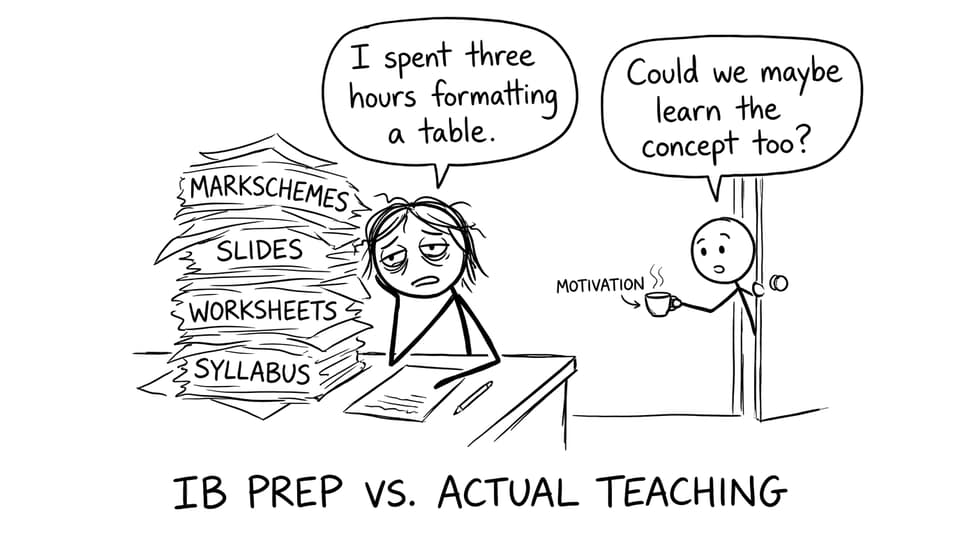
When your teacher says, “I’ll make a quick worksheet for tomorrow,” you probably picture 10 minutes and a printer.
In the real IB world, “quick” often means: interpret the syllabus wording, find exam-style questions, rewrite them into a class-friendly format, build a model answer, and then create a version for HL vs SL. That’s how lesson prep becomes a second job.
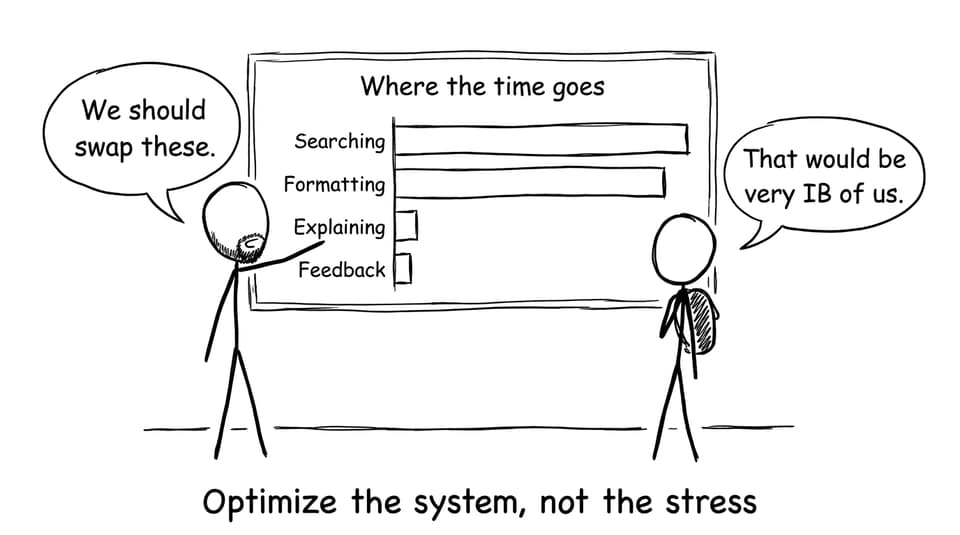
And here’s the part that matters to you as an IB student preparing for exams: when teachers spend less time formatting resources, they spend more time doing the work that moves your gradetargeted feedback, smarter practice, and clearer explanations.
A quick checklist: what “time-saving” lesson prep actually looks like in IB
If your goal is stronger IB exam performance, the best lesson materials usually share the same DNA:
-
Syllabus-mapped so you revise what’s examinable (not just what’s interesting)
-
Exam-style practice built in so class time converts into marks
-
Fast feedback loops so mistakes get fixed before they fossilize
-
Reusable structures so your teacher can iterate, not reinvent
-
One place to find everything (notes, questions, homework, analytics)
This is why platforms like RevisionDojo matter, not not as a shortcut, but as a system.
Why IB lesson prep takes so long (and why that affects your revision)
Most IB teachers aren’t slow. They’re working inside a complex framework where every resource must do multiple jobs.
The syllabus is detailed on purpose
The IB isn’t “teach the chapter.” It’s teach learning objectives, command terms, and skills. That precision is great for fairness, but it makes resource creation slower.
HL and SL split the classroom reality
Even when you share a classroom, HL and SL expectations diverge. Teachers end up producing two tracks of materials, or one track with careful differentiation.
Good questions are hard to find (and harder to format)
Teachers want questions that feel like the IB: structured prompts, markscheme logic, and the right balance of content and application. Finding them is one task. Turning them into clean lesson-ready handouts is another.
If you’ve ever wondered why your class sometimes does “notes only” lessons close to exams, it’s often because practice resources are the bottleneck.
How RevisionDojo helps IB teachers save time (so you get better practice)
RevisionDojo is built to reduce the invisible workload behind your IB lessons, while keeping quality and alignment high.
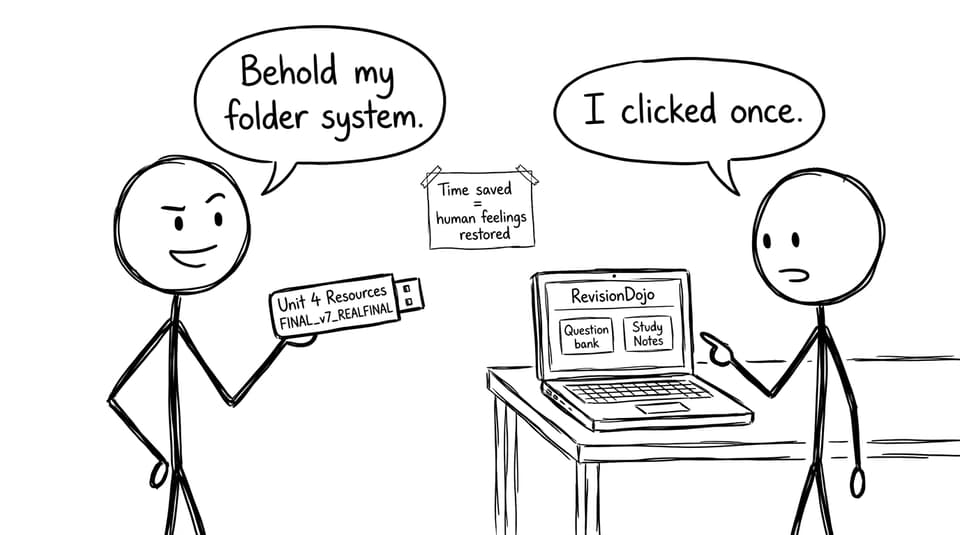
Build lessons around the Questionbank (less searching, more marks)
Instead of hunting for questions across folders and websites, teachers can pull exam-style practice from RevisionDojo’s Questionbank and assign it quickly.
For you, that usually means more consistent practice and fewer “random worksheet” moments.
Useful links:
Use Study Notes as the shared “source of truth”
A big time sink in IB teaching is rewriting explanations from scratch each year. With RevisionDojo, teachers can anchor lessons in syllabus-aligned Study Notes, then spend their energy on examples, misconceptions, and discussion.
That helps you too: your class explanation and your home revision stop feeling like two different worlds.
Useful links:
Turn concepts into Flashcards without manual admin
Teachers can encourage fast, daily retrieval practice using Flashcards (and students can build their own from what they missed). In a tight IB calendar, that matters because recall is often the first thing to collapse under stress.
Useful links:
Use AI Chat and Grading tools to shorten the feedback loop
In the IB, feedback is the multiplier. But marking takes time, and time is scarce. With RevisionDojo’s AI Chat and Grading tools, teachers can reduce repetitive marking and focus on the higher-value feedback that changes how you think.
That’s the difference between “you lost 2 marks” and “here’s the pattern causing you to lose 2 marks every time.”
Add realism with Predicted Papers and Mock Exams (without extra teacher workload)
As exams approach, teachers want you doing timed, exam-style sets. RevisionDojo’s Predicted Papers and Mock Exams support that structure, so class time can shift from creating papers to analyzing performance.
If your teacher is using RevisionDojo, you’ll often notice the class becomes more diagnostic: fewer generic tasks, more targeted fixes.
Useful link:
A realistic classroom story (from the student side)
Picture a typical week before mocks: your teacher wants to reteach one hard concept, set homework that actually matches the exam, and still return feedback fast enough for you to act on it.
In many IB classrooms, the limiting factor is not motivation. It’s logistics.
When lesson materials are already structured: notes to teach from, questions to assign, analytics to interpret: teachers get to spend their time where you feel it most: on clarity, pacing, and feedback. You get more practice that looks like the exam, and fewer “we ran out of time” lessons.
FAQ
How does saving teacher time help me score higher in IB?
In the IB, your grade moves when you do three things repeatedly: understand the concept, practice it in exam style, and correct mistakes with feedback. When teachers save time preparing lesson materials, they can run this loop more often and with less friction. That typically means more frequent low-stakes practice, clearer success criteria, and quicker correction of misconceptions. It also means teachers can differentiate faster, so HL students aren’t waiting and SL students aren’t overwhelmed. Over weeks, those small efficiencies turn into more targeted revision before your exams. In other words, teacher time saved becomes student marks gained.
What should I do if my IB teacher uses RevisionDojo and I want to benefit more?
Start by treating RevisionDojo as your “home base” for the same topics you’re doing in class. Use Study Notes to review the exact learning objective, then use the Questionbank to practice that objective in exam style. After each set, write down the one mistake pattern you keep repeating and ask AI Chat to explain it in the markscheme language you’re expected to use. Then create or review Flashcards for the parts you hesitate on (definitions, processes, formulas, key terms). If your teacher assigns timed practice via Mock Exams or Predicted Papers, don’t just check your score; identify which topics caused the losses and loop back. This is how you turn a platform into an advantage instead of another tab.
Does RevisionDojo only help teachers, or is it useful for students too?
It helps both, which is why it fits the IB so well. Teachers save time because they can pull syllabus-aligned materials quickly, assign practice in a structured way, and use analytics rather than guesswork. Students benefit because the system encourages active recall and exam-style application instead of passive rereading. The tools also connect naturally: Study Notes lead into Flashcards, which lead into Questionbank practice, with AI Chat supporting quick clarification. Add Grading tools, Predicted Papers, and Mock Exams, and you get a full exam-prep loop rather than isolated resources. If you need extra support, RevisionDojo also offers Tutors, which can make the system even more personal.
Conclusion: the best IB lessons feel simple because the system is strong
The most effective IB classrooms don’t feel frantic. They feel intentional: clear objectives, focused practice, and feedback that arrives while you can still use it.
When teachers save time preparing lesson materials, that calm structure becomes possible. And when you’re preparing for IB exams, that structure is everything.
If you want your school to turn lesson prep into a repeatable system (and give students more exam-style practice), point your teachers or coordinators here: RevisionDojo for Schools