The first time you realise university isn’t impressed by “I worked hard,” it can feel unfair.
Hard work matters. But higher education rewards something more specific: the ability to think in systems, test ideas, write clearly, and stay calm when the data refuses to behave.
That’s where IB SEHS quietly shines.
On the surface, it looks like a subject about sport. Underneath, it’s training for how universities actually operate: evidence, argument, uncertainty, and the disciplined habit of revising your beliefs when the numbers say otherwise. And if you’re an IB student preparing for exams, the best part is that these university-style skills also make you score better now.
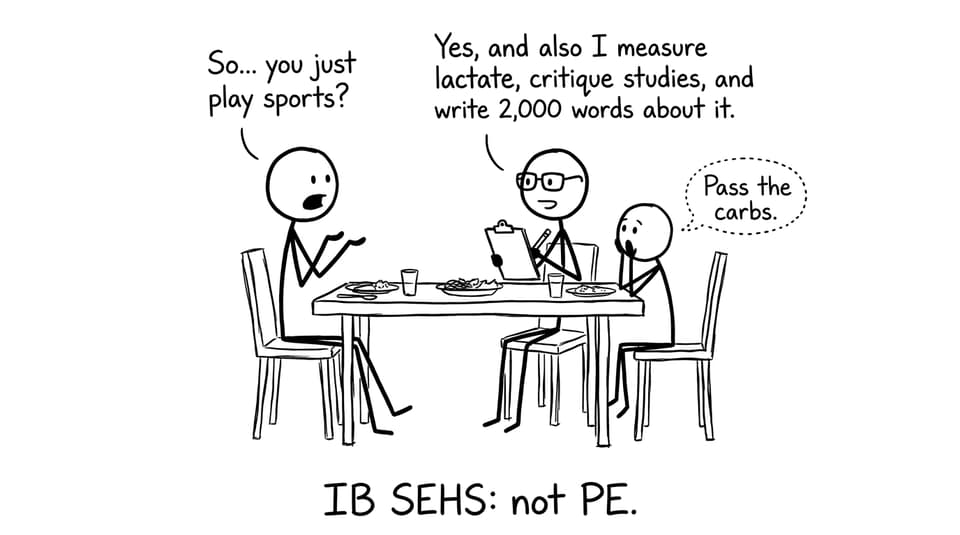
IB SEHS: not PE
A quick checklist: the university skills IB SEHS builds
Use this as a short “am I university-ready?” audit. IB SEHS strengthens your ability to:
Design investigations (not just repeat facts)
Analyse data and spot patterns fast
Evaluate sources, bias, and study limitations
Write in an academic style using evidence
Collaborate without losing standards
Connect theory to real-world decisions in health and performance
That’s basically the mindset behind your practical work and Internal Assessment-style thinking: not “What’s the correct answer?” but “What does the evidence justify?”
A good example is study design. In IB SEHS, you learn why control groups, randomisation, and placebos aren’t just vocabulary; they’re the difference between real findings and confident nonsense. If you want to tighten that skill for exam questions and writing, revise using these study design notes.
And when you need feedback that feels like a university supervisor (specific, criterion-based, and brutally useful), the IB SEHS IA Grader gives you strand-by-strand guidance you can actually act on.
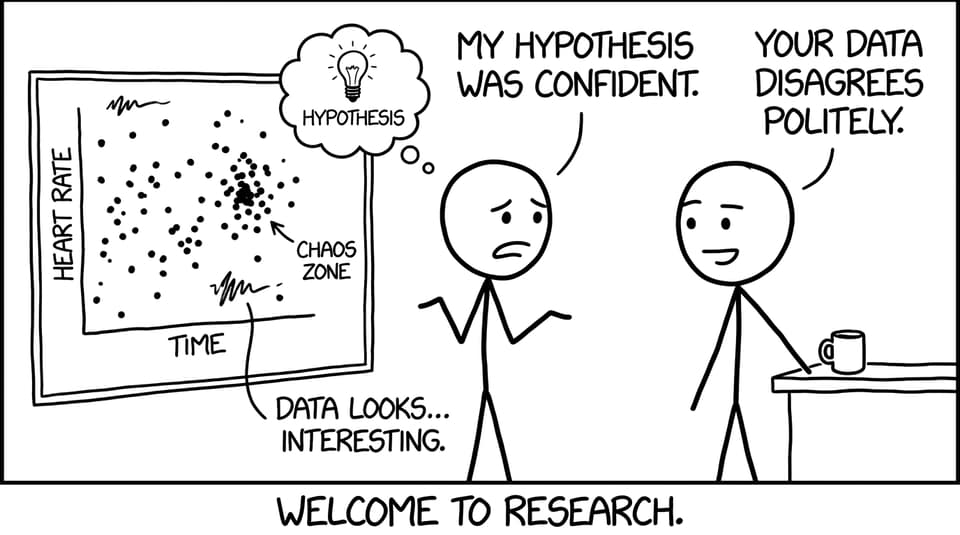
Welcome to research
IB SEHS builds critical thinking you can’t fake in university
University assessments don’t just test what you know. They test whether you can weigh what you know.
That’s why IB SEHS is such strong preparation: the course constantly asks you to compare models, interpret findings, and critique conclusions. You practise asking the kinds of questions professors expect you to ask in seminars:
Is the sample size meaningful?
Are there confounding variables?
Does correlation get mistaken for causation?
Are we overgeneralising from one population to another?
This is also why the subject is so exam-relevant: IB markschemes reward evaluation, not just definitions.
If you’re revising psychological factors and performance (a classic area where students slip into vague writing), use the Psychology of Sport topic page to practise moving from “I kind of get it” to “I can write this under time pressure.”
IB SEHS makes you comfortable with data (a university superpower)
In a lot of degrees, students don’t struggle because concepts are “too hard.” They struggle because they can’t translate messy information into a clear conclusion.
IB SEHS gives you repeated reps with:
Graphs, tables, and trend interpretation
Measurement, reliability, and anomalies
Linking physiological data to performance explanations
That’s not only helpful for sports science or health-related degrees. It transfers into psychology research methods, biology labs, economics datasets, and even business analytics.
Two content areas make this especially concrete:
Energy systems and how intensity changes which pathways dominate (perfect for data interpretation questions) -- see A.2.3 Energy Systems.
Forces and movement, where students learn to connect physics-style thinking to real performance contexts -- see B.2 Forces, motion and movement.
The RevisionDojo Questionbank is the fastest way to turn these topics into marks, because it forces you to interpret unfamiliar data repeatedly (and then fixes your method with feedback). If you haven’t used it yet, start at the Questionbank feature page.
IB SEHS trains academic communication (so essays feel less scary)
University is full of moments where your grade depends on how well you explain what you mean.
Precise terminology (not “the muscle gets tired,” but a mechanism)
Evidence-led claims (“because the data suggests…”) rather than opinion
If you want to strengthen scientific writing and clarity, practice one topic with notes, then do targeted questions immediately after. For example, revise the underlying systems using cardiovascular system notes, then answer exam-style items until your explanations are clean.
IB SEHS prepares you for multiple university pathways
A common worry is: “What if I don’t study sports science at university?”
The honest answer is that IB SEHS is useful far beyond one degree title.
Medicine, nursing, physiotherapy: you gain a strong base in human systems, health context, and evidence evaluation.
Sports science, kinesiology: direct alignment with biomechanics, physiology, and performance research.
Psychology: applied performance psychology gives you a real-world anchor for research thinking.
Business and management: data handling, communication, and team processes translate more than students expect.
If coursework quality is part of your university goals, it helps to see what top work looks like. RevisionDojo’s SEHS coursework exemplars library models strong structure and decision-making, so you’re not guessing what “good” means.
A simple exam-week routine that also builds university habits
Here’s a calm routine that works because it mirrors university learning loops: learn, test, fix, repeat.
20 minutes: Study Notes for one subtopic (keep it tight)
25 minutes: Questionbank set on that exact subtopic
10 minutes: Flashcards for definitions and key processes
5 minutes: Write one “error rule” (the mistake you won’t repeat)
In RevisionDojo terms, this uses the platform the way it’s designed: Study Notes, Flashcards, Questionbank, AI Chat, Grading tools, Predicted Papers, Mock Exams, Coursework Library, and Tutors. The tools aren’t separate; they’re a loop.
Conclusion: IB SEHS is university practice in disguise
The best preparation for university isn’t getting everything right the first time. It’s learning how to update your thinking when the evidence changes.
That’s why IB SEHS prepares you so well. It builds research habits, critical evaluation, data confidence, and clear communication -- the exact skills that make university feel less like a shock and more like a continuation.
If you want to turn IB SEHS into both exam results and long-term confidence, use RevisionDojo as your training ground: revise with Study Notes, drill with the Questionbank, lock it in with Flashcards, get unstuck with AI Chat, and sharpen performance with Grading tools, Predicted Papers, Mock Exams, the Coursework Library, and Tutors.
IB SEHS goal setting in sport made simple: goal types, SMART targets, common mistakes, and exam-ready tips using RevisionDojo practice tools.