

In IB Business Management, there’s a moment every student recognizes: you read a case study about a bold expansion, a shiny new machine, or an app launch, and it all sounds exciting… until the numbers arrive. Suddenly the question isn’t “Will this work?” but “How risky is this investment, and how fast can the business get its cash back?”
That’s where the payback period quietly earns its reputation. It’s not glamorous, but it’s practical. And in exams, practical tools often score.
What the payback period actually tells you (and why it matters)
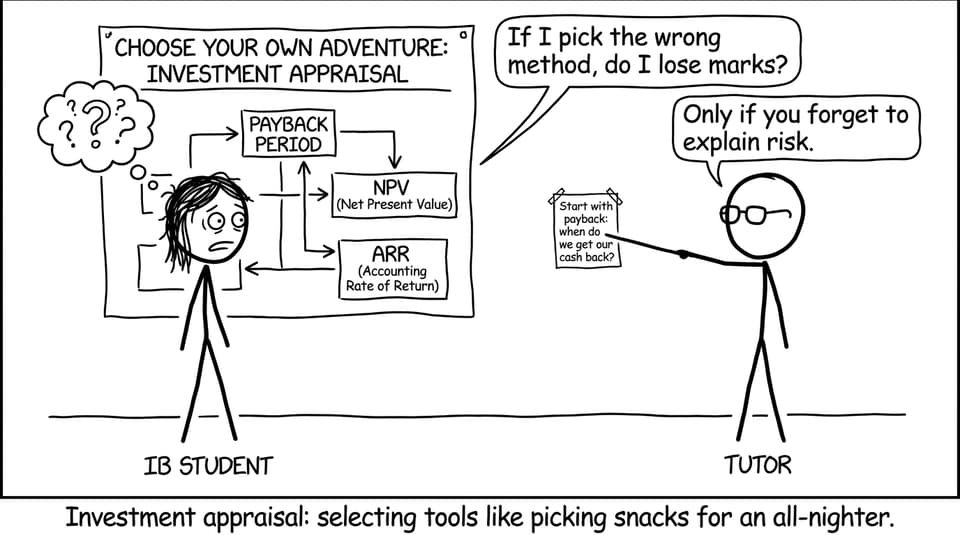
The payback period measures how long it takes for an investment’s cash inflows to recover the initial cost. In IB Business Management, that matters because risk isn’t just about whether a project might fail; it’s about how long the business is exposed before it can breathe again.
If you want the definition and calculation steps in one place, keep the relevant RevisionDojo pages open while revising: Investment appraisal techniques notes and the Key Definitions glossary.
Quick exam checklist for payback period
-
Define payback period clearly (time to recover initial investment from cash inflows)
-
Interpret: shorter payback == lower risk (usually)
-
Link to cash flow and uncertainty in the market
-
Add limitation: ignores profit after payback and time value of money
-
Conclude with a balanced judgement and context
How payback period helps businesses understand investment risk
In IB Business Management, “risk” often means uncertainty plus consequences. The payback period helps with both.
Short payback period == less time for things to go wrong
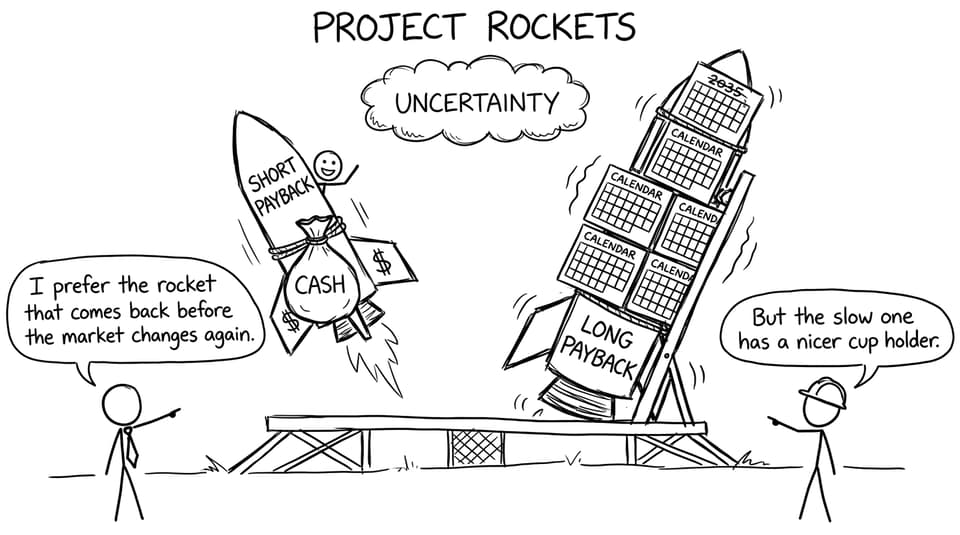
A shorter payback period reduces exposure. The business gets its money back sooner, which limits losses if demand drops, costs rise, or a competitor disrupts the market. This is especially convincing in fast-moving industries where product life cycles are short.
Long payback period == more uncertainty to survive
A longer payback period signals higher risk because more can change before the investment pays for itself: interest rates, technology, regulation, consumer preferences, and supplier costs. In exam responses, you can tie this to the case study by naming a specific uncertainty and showing how time increases vulnerability.
Payback period protects liquidity and cash flow
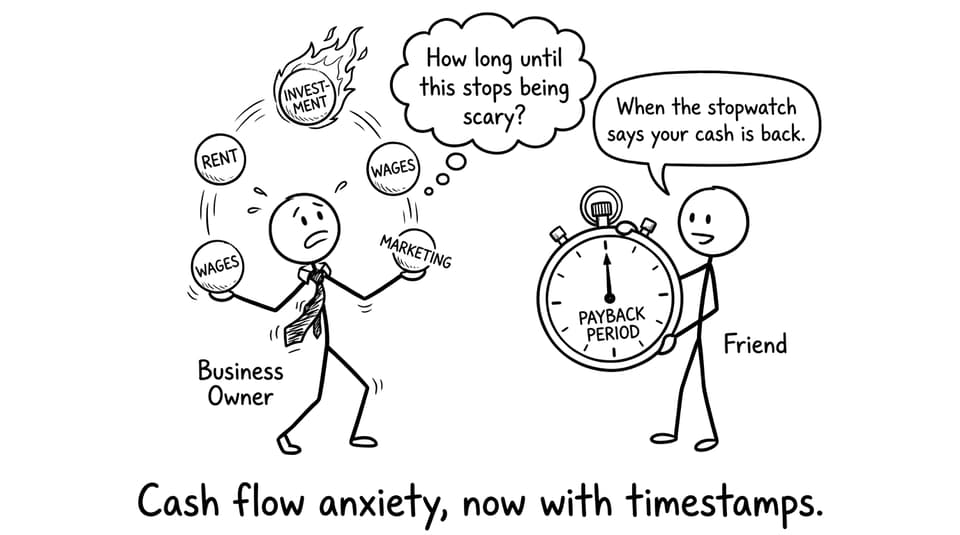
Payback period is also a cash flow lens. Projects that return cash faster improve liquidity and give managers flexibility: reinvest, repay debt, or handle unexpected costs. That’s why it’s often preferred by smaller firms with tight cash flow or businesses in volatile markets.
If you want a wider view of why firms use these tools at all, connect your answer to this overview: What is investment appraisal and why do businesses use it?. You can also practice applying payback period in context using the 3.8 Investment Appraisal topic hub and its Questionbank.
The limitation you must mention in IB Business Management
Payback period is helpful, but incomplete. It ignores:
-
Profit after the payback point (a project could pay back fast but earn little overall)
-
Time value of money (HL students should connect to discounting and NPV)
A strong extension is to contrast it with NPV: NPV (HL only) notes. For formula confidence under pressure, keep the Business Management Data Booklet bookmarked.
Bring it home: how to score with payback period
If you’re revising IB Business Management, treat payback period like a story about time and uncertainty: the longer money is trapped, the more ways reality can interfere. To turn that into marks, define it, interpret it as risk, connect it to cash flow, and then evaluate its limitations.
To practise turning the idea into exam-ready paragraphs, use RevisionDojo’s Questionbank, Study Notes, and Flashcards, then check your reasoning with AI Chat and the Grading tools. When you’re ready to simulate pressure, build Mock Exams and try Predicted Papers (and for coursework support, the Coursework Library and Tutors are there). Payback period is simple; your explanation doesn’t have to be.