

If you could peek into your first month at University, you’d probably notice something surprising.
It’s not that the smartest people are always the calmest. It’s not that the loudest students get the best grades. It’s that the students who already know how to manage themselves seem to glide while everyone else scrambles.
That’s the real reason people say the IB gives you an advantage at University.
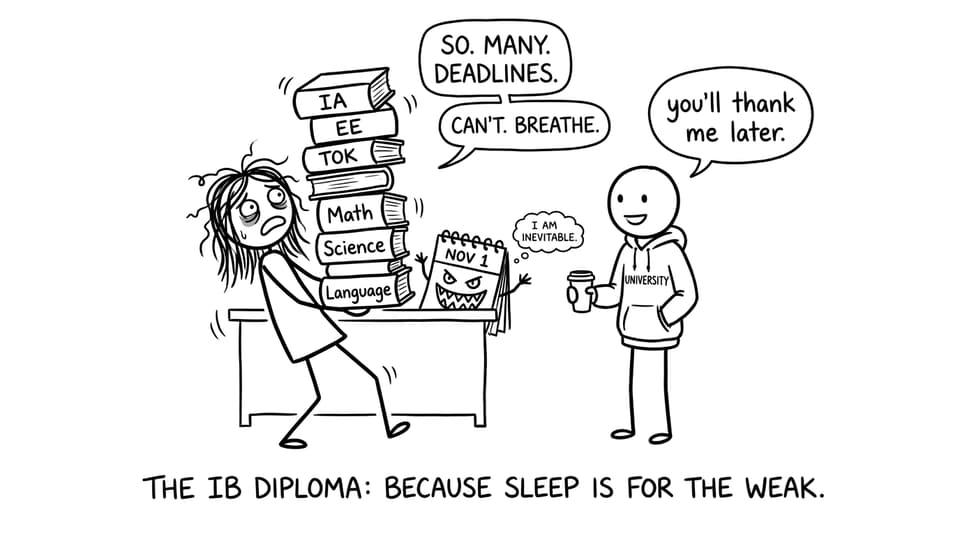
Not because IB students are magically “better,” but because you’ve been training for the same kind of pressure for two years: competing deadlines, long reading lists, independent projects, and the uncomfortable need to think clearly when you’re tired.
The catch is this: the IB advantage at University isn’t automatic. You only get it if you turn your IB workload into skills, not just stress.
The quick checklist: what actually gives you a University edge
If you want the short version, the IB helps at University when you can do these consistently:
-
Write structured arguments under time pressure (not just “good ideas”)
-
Read and extract what matters without drowning in pages
-
Reference and research without panic
-
Plan weeks ahead and still adapt when life changes
-
Learn from feedback quickly instead of taking it personally
RevisionDojo exists for exactly this conversion: turning “IB chaos” into repeatable habits with Study Notes, Flashcards, Questionbank, AI Chat, Grading tools, Predicted Papers, Mock Exams, a Coursework Library, and Tutors.
If you want a clean overview of how the platform supports exam preparation, start with RevisionDojo for IB.
Why University often feels easier after IB (even when it’s harder)
There’s a common story from IB graduates: they arrive at University expecting to be crushed--and then they’re confused because they’re… okay.
Not because the content is easy. It often isn’t. But because the shape of the work feels familiar.
IB trains the “invisible syllabus” of University
Most students think University success is about intelligence. Then they meet the invisible syllabus:
-
How to prioritize when nobody checks your homework
-
How to sit with confusion without quitting
-
How to produce drafts, not perfection
-
How to study in systems, not moods
IB students have already lived in that world. The Extended Essay, TOK, IAs, CAS, six subjects at once--it’s basically a rehearsal for University autonomy.
If you’re rebuilding your study system right now, this post is a strong reset: IB: I Study All Day but Remember Nothing.
University rewards the exact habits IB forces you to practice
In high school, you can sometimes win by being “good at school.” In University, you win by being good at:
-
Reading to decide, not reading to feel busy
-
Writing to argue, not writing to summarize
-
Practicing to score marks, not practicing to feel prepared
That’s why tools that keep you close to assessment-style thinking matter. RevisionDojo’s Questionbank and Mock Exams are designed to make practice feel like the real thing, so your brain learns the right patterns early.
For a realistic exam-night framework (the kind that mirrors University crunch weeks), see IB Exam Night Routine: What Actually Works.
The part parents worry about: “Is this pressure worth it?”
A lot of the anxiety around IB isn’t academic. It’s emotional.
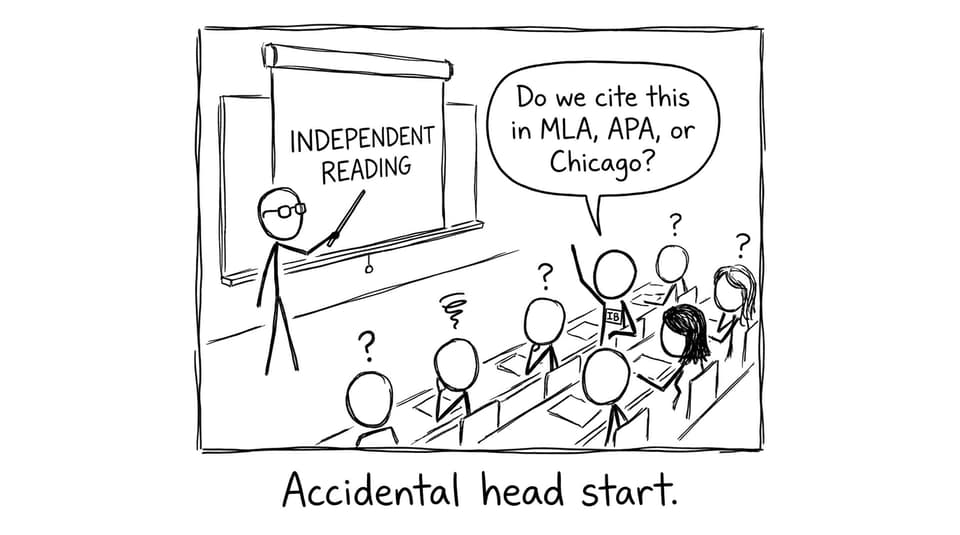
Parents see late nights, stress spikes, and students who look like they’re carrying a backpack full of bricks. So the question becomes: does this translate into real benefits at University, or is it just suffering with better branding?
The honest answer: it can translate. But only if you avoid two traps.
Trap one: grinding without feedback
Many students “work hard” in a way that looks impressive but creates little improvement:
-
rereading notes
-
rewriting summaries
-
highlighting everything
-
watching explanations without testing themselves
At University, that habit breaks fast because there’s too much content and too little time.
A better loop is: learn a little, test it, review mistakes, repeat. RevisionDojo supports this loop directly with Study Notes (for fast clarity), the Questionbank (for application), and Flashcards (for daily recall), plus AI Chat when you get stuck.
If you want the clearest version of this loop, read You Don’t Need 10 Hours a Day to Pass IB.
Trap two: thinking the advantage requires perfect grades
You do not need straight 7s to benefit at University.
The advantage is mostly about skills:
-
how you research
-
how you write
-
how you plan
-
how you handle deadlines
-
how you respond to critique
Even mid-range IB students often arrive at University with stronger academic habits than peers who never had to juggle long projects and multiple exam styles.
How to “cash in” your IB advantage at University (starting this week)
This is the part that matters for IB students preparing for exams: you can build your University advantage now, without adding more hours.
Build a time management system you can reuse at University
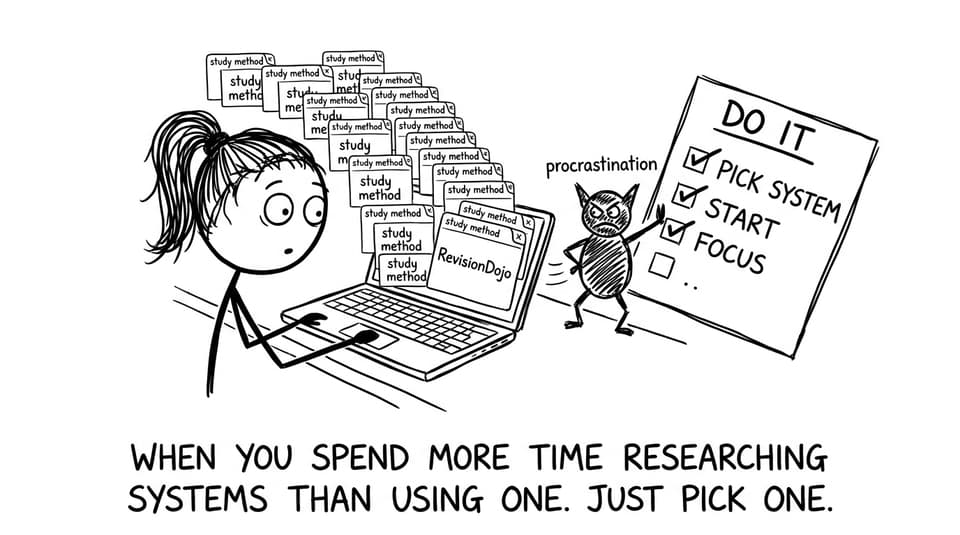
The simplest University skill is planning without drama. The IB gives you enough deadlines to learn it--if you build a system.
Use one of these guides to tighten your routine:
Then apply one rule that translates directly to University: plan by outputs, not by hours.
Instead of “study Biology 2 hours,” use “finish 20 Questionbank questions + write 5 error rules.”
Practice like University assesses: produce, don’t consume
When students struggle at University, it’s often because they consume information but don’t produce enough:
-
not enough timed writing
-
not enough problem sets
-
not enough practice under constraints
RevisionDojo makes production the default: Questionbank for targeted practice, Mock Exams to simulate pressure, and Grading tools to understand what marks actually want.
If you’re close to exams and need a tight plan, use IB: The Last 2 Weeks Before Exams (What Matters) or Is 1 Month Enough to Study for IB Exams?.
Learn the University superpower: asking good questions
In University, nobody follows you around to check you understood the lecture.
So the students who win are the ones who can spot their own confusion early and ask precise questions.
That’s what RevisionDojo’s AI Chat is for: not replacing thinking, but shortening the time between “I’m stuck” and “I can move again.” Pair it with the Coursework Library when you need examples of strong structure, and with Tutors when you need human strategy, accountability, or subject-specific exam technique.
Where RevisionDojo fits into the University advantage
You’re not doing IB to become a professional reviser. You’re doing it to become someone who can handle University without falling apart.
RevisionDojo helps you do that in a way that feels calmer:
-
Questionbank to turn knowledge into marks
-
Study Notes to stop the endless textbook spiral
-
Flashcards to build daily recall without cramming
-
AI Chat to unblock confusion fast
-
Mock Exams and Predicted Papers to reduce exam surprises
-
Grading tools to see what the markscheme is rewarding
-
Coursework Library to learn structure from strong exemplars
-
Tutors when you need a real person to help you change approach
If your family is comparing options, you can see plans here: RevisionDojo pricing. If your parents want a parent-focused overview, share RevisionDojo for Parents.
Closing: the real University advantage is calm competence
The best thing IB can give you isn’t a talking point for University applications.
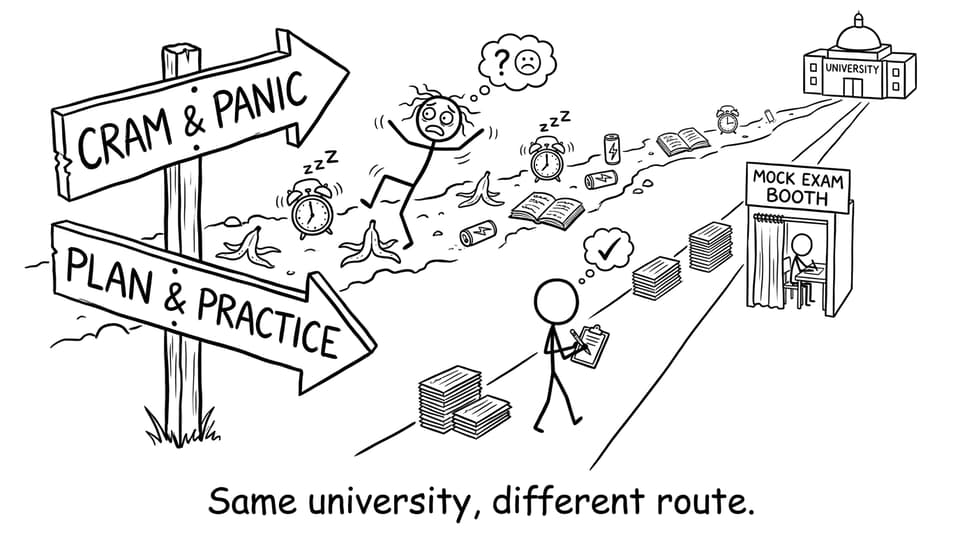
It’s a kind of calm competence. The sense that when deadlines stack up, you can still make a plan, do the work, learn from mistakes, and keep moving.
If you want to turn IB effort into a genuine University advantage, build a system now: Study Notes for clarity, Flashcards for recall, Questionbank for marks, AI Chat for fast fixes, and Mock Exams to rehearse pressure.
Start here: RevisionDojo for IB.