


A quick story you already know
You revise for an exam, open your notes, and tell yourself: “I’ll study everything.” Twenty minutes later, you’re deep in one topic, ignoring the rest, because your brain naturally chooses what feels most relevant.
That’s the logic behind market segmentation. In IB Business Management, segmentation is the moment a business stops trying to speak to “everyone” and starts speaking to the people most likely to listen, care, and buy. When a firm segments a market, it’s not being narrow-minded; it’s being efficient.
Market segmentation in IB Business Management (the exam-ready idea)
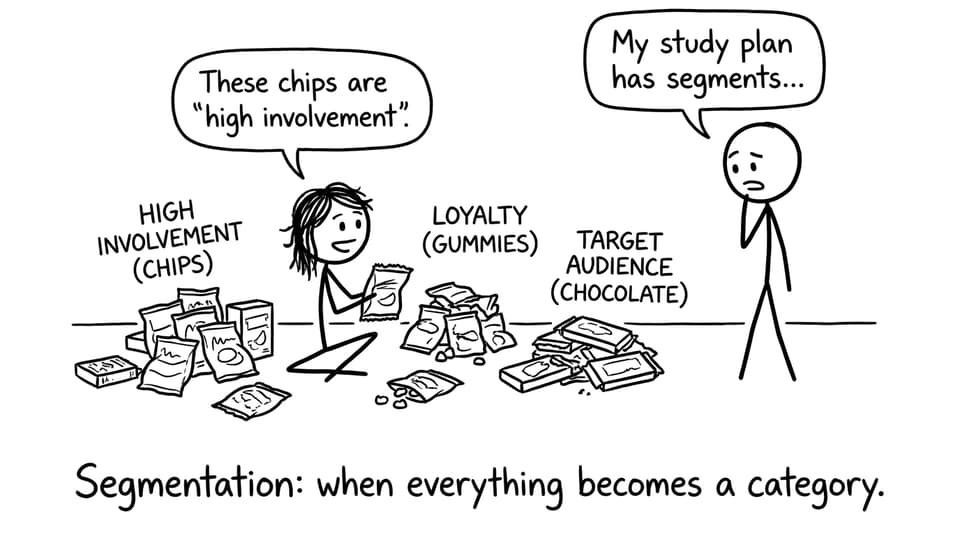
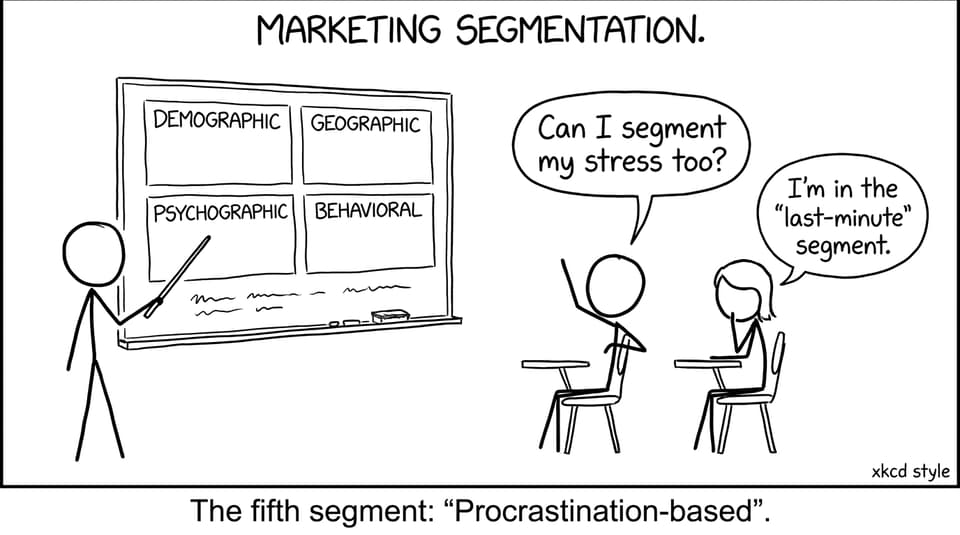
Market segmentation means dividing a broad market into smaller groups with similar characteristics. In IB Business Management, you’ll usually describe segments using:
-
Demographic (age, income, occupation)
-
Geographic (country, climate, urban vs rural)
-
Psychographic (lifestyle, values, personality)
-
Behavioral (usage rate, brand loyalty, benefits sought)
If you want the syllabus-aligned wording, RevisionDojo’s Segmentation, Targeting, and Positioning notes keep it tight and exam-friendly.
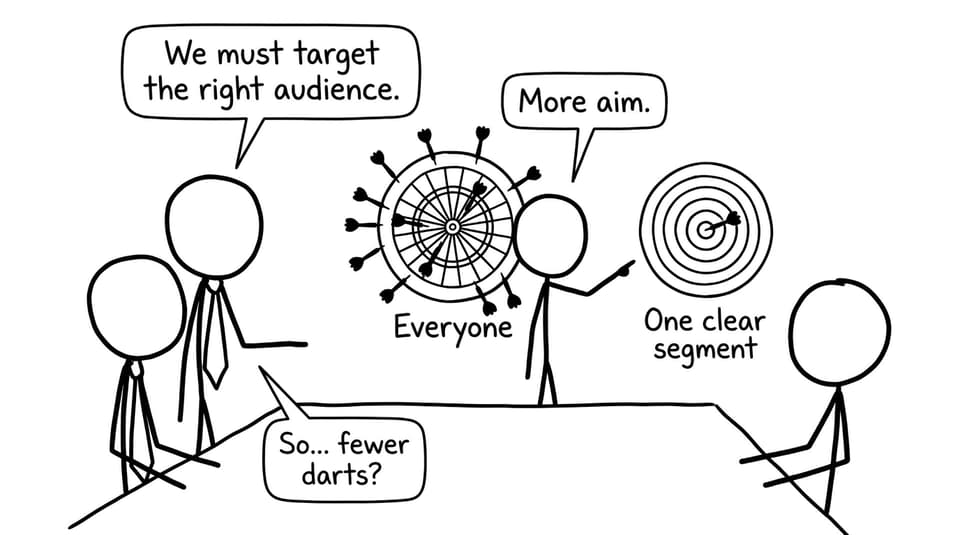
How market segmentation helps businesses reach the right audience
It makes promotion feel personal (instead of noisy)
A business that understands its segment can choose messages and channels that fit. Teens might respond to short-form video and social proof; busy professionals might want clear time-saving benefits. This is why segmentation improves marketing communication: the same product can be framed differently without changing what it is.
To connect this to the broader unit, RevisionDojo’s 4.2 Marketing Planning hub shows how segmentation links directly into a full marketing plan.
It improves product decisions and reduces risk
Segmentation is like product design with the lights on. When a firm knows which segment it serves, it can build features that match real needs (and avoid spending money on features the segment doesn’t value). In IB Business Management, this is an easy evaluation point: better fit tends to increase customer satisfaction and repeat purchase.
If you’re unsure how niche choices compare to broad strategies, read 4.2.3 Niche Market vs. Mass Market.
It supports smarter pricing
Different segments have different willingness to pay. A premium segment might pay for quality, brand status, or convenience; a price-sensitive segment might trade features for affordability. Segmentation helps businesses align pricing with perceived value, not guesswork.
To make your evaluation stronger, pair segmentation with the marketing mix logic in The seven Ps of the marketing mix.
It strengthens competitive advantage and focus
A clear segment creates a clear identity. Instead of copying competitors, a business can specialize: “We’re the best option for this group, for these reasons.” In IB Business Management, that’s differentiation in action.
RevisionDojo’s IB Business Management glossary is useful when you want precise wording for terms like targeting, positioning, and differentiation.
It reduces wasted resources
Marketing budgets are finite. Segmentation cuts “spray and pray” spending by focusing on the most profitable or most reachable customers. In exam terms: segmentation increases the efficiency of resource allocation and can improve return on marketing investment.
For practice that feels like the real thing, use the 4.2 Marketing planning Questionbank to rehearse 4-mark and 10-mark explanations under time pressure.
A mini checklist for exam answers (STP in one breath)
When a question asks how segmentation helps reach the right audience, write in this order:
-
Define market segmentation (one clean sentence)
-
Name 2 segmentation bases (e.g., demographic + behavioral)
-
Explain 2 benefits (promotion + product/pricing works well)
-
Add a short example (specific segment and what changes)
-
Evaluate (cost, data quality, segment size, risk of stereotyping)
For structure and timing, RevisionDojo’s IB Business Management marks format guide helps you match depth to marks.
Closing: make segmentation your advantage (and your marks)
Market segmentation helps businesses reach the right audience because it turns “customers” into specific people with specific needs. In IB Business Management, that clarity lets you explain better promotion, smarter product choices, sharper pricing, and stronger focus, all with less waste.
If you want to turn this into exam-ready writing, build your STP definitions with RevisionDojo’s Study Notes and Flashcards, drill application using the Questionbank, and sanity-check your evaluation using AI Chat and grading tools. When the question hits, you won’t just define market segmentation; you’ll show exactly why it works.


