


The moment a firm stops being a “price taker”
Picture the last time you bought something without checking alternatives: the same coffee order, the same streaming subscription, the same app you always use. That tiny habit is where IB Economics starts to feel real. In a perfectly competitive market, firms accept the market price. But with market power, a firm gets to choose its price-output combination, and that changes everything about profits, efficiency, and welfare.
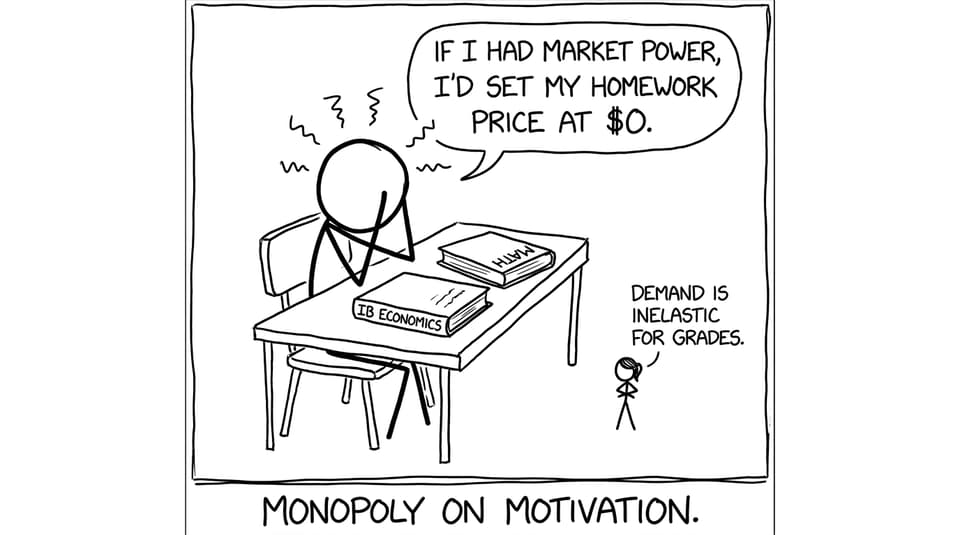
Market power matters in IB Economics because it explains why prices can sit above marginal cost, why output can be restricted, and why governments sometimes step in.
Quick exam checklist: what gives a firm market power?
For IB Economics, you can usually trace price influence back to a few repeatable sources:
-
Control of output (restrict supply, create scarcity)
-
Product differentiation (branding, loyalty, perceived uniqueness)
-
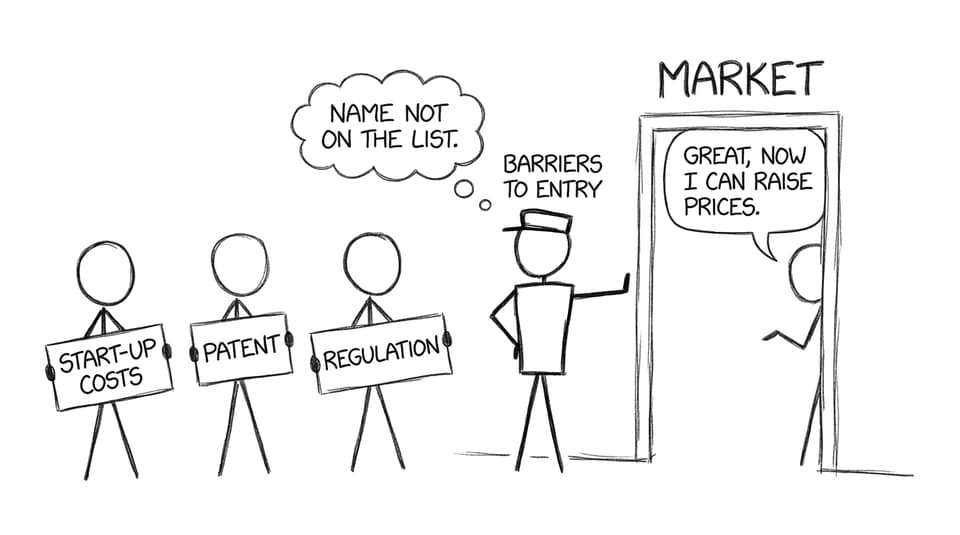
Barriers to entry (patents, licenses, high fixed costs)
-
Economies of scale (lower average costs for large incumbents)
-
A downward-sloping demand curve for the firm (price maker, not price taker)
If you want the syllabus-aligned framing, RevisionDojo’s topic hub on market power is the cleanest reference point: 2.11 Market failure: market power.
Why market power lets firms influence prices in IB Economics
Market power and output control: scarcity becomes strategy
In IB Economics, the simplest story is this: if one firm (or a few firms) dominates supply, it can restrict output to push price up. Less quantity available shifts the market outcome toward higher prices. Think monopoly or tight oligopoly behavior.
This connects directly to the “price maker” idea you’ll see in monopoly analysis, where profit-maximization occurs at MR = MC, and the price is then read off the demand curve above that point. For a focused refresher, use: What Is a Monopoly? | IB Economics Market Structure Guide.
Product differentiation: when “similar” stops being a substitute
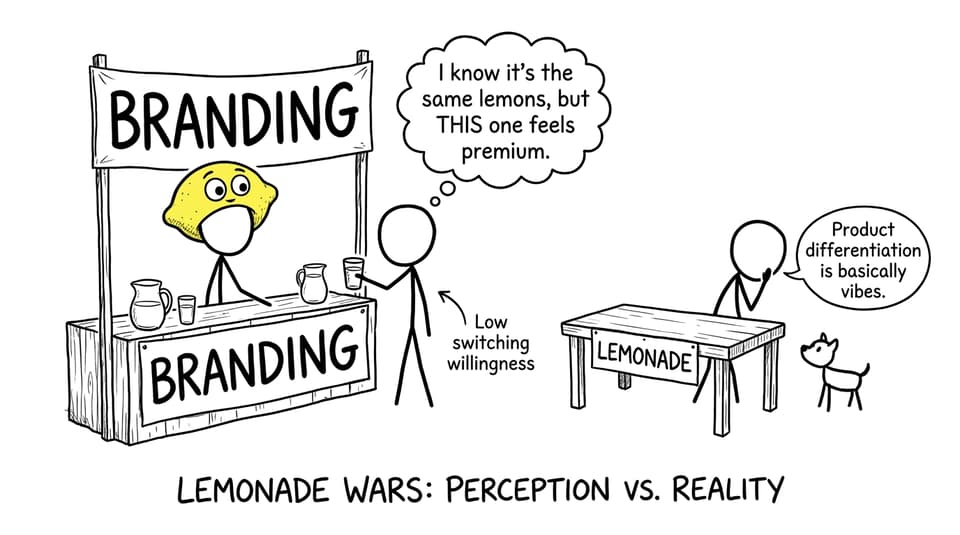
Firms gain market power when consumers feel the product is unique, even if the underlying product isn’t radically different. Strong brands reduce switching, making demand less price-sensitive and giving the firm room to raise prices without losing all customers.
That’s why in IB Economics, product differentiation is not just marketing trivia. It changes the shape and elasticity of demand faced by the firm.
Barriers to entry: protecting price-setting power
Barriers to entry keep competitors out, which keeps the firm’s market power intact. In IB Economics, you can classify barriers as legal (patents), structural (high fixed costs, natural monopoly conditions), or strategic (limit pricing, heavy advertising).
Once entry is blocked, the incumbent can often raise prices with less fear of being undercut.
The core diagram logic: downward-sloping demand and welfare loss
A firm with market power faces a downward-sloping demand curve, so lowering price is required to sell more output. That’s why MR lies below AR, and why the firm does not produce where P = MC.
In IB Economics, this is where evaluation marks live: higher prices and lower output reduce consumer surplus and create deadweight loss (welfare loss). RevisionDojo’s notes summarize this clearly: Market power notes (2.11).
For a wider welfare link, see: Allocative efficiency at the competitive market equilibrium (2.3.6).
How to revise this fast with RevisionDojo
If you’re preparing for IB Economics exams, the fastest route is active practice:
-
Use the Market power Questionbank to drill definitions, diagrams, and evaluation.
-
Lock in key terms with Market power Flashcards.
-
If you need step-by-step structure, follow Market power Lessons.
(And when you get stuck on a diagram explanation, RevisionDojo’s AI Chat and Grading tools help you tighten your chains of reasoning the way examiners reward.)
Closing: turn “market power” into easy marks
Market power is the quiet reason firms can influence prices: control output, protect entry, differentiate products, and face a downward-sloping demand curve. For IB Economics, the scoring move is to connect that power to MR = MC, then evaluate welfare effects and policy responses.
If you want to make this automatic under time pressure, use RevisionDojo’s Questionbank, Study Notes, Flashcards, AI Chat, Grading tools, Predicted Papers, Mock Exams, Coursework Library, and Tutors to turn market power from a definition into a dependable exam paragraph. Start here: Economics: IB Resources.