


The moment a business realises “income” isn’t one number
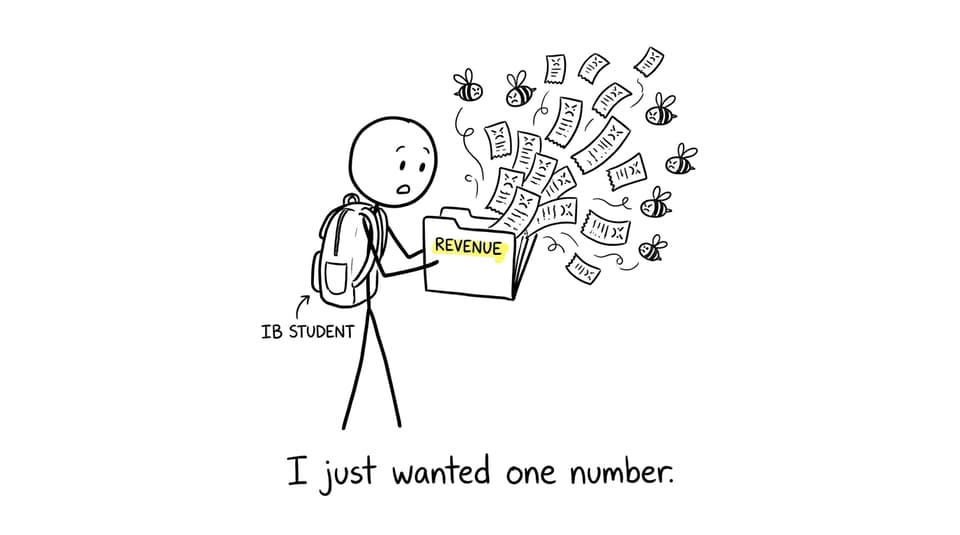
In IB Business Management, students often talk about revenue like it is a single tap you turn on: sell more, earn more. But real businesses discover something messier. Income arrives from different places, at different speeds, with different risks attached. One day the “sales” line looks great, the next day a subscription churn spike quietly flips the story.
That’s why revenue streams matter. They don’t just tell you how much money comes in. They show where it comes from, why it comes from there, and what could break first.
Quick checklist: what examiners want you to do with revenue streams
For IB Business Management exam questions (especially in finance topics), you should be ready to:
-
Define revenue streams clearly (different sources of income)
-
Categorise them (product sales, services, subscriptions, licensing, advertising, etc.)
-
Analyse performance trends (growth, decline, seasonality)
-
Link to decisions (pricing, investment, diversification, discontinuation)
-
Evaluate risk (over-reliance on one stream)
To revise the syllabus wording and exam-style framing, use 3.3 Costs and revenues and the focused notes on Total Revenue and Revenue Streams.
How revenue streams help businesses understand where income comes from
Revenue streams create financial clarity
A business that splits income into clear revenue streams can stop guessing. Instead of “we made $200,000,” it can say:
-
$90,000 from memberships
-
$60,000 from personal training
-
$50,000 from merchandise
That clarity changes everything: budgeting, staffing, marketing, even which product gets the best shelf space. In IB Business Management, this fits perfectly with the idea that good finance information reduces uncertainty and improves control. If you need the bigger finance context, Role of finance for businesses is a strong companion page.
Revenue streams measure performance (not just outcomes)
Two revenue streams can produce the same income but tell totally different stories. A one-off product launch might spike revenue today, while recurring subscriptions may grow slowly but build stability.
Businesses use revenue streams to compare:
-
Which stream is growing fastest
-
Which is shrinking (and why)
-
Which customer segment is most valuable
For exam practice on how to write this analysis under time pressure, try RevisionDojo’s 3.3 Costs and Revenues Questionbank.

Revenue streams support strategic decision-making
Once a business sees the revenue mix, it can act. If one stream consistently outperforms others, managers may invest more in it (new staff, better tech, expansion). If a stream is weak, they might fix it, reposition it, or cut it.
In IB Business Management, this is where you earn evaluation marks: you explain trade-offs. Cutting a weak stream may improve profit focus, but it might also reduce market presence or long-term growth potential.
Revenue streams reduce risk through diversification
A business with only one revenue stream is fragile. A single change in consumer tastes, regulation, or competition can drop income to zero.
Multiple revenue streams spread risk. If advertising revenue falls, service income might hold steady. If product sales dip seasonally, subscriptions may smooth cash inflows.
This links neatly to cash concepts too, because stable revenue streams often make cash planning easier. For that connection, see Why cash flow is so important, even for profitable businesses and the syllabus unit on Cash flow.
Revenue streams improve pricing and forecasting
When businesses know what each stream contributes, they can test pricing strategies: bundles, premium tiers, freemium models, discounts, or value-based pricing.
It also makes forecasting more accurate. Trends become visible: which months surge, which streams are sensitive to price changes, and where demand is predictable.
To connect revenue to formal financial statements in IB Business Management, review Final accounts notes.
Bring it home: make revenue streams your exam advantage
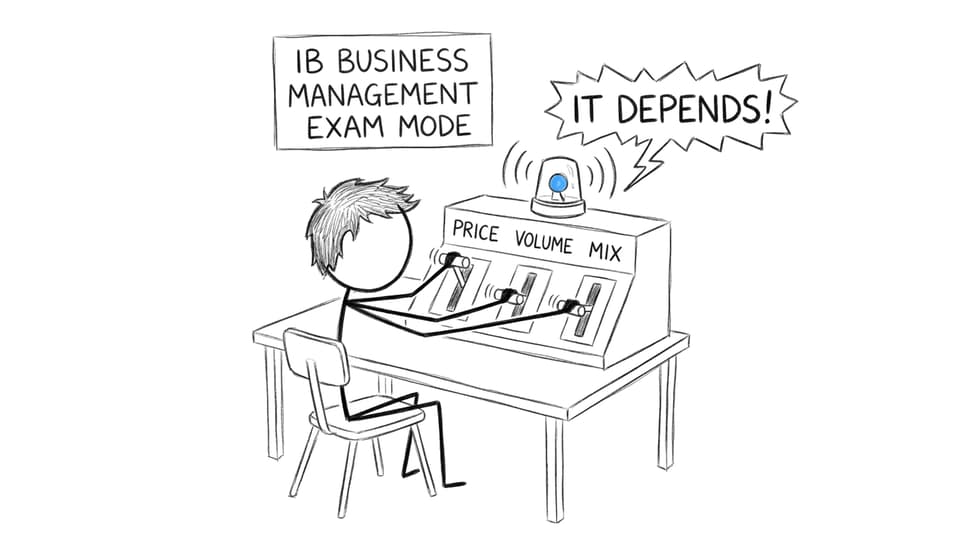
In IB Business Management, revenue streams are more than a definition. They are a lens. They reveal what customers value, where risk hides, and which decisions are actually supported by evidence.
If you want to turn that lens into marks, revise the finance unit inside IB Business Management Resources using RevisionDojo’s Questionbank, Study Notes, Flashcards, AI Chat, Predicted Papers, Mock Exams, Grading tools, and Tutors. When you can explain revenue streams calmly and clearly, you stop memorising finance and start thinking like a manager.


