


When a workplace disagreement drags on, it rarely explodes all at once. It usually leaks. A few shorter replies. A meeting that “needs rescheduling.” A team that stops volunteering ideas. In IB Business Management, those small signals matter because they show what conflict really costs: trust, time, and output.
Negotiation and compromise are the two simplest tools businesses use to stop that leak early. Not by forcing a winner, but by turning tension into a decision both sides can live with.
A quick IB Business Management checklist for resolving conflict
Use this mini-checklist to keep your answers sharp (and your examples realistic):
-
Define the conflict (workload, pay, schedules, policies)
-
Identify stakeholders (employees, managers, HR, unions)
-
Use negotiation to surface interests and constraints
-
Use compromise to settle on a workable middle ground
-
Consider third-party options if needed (conciliation, arbitration)
For syllabus-aligned support, start with Business Management - IB Resources.
How negotiation works in IB Business Management workplace conflicts
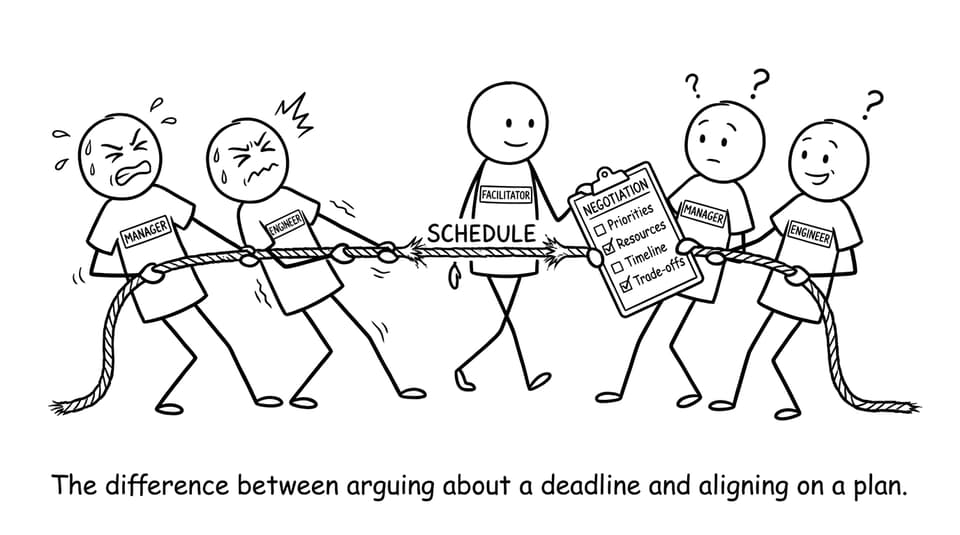
In IB Business Management, negotiation is more than “talking it out.” It is a structured attempt to reach agreement when employers and employees want different outcomes.
The key mechanism is open dialogue. Employers can explain constraints like budgets, capacity, KPIs, or compliance. Employees can explain what’s happening on the ground: unrealistic deadlines, unclear communication, or perceived unfairness. When both sides reveal their real limits, the disagreement stops being personal and starts becoming solvable.
Negotiation also depends on active listening. In exam terms, this is how a business reduces misunderstandings and finds the root cause, not just the surface argument. If you want the exact terminology, RevisionDojo’s 2.7.3 Approaches to Conflict Resolution page is a clean place to revise.
Why compromise helps employers and employees solve disagreements
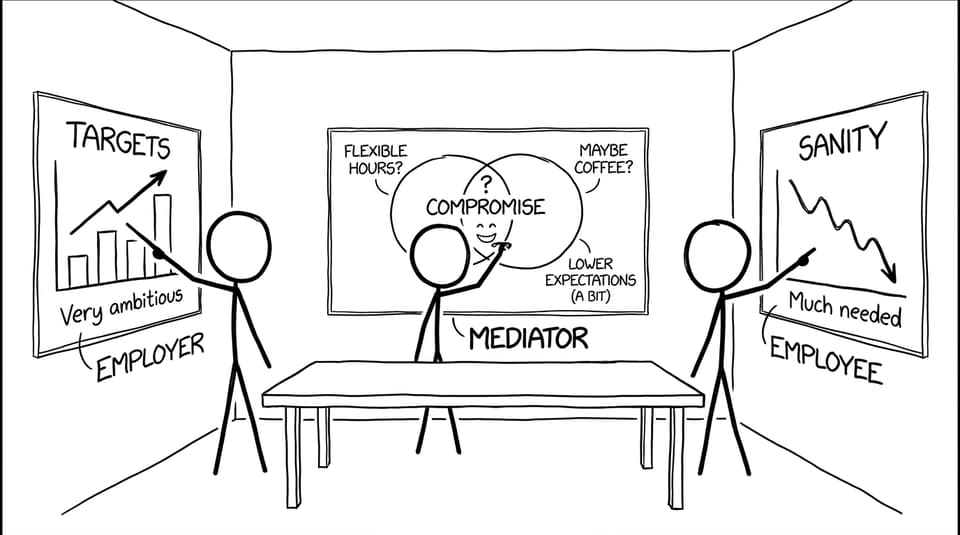
Compromise is what happens after negotiation uncovers what each side actually needs.
A good IB Business Management example: an employee feels overworked, while the employer needs output to hit targets. A compromise might be adjusting deadlines, redistributing tasks, or agreeing on clearer performance standards. No one gets “everything,” but both sides get something meaningful. That’s why compromise is often described as a balanced solution.
Crucially, compromise also protects relationships. In HR terms, businesses aren’t only solving today’s issue; they’re protecting future cooperation, motivation, and retention. If you’re revising the wider HR unit, link this idea back to satisfaction and performance using 2.4.1 Motivation Theories.
Linking negotiation to exam-style conflict resolution (fast)
In longer responses, strengthen your analysis by showing options. For example:
-
Negotiation + compromise (most flexible)
-
Conciliation when a neutral third party can help rebuild dialogue
-
Arbitration when a binding decision is necessary
See the sharper definitions in 2.7.3 Approaches to Conflict Resolution Notes and connect it to the wider topic using 2.7.2 Approaches to Conflict in the Workplace Notes.
Conclusion: turn conflict into marks (and real understanding)
If you can explain how negotiation creates open dialogue and how compromise produces balanced outcomes, you are already thinking like an IB Business Management student who can analyze, not just define. To keep the concepts exam-ready, practise application with RevisionDojo’s Questionbank, lock in definitions with Flashcards, and pressure-test your paragraphs using AI Chat and Grading tools. When you want full exam realism, use Predicted Papers and build timed Mock Exams, then refine with the Study Notes and Tutors.
For more on stakeholder tensions that often drive these disputes, read Conflict Between Stakeholders Notes and explore more IB Business Management blog posts.