
In one city, you can tell population growth is “working” by the sound alone: the morning rush, the new apartment blocks, the lines outside clinics, the extra desks squeezed into classrooms.
In another place, you feel the opposite kind of pressure: a quiet main street, a shrinking workforce, a school merged with the next town over.
This is why IB Geography treats population policy as more than a definition. It’s lived reality, and it’s also exam gold. Governments manage population growth because both rapid growth and long-term decline can strain jobs, services, resources, and the shape of society.
To revise the syllabus content behind this topic, start with Changing Population resources for IB Geography and then zoom in on Managing Population Change notes.
IB Geography exam checklist: what to include in answers
When an exam question asks how governments manage population growth (and whether it’s effective), IB Geography examiners reward structure. Use this checklist and evaluate each lever:
-
Anti-natalist policies (reduce fertility rate)
-
Pro-natalist policies (increase fertility rate)
-
Migration policy (change population size and age structure quickly)
-
Development-led strategies (reduce fertility indirectly over time)
-
Ethics, culture, and unintended consequences (where top evaluation marks live)
For practice, build targeted drills from the Changing populations and places Questionbank and the broader Changing Population Questionbank.
Anti-natalist policy in IB Geography: slowing growth without breaking trust
In countries experiencing high natural increase, governments often try to lower fertility through:
-
family planning programs
-
contraception access
-
public health campaigns
-
education initiatives (especially girls’ education)
In IB Geography, the key nuance is that the most durable anti-natalist policies often feel like expanded choice, not punishment. When infant mortality falls, when education rises, and when women have access to work, families frequently choose smaller family sizes because the “insurance” function of having many children becomes less necessary.
But exam answers should never stop at “it reduces births.” Evaluate.
-
Ethics: coercive approaches raise rights concerns.
-
Equity: penalties and restrictions often hit low-income families hardest.
-
Governance capacity: if a state cannot deliver clinics, staff, or consistent messaging, policy becomes symbolic.
-
Culture and religion: acceptance varies, and that changes outcomes.
A strong way to anchor evaluation is the Demographic Transition Model. Use this explainer: How the Demographic Transition Model explains population change. Then use active recall with DTM and population change flashcards.
Pro-natalist policy in IB Geography: making births affordable (and realistic)
When countries face ageing populations, shrinking labor forces, or very low fertility, governments may encourage births via:
-
child benefits and direct payments
-
tax credits
-
subsidised childcare
-
paid parental leave
-
housing support for families
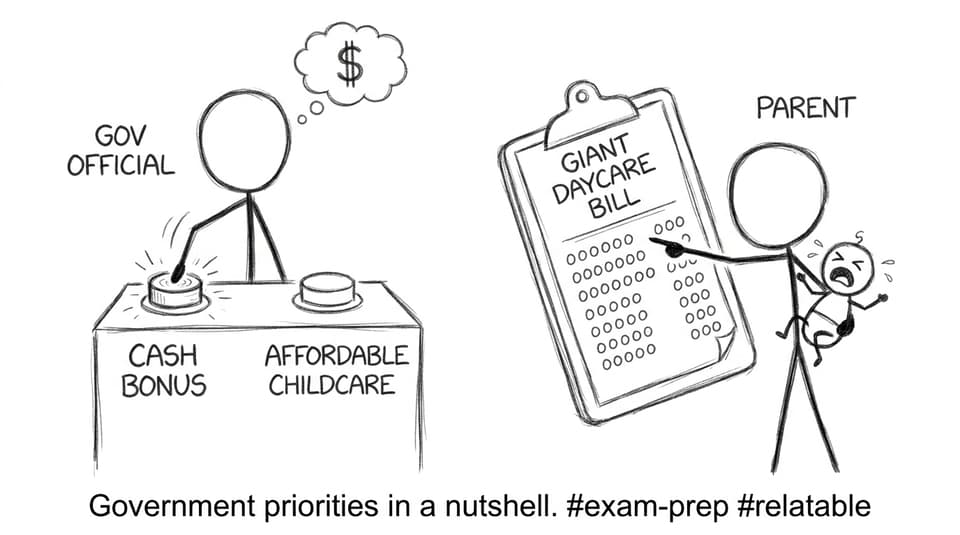
In IB Geography, you should be ready to explain why pro-natalist policy so often has limited long-term impact. Money helps, but fertility decisions also depend on work culture, housing availability, gender norms, and whether having children damages career prospects.
A common exam-ready evaluation:
-
Short-term effect: incentives can cause a small rise in births (timing shifts) when households “bring forward” decisions.
-
Long-term effect: if childcare remains expensive or workplace flexibility is weak, fertility tends to return to low levels.
-
Wider impacts: if policy reinforces unequal caregiving expectations, it can reduce female labor participation, creating new economic pressures.
Migration policy in IB Geography: the fastest lever (and the messiest)
Migration can change population size and structure faster than fertility policy. Countries with labor shortages may encourage immigration to:
-
increase the working-age population
-
reduce dependency ratios
-
fill specific skill gaps
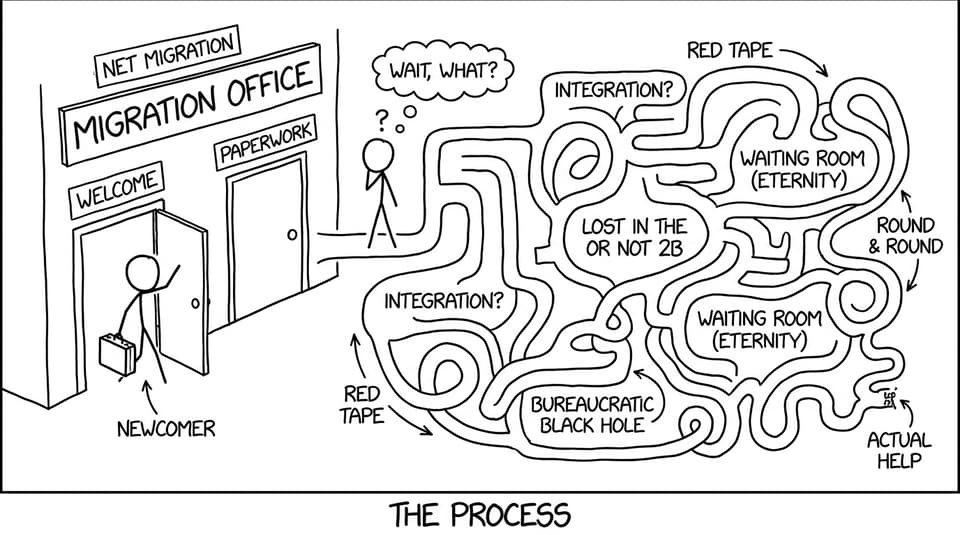
But IB Geography essays need the second half of the sentence: migration only “works” if services and integration keep up.
Evaluation angles that score well:
-
Service pressure: housing, schooling, healthcare, transport.
-
Spatial unevenness: migrants often concentrate in certain cities, intensifying local strain.
-
Social cohesion and politics: public acceptance can limit policy over time.
-
Selectivity: skill-based systems may boost productivity but do less for sectors needing low-wage labor.
If you want an extra layer of examples and vocabulary for this topic, revise How migration reshapes population structures in urban areas.
Development-led management in IB Geography: the quiet strategy that changes everything
Some governments manage population growth indirectly by improving the conditions that shape fertility decisions:
-
better healthcare and sanitation
-
lower infant mortality
-
increased access to education
-
more employment opportunities for women
-
poverty reduction and social security
This approach aligns closely with the logic of the DTM: as development improves, death rates fall first, and birth rates often fall later as households adjust.
In IB Geography, the evaluation is a trade-off.
-
Pros: usually more ethical, tends to create long-term stability, improves quality of life regardless of fertility outcomes.
-
Cons: slower. Governments facing immediate school overcrowding, youth unemployment, or water stress may not feel relief quickly.
A sharp exam line: development-led policy is often the most sustainable lever, but it is rarely the fastest.
How to write top-mark evaluation paragraphs in IB Geography
Many students know policies. Fewer students evaluate them cleanly under time pressure.
Use this three-step frame every time:
-
Name the strategy (anti-natalist, pro-natalist, migration, development-led)
-
Explain the mechanism (fertility, mortality, net migration, age structure)
-
Judge effectiveness using context (DTM stage, culture, state capacity, equity, time scale)
Then practise under realistic conditions. Start from the IB Geography subject hub, and when you’re ready to rehearse full-paper stamina, use Geography Predicted Papers or the wider IB Predicted Papers library. If you want a strategy for using them well, see Best Geography Mock Exams for IB.

Conclusion: what “effective” means in IB Geography
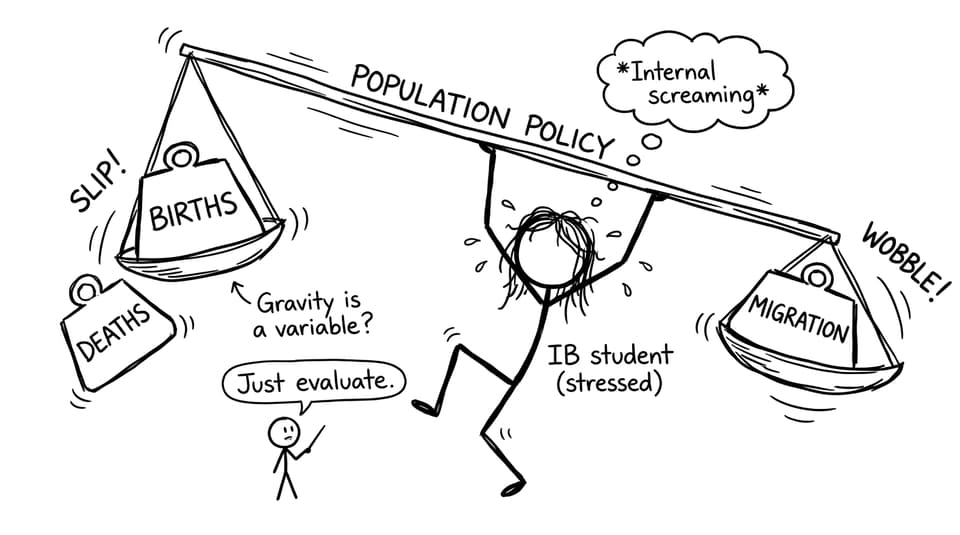
The big idea in IB Geography is that governments don’t manage population growth with a single switch. They juggle births, deaths, and migration, while trying not to damage trust, rights, or long-term development.
Effective policy fits context: the country’s DTM stage, cultural norms, economic capacity, and the speed of change needed. Anti-natalist and pro-natalist approaches can shift fertility at the margins, migration can reshape age structure quickly, and development-led strategies often deliver the most durable stability.
If you want to turn that understanding into exam performance, RevisionDojo is built as an end-to-end system: syllabus-aligned Study Notes, active-recall Flashcards, targeted Questionbank practice, AI Chat for quick clarity, Grading tools for evaluation-heavy paragraphs, plus Predicted Papers, Mock Exams, a Coursework Library, and Tutors to tighten your case-study evidence and structure in IB Geography.