
Migration rarely arrives with fireworks. It shows up quietly: one more student on a bus route, one more family sharing a flat, one more language on a shop sign. Then, months later, you look at a city’s data and realize the population structure has shifted.
That is why this topic matters in IB Geography. Migration doesn’t just increase a city’s population, it changes who lives there, where they settle, and what the city must provide. If you can explain those structural shifts clearly, you can turn a generic “migration causes growth” paragraph into exam-grade analysis.
Quick checklist: what migration changes in urban population structure
Use this as a fast planning frame in IB Geography essays and 10-mark responses:
-
Age structure (often a bulge in working-age cohorts)
-
Sex ratio (gender balance shifts by sector and culture)
-
Ethnicity and cultural identity (greater diversity and diaspora formation)
-
Spatial distribution inside the city (inner city, periphery, informal settlements)
-
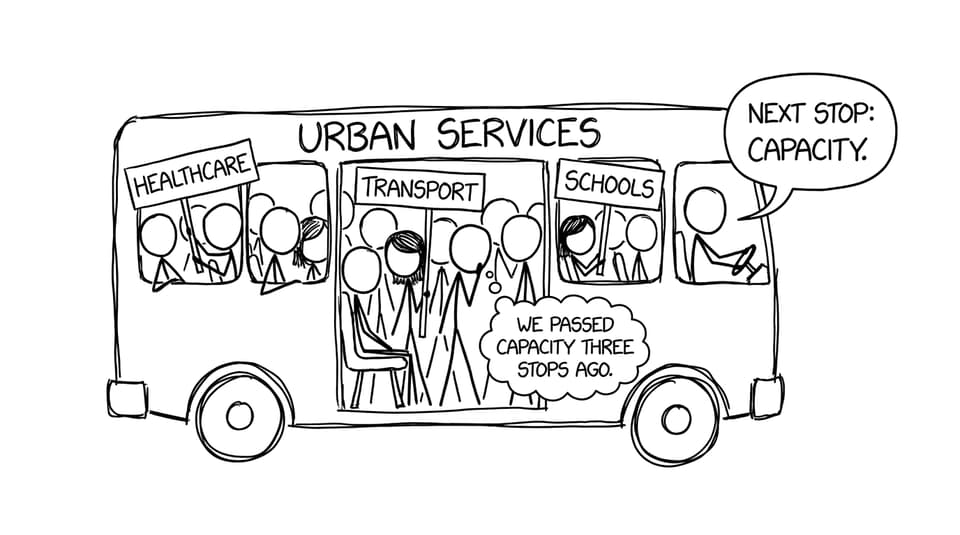
Dependency ratio and service demand (schools, housing, transport, healthcare)
To practise applying this structure to real questions, the Changing Populations and Places Questionbank is built for exactly these cause-effect chains.
IB Geography: migration and the “young adult bulge” in cities
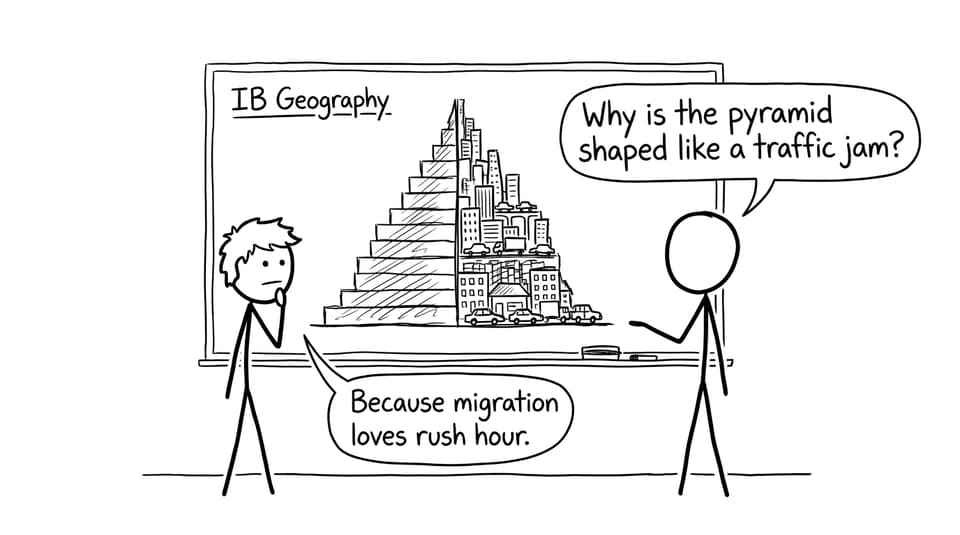
Most migrants are not randomly distributed by age. They are often young adults moving for work, education, and opportunity. That produces a visible fingerprint on a population pyramid: a wider band in the 18-35 range.
In IB Geography, this matters because it changes:
-
Dependency ratios: more working-age people can lower the overall dependency burden.
-
Urban labour supply: cities can expand service and industrial sectors quickly.
-
Pressure points: housing demand, transport congestion, and competition for jobs rise.
This links cleanly with urban growth content in Megacity Growth and Its Consequences notes and the broader G.2 Changing Urban Systems unit.
Gender balance: why cities don’t always “even out”
A common mistake in IB Geography answers is to assume migration affects everyone equally. In reality, gender structure changes depending on which jobs are available and which social norms shape mobility.
-
Male-dominated flows can occur where construction, extractive industry, or manufacturing pull labour.
-
Female-dominated flows can grow where healthcare, domestic work, and education expand.
The exam skill is to connect the shift to consequences: changes in household composition, fertility patterns, and even political priorities in neighbourhoods where one gender is over-represented.
Diversity, diaspora, and the urban identity shift
International migration can rapidly increase ethnic and cultural diversity, reshaping what a city “is.” New languages, religions, food economies, and cultural networks appear, oftenoften concentrated in specific districts.
This is a gift for IB Geography evaluation: diversity can fuel entrepreneurship and innovation, but it can also raise challenges around segregation, unequal access to services, and social cohesion.
For sharper vocabulary and examples, connect this to Diasporas and Identity notes.
Where migrants settle: the city’s internal map changes
Migration reshapes population structure spatially, not just statistically.
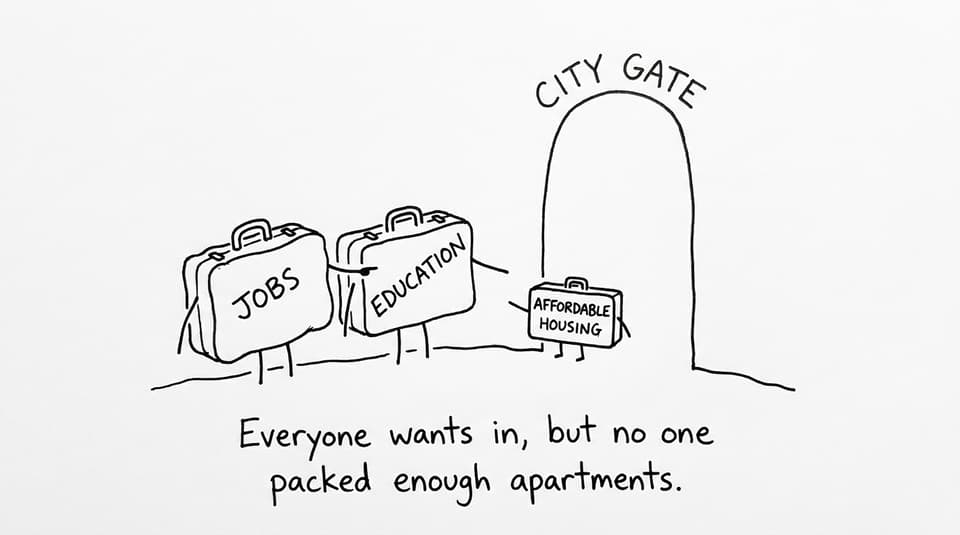
Many new arrivals first settle where rent is lower and access to work is faster: inner-city areas, peripheral zones, or informal settlements. Over time, some households move outward as incomes rise, contributing to suburbanisation and urban sprawl.
If you want a syllabus-aligned explanation of these movements, review Urbanization and Population Movements notes.
How to write this in an exam (without sounding generic)
A strong IB Geography paragraph usually follows this logic:
Cause (migration type + pull factors) to structural change (age/sex/diversity) to urban outcome (services, housing, labour, cohesion) to evaluation (who benefits, who faces costs, short vs long term).
If you need a fast way to anchor your discussion to a population theory, pair migration impacts with the Demographic Transition Model explainer to show why natural increase and migration can overlap in urban growth.
Conclusion: turn migration into marks
Migration reshapes urban population structures by making cities younger, altering gender balances, increasing cultural diversity, and redistributing people across neighbourhoods. In IB Geography, that’s not just background knowledge, it’sit’s a reliable way to build explanation, data interpretation, and evaluation in one response.
If you want to revise this efficiently, use RevisionDojo as your home base: the Study Notes clarify mechanisms, the Flashcards lock in key terms, the Questionbank trains exam technique, and AI Chat helps you refine explanations. Add Mock Exams, Predicted Papers, and grading tools when you’re ready to test timing and structure, andand you’ll be writing migration answers that feel precise, not generic.
Explore more IB Geography support via the Geography hub and the IB Geography blog tag.