


A manager rarely ruins a business with one dramatic mistake. It’s usually a slow drift: saying yes too often, spending a little too freely, assuming next month will “work itself out.” In IB Business Management, budgets matter because they interrupt that drift. A budget is not just a table of numbers; it’s a practical way to turn strategy into daily decisions.

What a budget helps a manager do (quick checklist)
-
Set clear financial boundaries for departments and projects
-
Prioritize goals when resources are limited
-
Compare actual results to targets using variance analysis
-
Coordinate decisions across functions (marketing, operations, HR)
-
Decide when growth is affordable (and when it isn’t)
-
Create accountability for spending and performance
If you’re revising IB Business Management, connect this to Unit 3 finance and the HL budgets topic: 3.9 Budgets (HL only).
IB Business Management: budgets create boundaries that prevent “fantasy decisions”
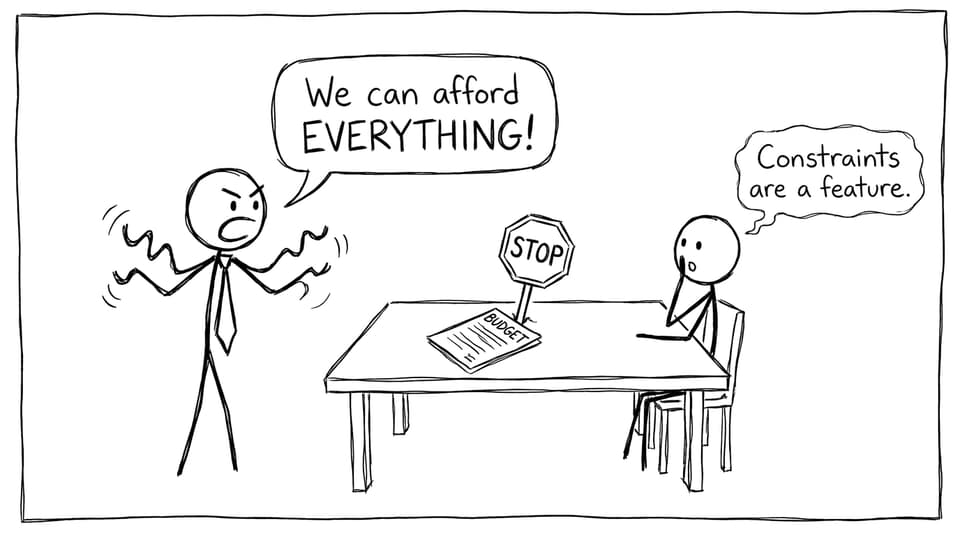
Managers make better decisions when they know the limits. A marketing manager choosing between a social media campaign and a sponsorship deal thinks differently when the budget is $5,000 rather than “whatever we can manage.” Those limits force realistic trade-offs: scale down, negotiate, delay, or find cheaper channels.
This is why budgeting is tightly linked to control. In exam answers, you can frame it as: budgets reduce the risk of overspending, improve resource allocation, and increase financial discipline.
For a syllabus-aligned definition and structure, revise budgeting mechanics here: 3.9.2 Constructing a Budget and the supporting detail in constructing a budget notes.
IB Business Management: budgets force prioritization (and make strategy visible)
A budget is strategy with numbers attached. When funds are scarce, managers must rank objectives: customer service vs faster delivery, training vs new equipment, product quality vs cheaper suppliers. That prioritization is exactly what examiners want: decision-making under constraints.
To extend your answer, link budgeting to other finance decisions like investment choices and opportunity cost. Revision support: 3.8 Investment Appraisal and core finance foundations in 3.1.1 Role of Finance for Businesses.
Budgets improve decisions through variance analysis and early warnings
Even a well-built budget is a forecast, and forecasts will be wrong. The decision advantage comes from what happens next: comparing actual results to budgeted figures to spot problems early.
If costs rise above target, managers investigate: supplier price changes, waste, lower productivity, or unrealistic assumptions. If revenue is below target, they adjust pricing, promotion, capacity, or cash flow plans. This turns “surprises” into manageable signals.
For exam-ready phrasing and examples, revise: importance of budgets and variances in decision-making notes and the deeper explanation in What Causes Budget Variances, and Why Is Variance Analysis Important for Managers?.
Budgets align teams and create accountability
Budgets also reduce internal conflict. When operations understands the production budget and marketing understands the promotion budget, decisions become coordinated rather than competitive. It’s harder to “double spend” or chase isolated targets that hurt the wider organization.
They also create accountability: managers are responsible for staying within budget, explaining variances, and improving performance. In IB Business Management, that’s a strong evaluation point: budgets can motivate careful planning, but overly tight budgets can also cause short-term thinking or demotivation if targets feel impossible.
To support broader exam prep, explore the subject hub with tools like Questionbank, Study Notes, Flashcards, AI Chat, Grading tools, Predicted Papers, Mock Exams, Coursework Library, and Tutors: IB Business Management Resources.
Conclusion: turn budgeting into exam marks
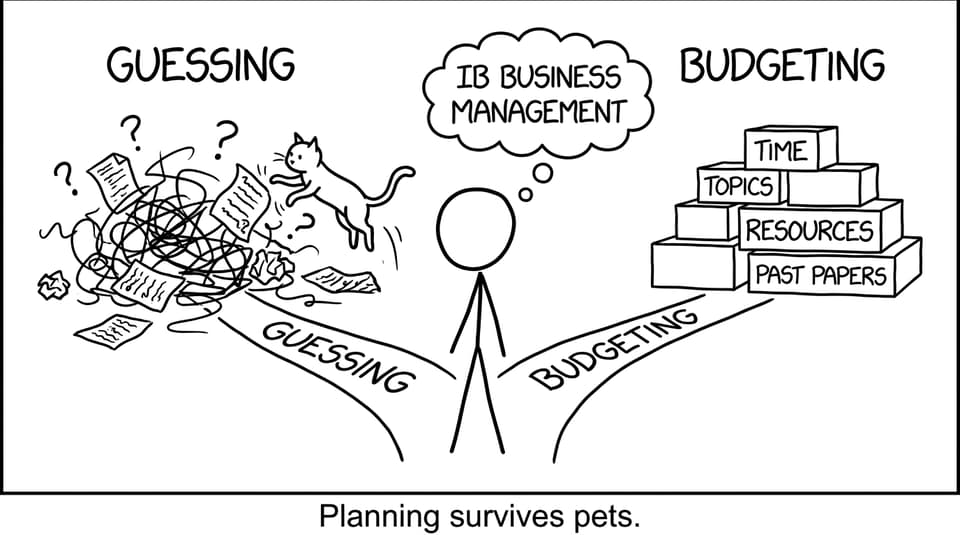
Budgets help managers make better decisions because they set boundaries, force prioritization, reveal variances early, align departments, and build accountability. If you can explain those links clearly, you’re doing IB Business Management the way examiners reward: definition, application, analysis, and evaluation.
To lock this topic in, use RevisionDojo’s Questionbank to practice budget and variance questions, Study Notes and Flashcards to tighten definitions, AI Chat to test your explanations, and Grading tools to polish your written responses. Start with the budgeting topic page: IB Business Management 3.9 Budgets and build from there.


